Bell Pepper for Baby
Last updated October 2026
Bell peppers can be part of a baby's first solid foods from around 6 months, when they are developmentally ready. The main decision is texture: a tender cooked pepper is different from a crisp raw one.
Quick answer
From around 6 months, once your baby can sit upright with steady head control and is ready for solids, offer thoroughly softened pepper as a mash, purée or suitably prepared finger food.
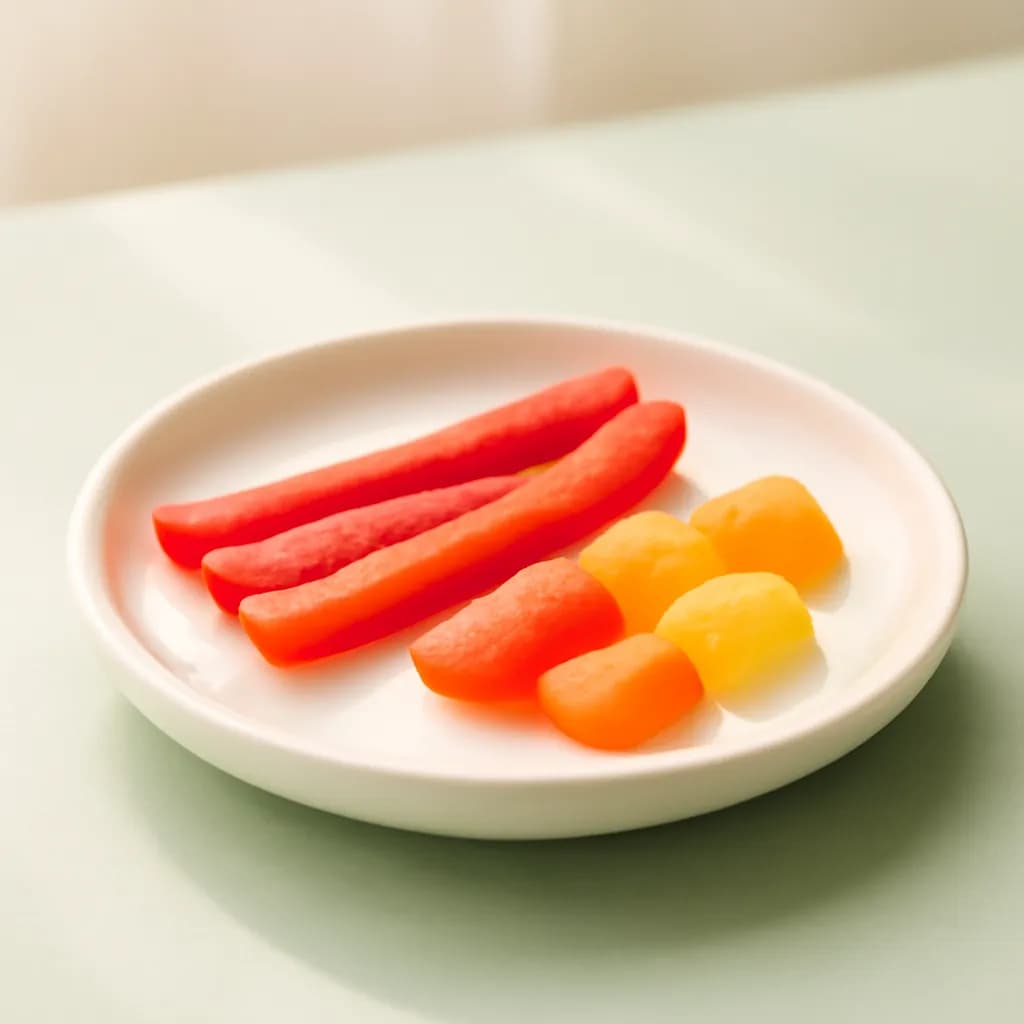
How to prepare bell pepper for your baby
Wash a pepper, remove the stalk, seeds and inner core, and roast, steam or simmer it until the flesh collapses easily when pressed with a fork. Check every batch rather than relying on a fixed cooking time.
For an early spoon-fed meal, mash or blend the tender flesh. Mix with beans, lentils or a familiar vegetable after any separate allergen introductions are complete.
For self-feeding, first check that the thick end and thin edge are equally soft. A narrow baton of soft cooked pepper may be offered only if the child can manage it; otherwise mash it. Peel leathery skin rather than assuming a fixed strip length makes it safe.
As your child develops a pincer grasp and more effective chewing, offer smaller soft pieces in an omelette, stew or pasta sauce. Hard raw pepper strips require a separate readiness assessment; age alone does not make them suitable.
The right shape and size depend on your baby's eating skills, not on age alone. Step-by-step preparation: How to prepare and cut bell pepper
Also check how to cut food for baby-led weaning for general BLW cutting tips.
When can babies eat bell pepper?
Cooked versus raw matters more than a birthday. Raw pepper can be crunchy and difficult for early eaters to manage; even after 12 months, assess the actual strip's firmness, your child's chewing ability and the way it is cut.
Start with a small amount of the prepared food. An individual reaction is possible even though pepper is not among the major allergens most commonly highlighted in infant-feeding guidance.
Red, yellow, orange and green peppers can all work. Wash the pepper, remove the stem, seed-bearing core and pale inner membranes, then steam, roast or simmer it until the thickest part mashes easily. If roasted skin forms a tough or charred sheet, peel it away before serving.
Peppers add vitamin C to a meal. Pair soft pepper with iron-rich foods such as lentils or meat rather than relying on the pepper itself as a substantial iron source.
See our first foods for baby guide for more ideas.
Preparation and safety checks
Choose soft cooked pepper for early eaters; firm raw pepper pieces can be hard to chew.
Remove the stalk, seed-bearing centre and any skin that remains chewy after cooking.
Check both the thick end and thinner edge for softness; cooking can leave unevenly firm areas.
Avoid hard charred skin or crisp fried edges, which change the texture of a supposedly soft serving.
Seat your baby upright and supervise throughout the meal; cooking and cutting reduce risk but do not eliminate choking.
Use the existing pepper cutting guide for additional preparation ideas, and verify food photographs before treating them as safety demonstrations.
Bell pepper recipes for babies
View all recipes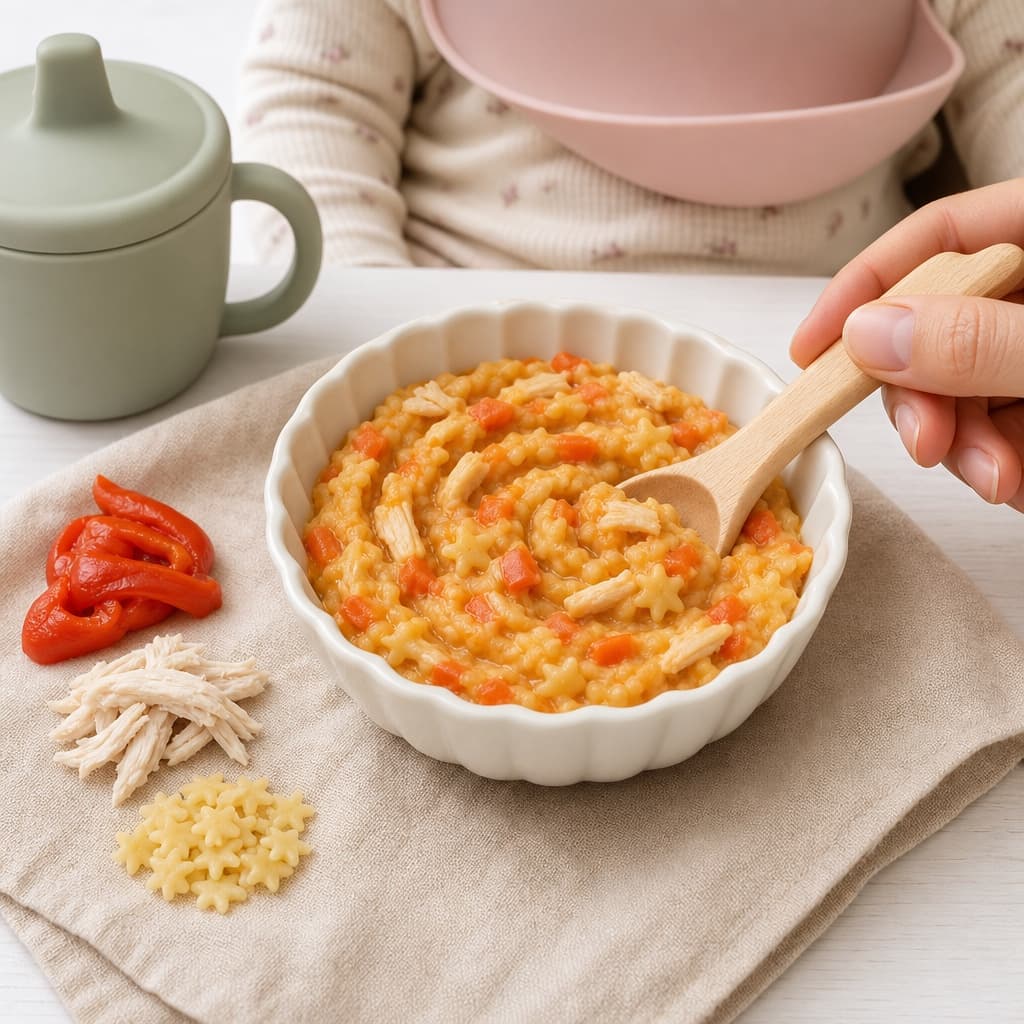
Chicken Roasted Red Pepper Pasta
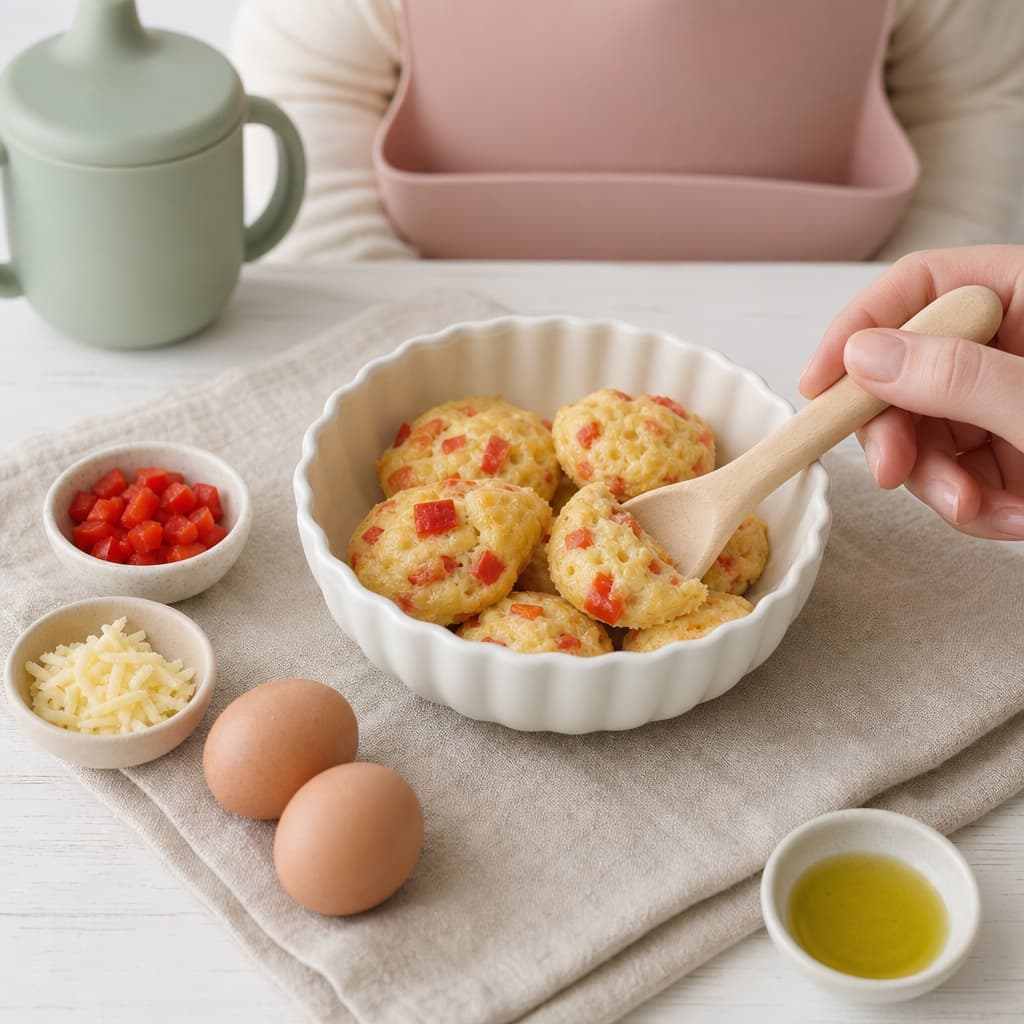
Mini Red Pepper Egg Muffins
See all bell pepper recipes for babies. Explore baby breakfast recipes, baby-led weaning recipes and first foods for baby for more ideas.
Related Guides
Frequently Asked Questions
Is Bell pepper a common allergen?
Some babies may be allergic to Bell pepper. Introduce Bell pepper carefully when babies start solids and watch for reactions.
What nutrients does Bell pepper provide for babies?
Bell pepper provides nutrients like fibre, vitamin A, vitamin C, iron that support babies' growth and development.
Sources & References
This guide is informed by current guidelines from leading health organizations:
- ●CDC - When, What, and How to Introduce Solid Foods CDC
- ●NHS - Your Baby's First Solid Foods NHS
- ●NHS - Preparing Food Safely for Babies NHS
- ●CDC — Choking Hazards (reviewed March 2026) CDC
