First Foods for Babies
Last updated April 2026
Safe and simple foods to start solids with confidence.
Starting solids is an exciting milestone, but many parents wonder what foods to offer first.
The good news is that babies can safely explore many whole foods from around six months of age. The key is choosing soft textures, simple ingredients, and foods that are easy for babies to hold or mash.
Below you'll find safe first foods to help your baby begin their journey. For meal ideas, see our BLW breakfast ideas and baby led weaning food list.
Best First Foods for Babies
When babies begin solids, they benefit from foods that are soft, nutrient-dense, and easy to grasp.
These foods are widely recommended by pediatric nutrition experts as excellent first foods for 6 month olds and beyond:
- • Avocado
- • Banana
- • Sweet potato
- • Oatmeal
- • Yogurt
- • Egg
- • Soft cooked carrots
- • Soft cooked broccoli
- • Mashed beans or lentils
- • Soft fruit like mango or pear
These foods provide important nutrients such as iron, healthy fats, fiber, and vitamins that support growth and development.
Types of First Foods to Offer
Fruits
Banana, avocado, mango, pear, peach
These are naturally soft and easy to mash, making them ideal baby led weaning first foods.
Vegetables
Sweet potato, carrots, zucchini, pumpkin, broccoli
Vegetables expose babies to new flavors early and provide valuable vitamins and fiber.
Iron-rich foods
Egg, lentils, beans, chicken, beef, iron-fortified cereals
Iron becomes especially important after six months. Include these in your baby feeding schedule from the start.
Foods to Introduce Carefully
Common allergens should be introduced safely and gradually:
- • Peanut
- • Egg
- • Dairy
- • Fish
- • Sesame
- • Soy
Most allergens can be introduced early in baby-safe forms (e.g., thinned peanut butter, well-cooked egg, plain yogurt). Introduce one at a time and watch for reactions.
How Food Texture Changes as Babies Grow
Starting solids foods progress from soft mashes to finger foods. Learn how to cut food for baby-led weaning so you can prepare safe foods for babies at each stage.
6 months
- • Soft finger foods
- • Mashed textures
- • Large pieces babies can hold
8–9 months
- • Smaller soft pieces
- • Shredded foods
- • Soft pasta
10–12 months
- • Bite-sized pieces
- • Family foods
- • More variety
Make Starting Solids Simple with Nibli
Many parents feel unsure about what foods to introduce and when.
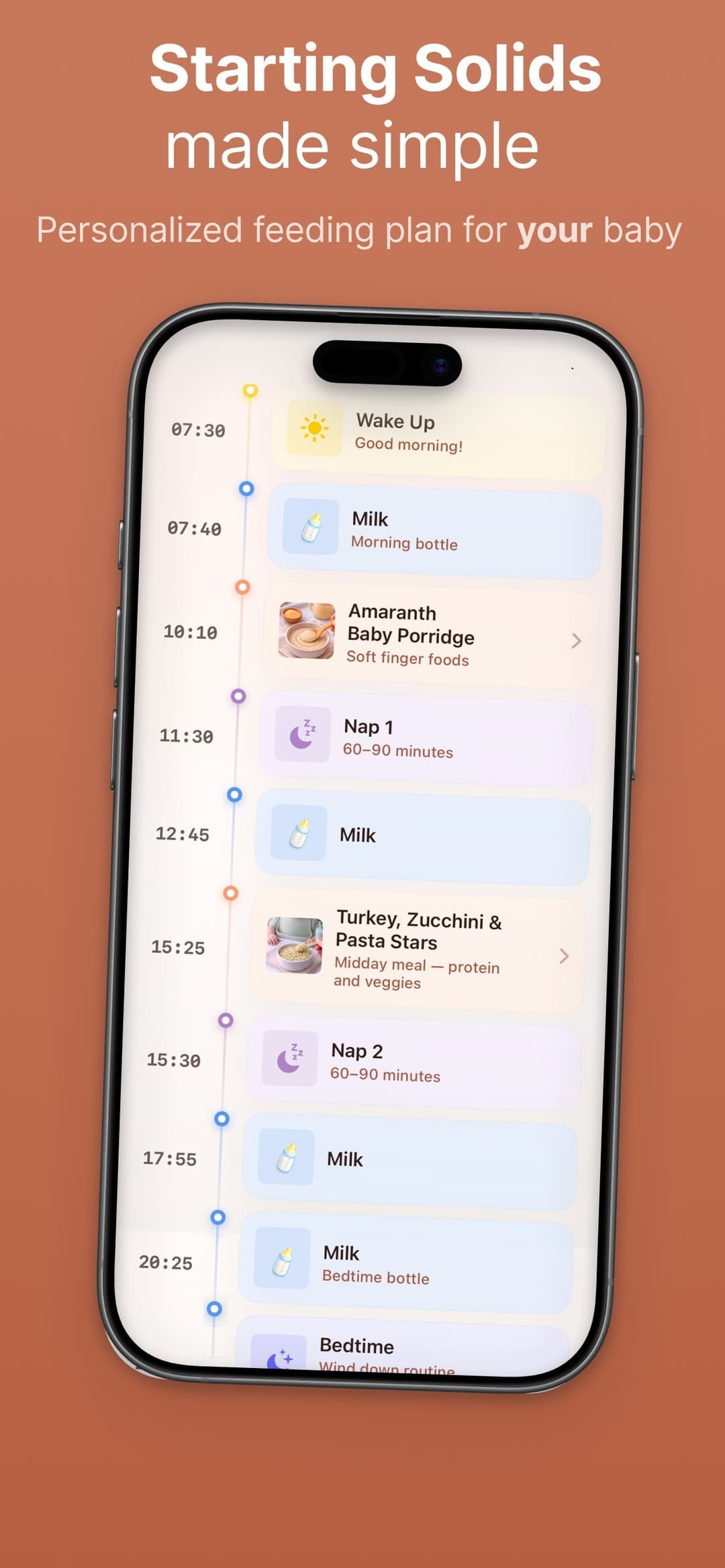
Nibli helps simplify starting solids by generating a personalized feeding plan based on your baby's age and development stage.
With Nibli you can:
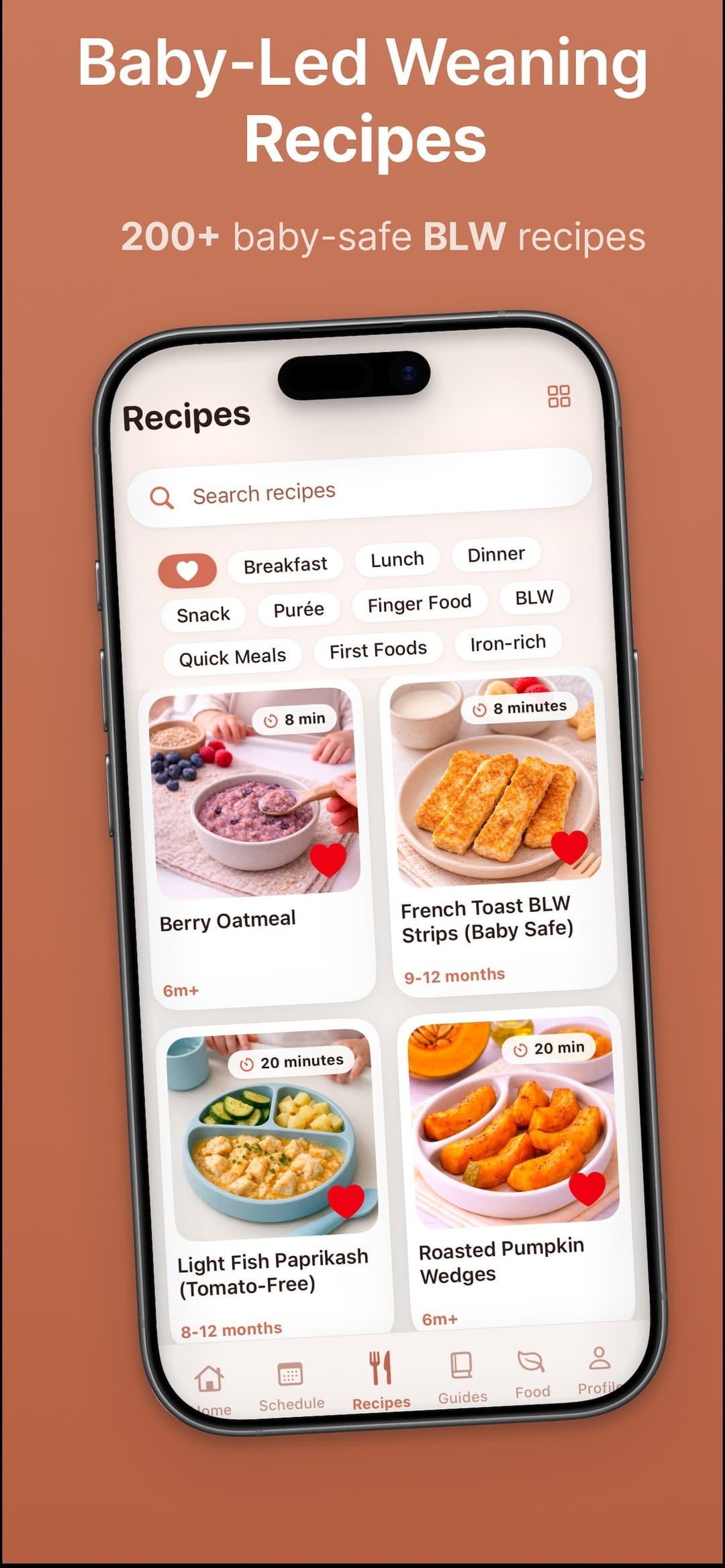
- •discover baby-safe recipes
- •learn how to cut foods safely for BLW
- •follow a personalized feeding schedule
- •track foods your baby has tried
Instead of wondering what to feed your baby each day, Nibli gives you a clear plan.
verifiedSources & References
This guide is informed by current guidelines from leading health organizations:
Frequently Asked Questions
When should babies start solids?
Most babies are ready to start solids around 6 months when they can sit with support, hold their head steady, and show interest in food.
Can babies start solids at 6 months?
Yes, most babies can start solids around 6 months when they show signs of readiness such as sitting with support and interest in food.
What are good first foods for babies?
Good first foods include soft fruits, cooked vegetables, mashed grains, and simple proteins like lentils, eggs, or soft meats.
What is baby led weaning?
Baby-led weaning is a feeding approach where babies feed themselves soft finger foods instead of being spoon-fed purees.
What foods should babies avoid?
Foods that pose choking risks or are not suitable for infants, such as honey or whole nuts, should be avoided.
Is baby led weaning safe?
Baby-led weaning can be safe when foods are prepared in appropriate shapes and textures and babies are supervised during meals.
What are the signs my baby is ready to start solids?
Look for steady head control, ability to sit with little support, loss of the tongue-thrust reflex, and active interest in family meals. Most babies show these signs around 6 months of age.
Can babies start solids at 4 months?
Most health authorities recommend waiting until around 6 months because baby's gut and motor skills are usually not ready before then. If you are considering starting earlier, talk to your pediatrician first.
Should babies drink water with solid foods?
Once babies start solids, small sips of water from an open or straw cup can be offered with meals. Breast milk or formula remains the main source of fluids during the first year.
How much should a 6 month old eat when starting solids?
Most 6-month-olds eat 1-2 tablespoons of solid food per meal at first, with one or two meals per day. Over the next few weeks, intake gradually grows to 2-4 tablespoons. Milk still supplies most calories until around 9 months.
What should I feed my baby in the first week of solids?
Start with a single soft food once a day for 2-3 days at a time, then introduce another. Iron-rich first foods (puréed beef, lentils, fortified cereal) and easy starters (avocado, banana, cooked sweet potato) work well. Introduce one new food at a time so you can spot any reaction.
Should I start with purees or baby led weaning?
Both approaches are evidence-based and safe when done correctly. Many families use a combination - purees on a spoon plus soft finger foods baby self-feeds. The right choice depends on your baby's readiness, your comfort, and family meal style.
What are the top 9 allergens to introduce to babies?
Major allergens to introduce around 6 months are: peanut, egg, dairy, wheat, soy, tree nuts, fish, shellfish, and sesame. Early, sustained introduction (after 6 months) is now recommended by AAP, NIH, and EAACI to reduce allergy risk.
How do I introduce peanut to my baby?
Mix smooth peanut butter (1-2 tsp) into warm water, breast milk, or oatmeal until thinned. Offer a small amount on a spoon at home, when you can watch your baby for 2 hours. Keep peanut in baby's diet at least once a week to maintain tolerance.
How do I know if my baby has a food allergy?
Most allergic reactions appear within 2 hours of eating. Mild signs: hives, redness, vomiting, swelling around the lips. Severe signs: difficulty breathing, severe swelling, persistent vomiting - call emergency services immediately. Introduce one new food at a time so you can identify the trigger.
Can babies have salt and sugar?
Avoid added salt before 12 months - baby's kidneys can't process it. Limit added sugar before age 2 (it displaces nutritious foods and shapes taste preferences). Honey is unsafe before 12 months due to botulism risk.
When should babies be eating three meals a day?
Most babies move to three solid meals a day between 8 and 10 months as their appetite and skills grow. Add a small snack between lunch and dinner from around 9-12 months to bridge the gap with rising energy needs.
Start Your Baby's Food Journey with Confidence
Nibli creates a personalized starting solids plan so you always know what to feed your baby next.
Try Nibli today to start building your baby's feeding routine.