Baby Led Weaning Food List
Last updated April 2026
Safe foods babies can explore when starting solids.
Baby-led weaning allows babies to explore real foods from around six months of age.
Instead of spoon-feeding purees, babies can self-feed soft foods that are safe, nutritious, and easy to grasp.
Parents often ask one important question:
“What foods can my baby eat?”
If you're starting solids, see our guide to first foods for babies. This guide includes a simple list of baby-led weaning foods across different food groups to help you introduce a wide variety of flavors and nutrients.
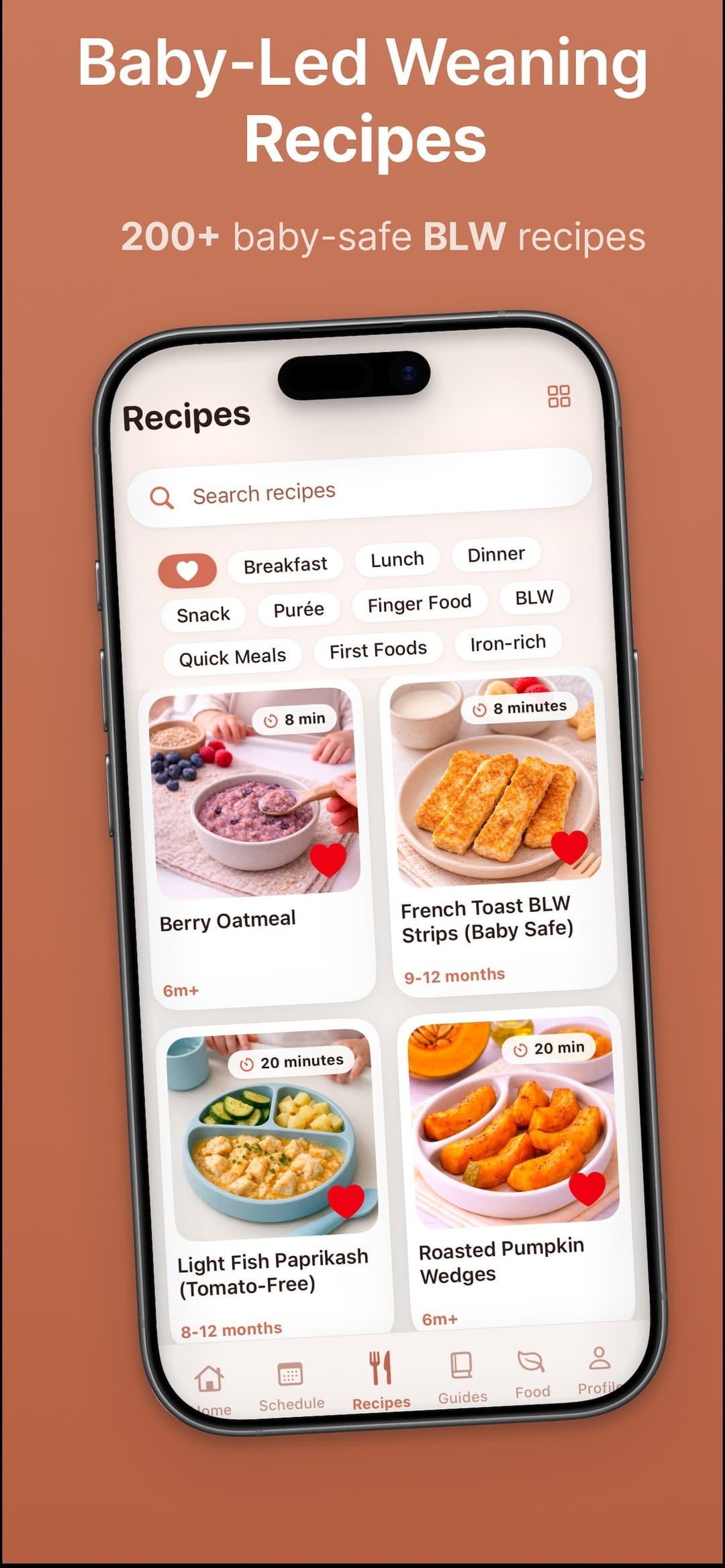
Fruits for Baby Led Weaning
- • Avocado
- • Banana
- • Mango
- • Pear
- • Peach
- • Apple (steamed)
- • Blueberries (mashed)
- • Strawberries
- • Papaya
- • Melon
Fruits should be served soft and in baby-safe shapes. Learn how to cut food for baby-led weaning to prepare fruits safely.
Vegetables Babies Can Eat
- • Sweet potato
- • Carrot
- • Zucchini
- • Broccoli
- • Cauliflower
- • Pumpkin
- • Green beans
- • Peas
- • Spinach
- • Bell pepper
Vegetables should be steamed or roasted until soft. Whole florets like broccoli make great BLW foods - the stem acts as a natural handle.
Protein Foods for Babies
- • Egg
- • Chicken
- • Turkey
- • Beef
- • Salmon
- • Sardines
- • Lentils
- • Beans
- • Tofu
- • Yogurt
Protein foods help support growth and iron intake. Include iron rich foods for babies like meat and lentils regularly. See our first foods for babies guide for safe preparation.
Grains and Energy Foods
- • Oatmeal
- • Rice
- • Quinoa
- • Pasta
- • Bread or toast
- • Pancakes
- • Potatoes
These foods provide energy for growing babies. Toast fingers, soft-cooked pasta, and oatmeal are popular BLW foods 6 months and beyond.
Foods to Avoid When Starting Solids
- • Whole nuts
- • Popcorn
- • Hard raw vegetables
- • Whole grapes
- • Hard candy
- • Excess salt
- • Honey (before 12 months)
These pose choking risks or safety concerns. Cut grapes into quarters, cook vegetables until soft, and avoid honey entirely before 12 months. Use nut butters (thin spread) instead of whole nuts.
How Food Choices Change as Babies Grow
6 months
- • Soft fruits
- • Soft vegetables
- • Large finger foods
- • Simple grains
8–9 months
- • Shredded meat
- • Soft pasta
- • Smaller pieces of food
- • More variety
10–12 months
- • Bite-sized foods
- • Family meals
- • More textures
See the full 6 month baby feeding schedule or our baby feeding schedule for meal timing and structure.
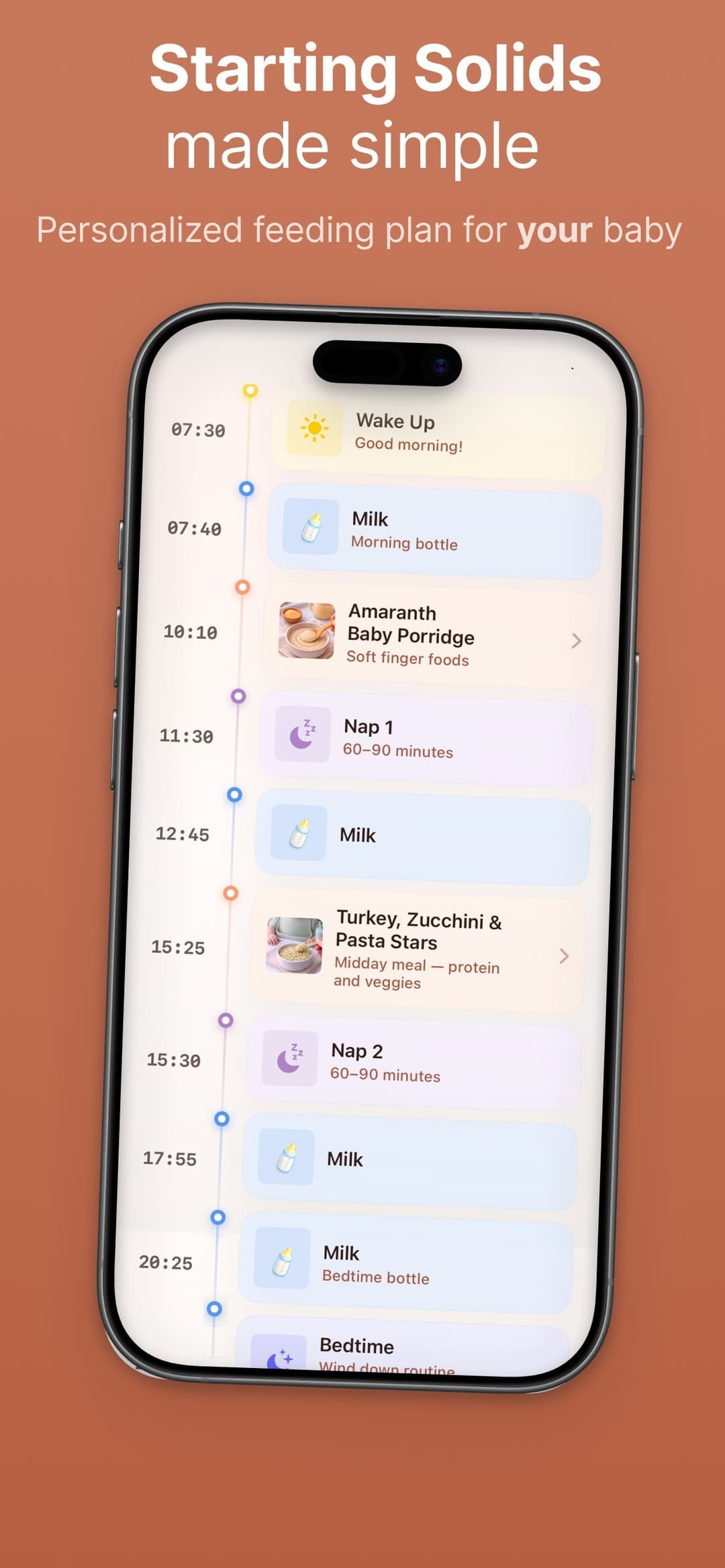
Discover New Baby Foods with Nibli
Introducing new foods can feel overwhelming when starting solids.
Nibli makes it easier by generating a personalized feeding plan based on your baby's age.
Inside the app you can:
- •discover baby-safe recipes
- •see balanced feeding schedules
- •learn how to prepare foods safely
- •track foods your baby has tried
The app helps parents introduce new foods gradually and build a varied diet for their baby.
Make Baby-Led Weaning Simple
Nibli helps parents confidently introduce new foods and build healthy eating habits from the very beginning.
Try Nibli today to start planning your baby's meals.
verifiedSources & References
This guide is informed by current guidelines from leading health organizations:
Frequently Asked Questions
What foods can babies eat for baby-led weaning?
Babies can eat a wide variety of soft foods including avocado, banana, sweet potato, egg, chicken, lentils, oatmeal, and soft vegetables like broccoli and carrots. All BLW foods should be soft enough to mash with gentle pressure and cut into shapes babies can grasp. Learn how to cut foods safely for each stage.
When can babies start BLW?
Most babies can start baby-led weaning around 6 months of age when they show signs of readiness: sitting with support, good head control, and interest in food. Always ensure foods are soft and prepared in baby-safe shapes.
What foods should babies not eat?
Avoid whole nuts, popcorn, hard raw vegetables, whole grapes, hard candy, and honey before 12 months. These pose choking or safety risks. Modify or avoid sticky foods. Cut round foods into strips and cook vegetables until soft.
What are the best first foods for BLW?
Top BLW first foods: avocado strips, ripe banana, steamed sweet potato wedges, soft-cooked pear, scrambled egg, oatmeal fingers, soft toast strips with avocado or thinned nut butter, and slow-cooked meat strips. All soft enough to mash, cut to graspable sizes.
Can babies eat fruit for BLW?
Yes. Soft ripe fruits like banana, avocado, mango, kiwi, pear, and peach are excellent BLW starters. Always remove pits, seeds, and tough skins. Quarter round fruits like grapes and cherry tomatoes lengthwise.
What proteins are best for baby led weaning?
Top BLW proteins: scrambled egg, slow-cooked beef strips, chicken thigh strips, salmon fillet, lentil patties, soft tofu cubes, ground meat patties, soft cooked beans (squashed slightly). Iron-rich proteins are especially important from 6 months.
Can babies eat dairy on BLW?
Yes - full-fat plain yogurt and small amounts of soft cheese can be introduced around 6 months. Cow's milk as a drink waits until 12 months, but it can be used in cooking earlier. Choose unsweetened, full-fat varieties.
What spices and herbs can babies have?
Most fresh herbs (basil, parsley, dill, cilantro) and mild spices (cinnamon, cumin, paprika, garlic, ginger) are safe from 6 months and help babies develop taste preferences. Avoid added salt and chili until older. Cinnamon and turmeric are especially well-tolerated.
Are there foods babies should never eat?
Yes: honey before 12 months (botulism risk), whole nuts and large peanut chunks (choking), hot dogs and grapes in unmodified shapes (choking), unpasteurized dairy or juice (bacterial risk), high-mercury fish (king mackerel, swordfish, shark), raw eggs and raw fish (until older).