Baby Allergen Introduction Guide
Last updated April 2026
Introducing new foods to your baby is an exciting part of starting solids. Many parents wonder when and how to introduce common food allergens such as eggs, dairy, peanuts, or fish.
Current guidelines suggest introducing allergenic foods during infancy once babies begin eating solids. Offering these foods in safe forms may help babies become familiar with a variety of foods as they grow.
This guide explains which foods are common allergens, when to introduce them, and how to introduce them safely when starting solids.
What Are Common Food Allergens?
Certain foods are more likely to cause allergic reactions in some people. These are often called common allergens.
Common food allergens include:
- • eggs
- • peanuts
- • dairy
- • fish
- • wheat
- • soy
- • tree nuts
- • sesame
Many babies tolerate these foods without problems, but introducing them carefully is important.
When to Introduce Allergens to Babies
Many pediatric guidelines recommend introducing allergenic foods once babies start eating solids, usually around six months.
Allergenic foods can be introduced alongside other foods such as fruits, vegetables, and grains.
Introducing a variety of foods during infancy helps babies become familiar with different tastes and textures. For more ideas, see first foods for baby.
You can learn more about starting solids here: how to start baby-led weaning.
How to Introduce Allergenic Foods Safely
When introducing allergenic foods, start with small amounts and observe your baby.
Helpful tips include:
- • introduce one new allergenic food at a time
- • offer it earlier in the day so you can observe reactions
- • start with small portions
- • wait a day or two before introducing another new allergen
If your baby tolerates the food well, it can be offered again in the future.
Examples of Allergenic Foods for Babies
Here are examples of allergenic foods and how they may be prepared for babies:
Eggs
- • scrambled eggs
- • soft omelet strips
Peanut products
- • smooth peanut butter mixed with yogurt or oatmeal
Dairy
- • plain yogurt
- • cottage cheese
Fish
- • soft cooked salmon
- • flaked white fish
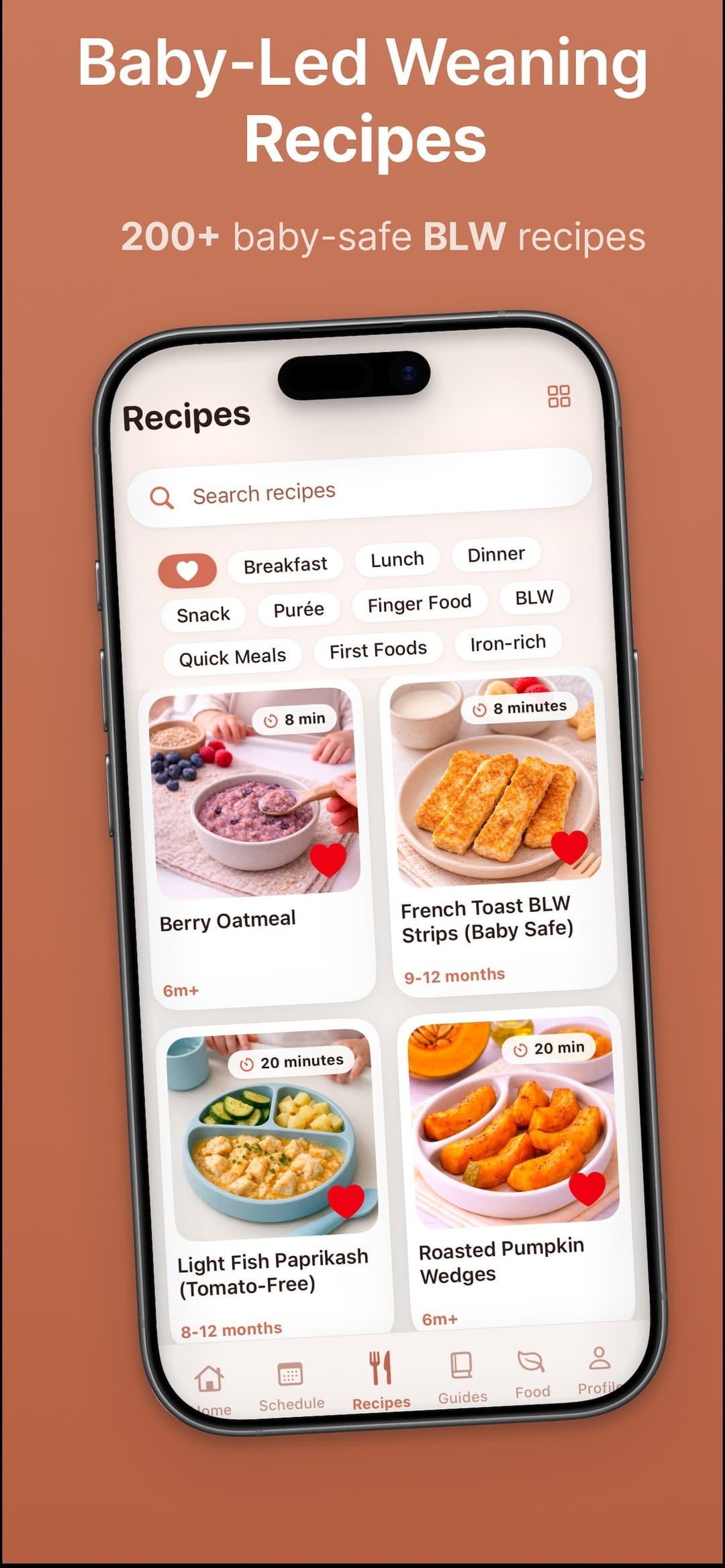
You can explore baby-friendly recipes using these foods here: baby-led weaning recipes.
Signs of Possible Food Reactions
Some babies may react to certain foods. Possible signs can include:
- • skin rashes
- • swelling around the mouth
- • vomiting
- • digestive discomfort
If you notice unusual symptoms after introducing a new food, consult a healthcare professional.
Foods to Avoid During Allergen Introduction
Certain foods should still be avoided during infancy.
Examples include:
- • honey before age one
- • whole nuts
- • foods that pose choking hazards
You can learn more here: foods to avoid for babies.
verifiedSources & References
This guide is informed by current guidelines from leading health organizations:
Frequently Asked Questions
When should babies be introduced to allergenic foods?
Many guidelines suggest introducing allergenic foods once babies start eating solids, typically around six months.
What are the most common food allergens for babies?
Common allergens include eggs, peanuts, dairy, fish, wheat, soy, tree nuts, and sesame.
How do you introduce peanut butter to babies?
Peanut butter can be mixed with yogurt, oatmeal, or water to create a smooth texture suitable for babies.
Should I introduce allergens one at a time?
Introducing allergens one at a time can make it easier to identify reactions.
Can babies with no allergy history eat allergenic foods?
Many babies can safely try allergenic foods once they start solids, but parents should introduce them carefully.
What are the symptoms of a food allergy in babies?
Mild reactions: hives, redness around the mouth, mild swelling, vomiting, diarrhea, runny nose. Severe reactions (anaphylaxis): difficulty breathing, persistent cough, throat swelling, repeated vomiting, weak pulse, pale or blue skin - call emergency services immediately.
Should I introduce peanut early to prevent allergy?
Yes. NIH/AAP guidelines recommend introducing peanut between 4-6 months for babies at high risk (severe eczema, egg allergy) - earlier introduction can reduce peanut allergy risk by up to 80%. Talk to your pediatrician for high-risk babies; introduce by 6 months for everyone else.
How long should I wait between introducing allergens?
Wait 2-3 days between major allergens so you can identify which food caused any reaction. Once a food is safely introduced, keep it in the diet at least once a week to maintain tolerance.
What if my baby has eczema?
Babies with moderate-to-severe eczema are at higher risk for food allergies, particularly egg and peanut. Don't delay allergen introduction - talk to your pediatrician about safely introducing peanut and egg as early as 4 months in some cases.
Can I delay allergen introduction to be safe?
Delaying allergens beyond 6-7 months actually increases allergy risk. Modern guidelines (AAP, NIH, EAACI, FDA) all support early, sustained introduction starting from around 4-6 months for high-risk babies and around 6 months for all others.
Is it safe to introduce all 9 allergens in one week?
It's not recommended. Spread introductions across several weeks - 1 new allergen every 2-3 days - so you can identify the trigger if a reaction occurs. After successful introduction, keep allergens in regular rotation in the baby's diet.
Introduce Allergens with Confidence
Nibli helps you plan allergen introduction with personalized feeding schedules and baby-friendly recipe ideas.
Try Nibli today to start your baby's food journey.