When can babies have mango?
Most babies are ready to start solids around 6 months. The WHO and NHS advise beginning complementary foods at about 6 months once your baby can sit with minimal support, has good head and neck control, shows interest in food, and can bring food to their mouth.
Mango is not a common allergen and does not need to be delayed. The AAP no longer recommends delaying the introduction of common allergens, and encourages a varied diet from 6 months. Peel mango well because the skin can trigger contact irritation in some people. Avoid fruit juice, including mango juice, in the first year per AAP guidance.
How to serve mango safely
6 to 9 months: Choose very ripe mango that passes the squish test, it should mash easily between your thumb and forefinger. Peel completely, remove the pit, and cut into large 4 to 5 cm finger-size spears so baby can grasp and gnaw. To improve grip, use a crinkle cutter or lightly coat pieces with ground oats, flax, or coconut. For spoon feeding, mash or blend mango to a smooth puree, thinning with breast milk or formula as needed.
9 to 12 months and beyond: Once the pincer grasp emerges, usually around 9 months, move to pea-sized cubes to support safe self-feeding. Continue the squish test, and offer mango with iron-rich foods like yogurt, oats, or beans so vitamin C can help iron absorption. Avoid hard, unripe, or dried mango. Serve thawed frozen mango only after it is fully soft.
Mango nutrition for babies
- 💚High in vitamin C, which supports immunity and helps absorb iron from plant foods.
- 💚Provides vitamin A carotenoids that support vision, skin, and immune health.
- 💚Contains fiber that supports digestive health and regular stools.
- 💚Supplies folate for rapid growth and cell development.
- 💚Provides potassium for muscle function and fluid balance.
Safety tips
- ✓Start solids around 6 months when baby shows readiness. Use the squish test, pieces should mash easily between your fingers.
- ✓Cut by age: for 6 to 9 months serve 4 to 5 cm finger-size spears; after the pincer grasp develops, offer pea-sized cubes.
- ✓Always peel mango. The skin can contain irritants similar to poison ivy and may cause a rash on the face or hands.
- ✓Introduce a small amount at first and watch for allergy symptoms like hives, vomiting, or wheeze. Seek urgent care for breathing trouble.
- ✓Avoid hard, unripe, or dried mango and skip fruit juice before 12 months, consistent with AAP guidance.
Baby-friendly mango recipes
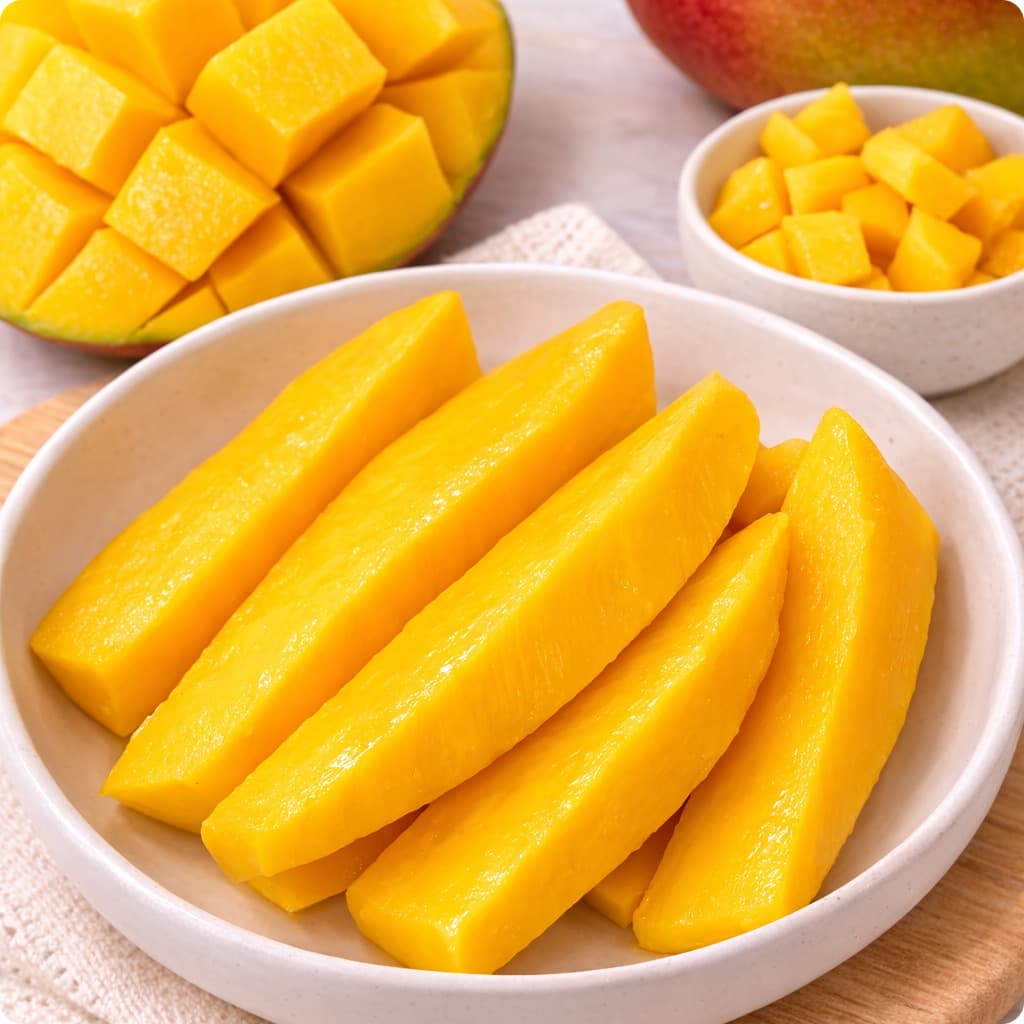
Mango Spears
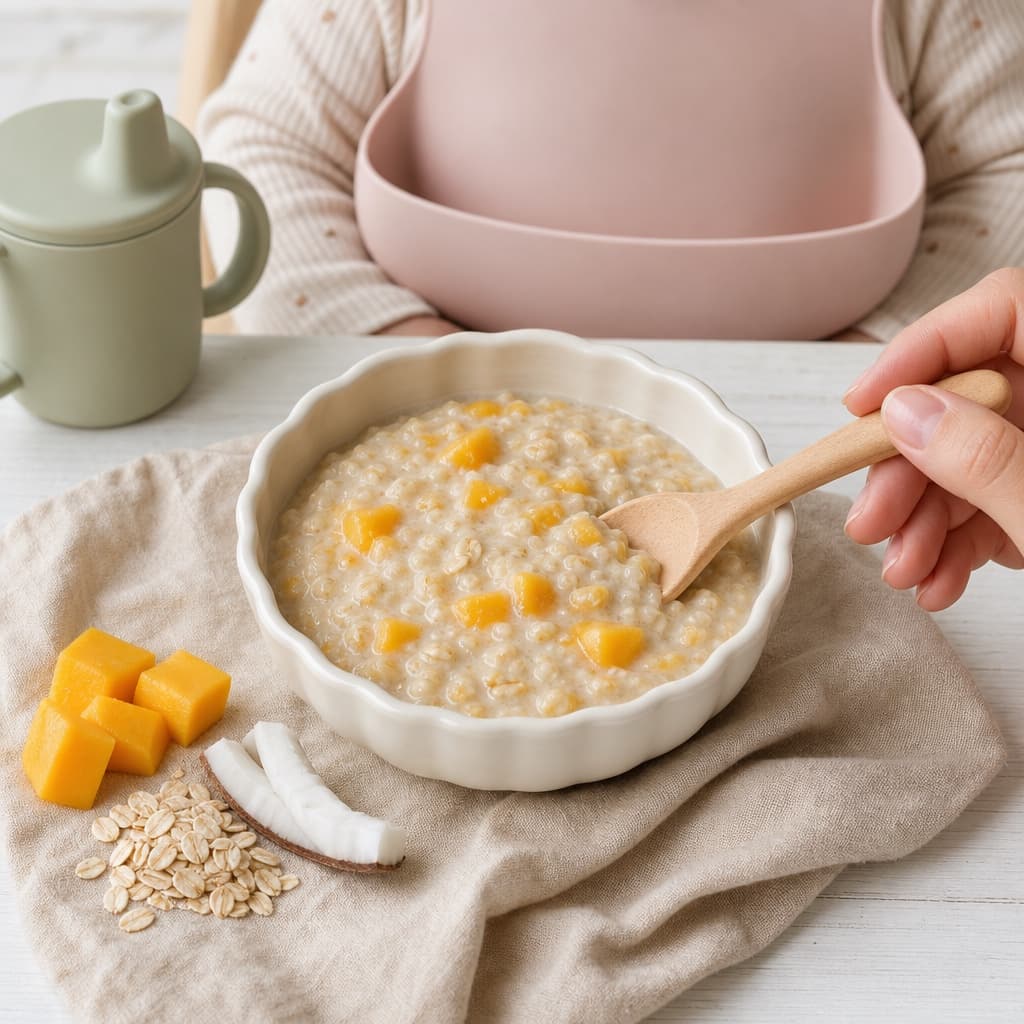
Mango Coconut Oatmeal
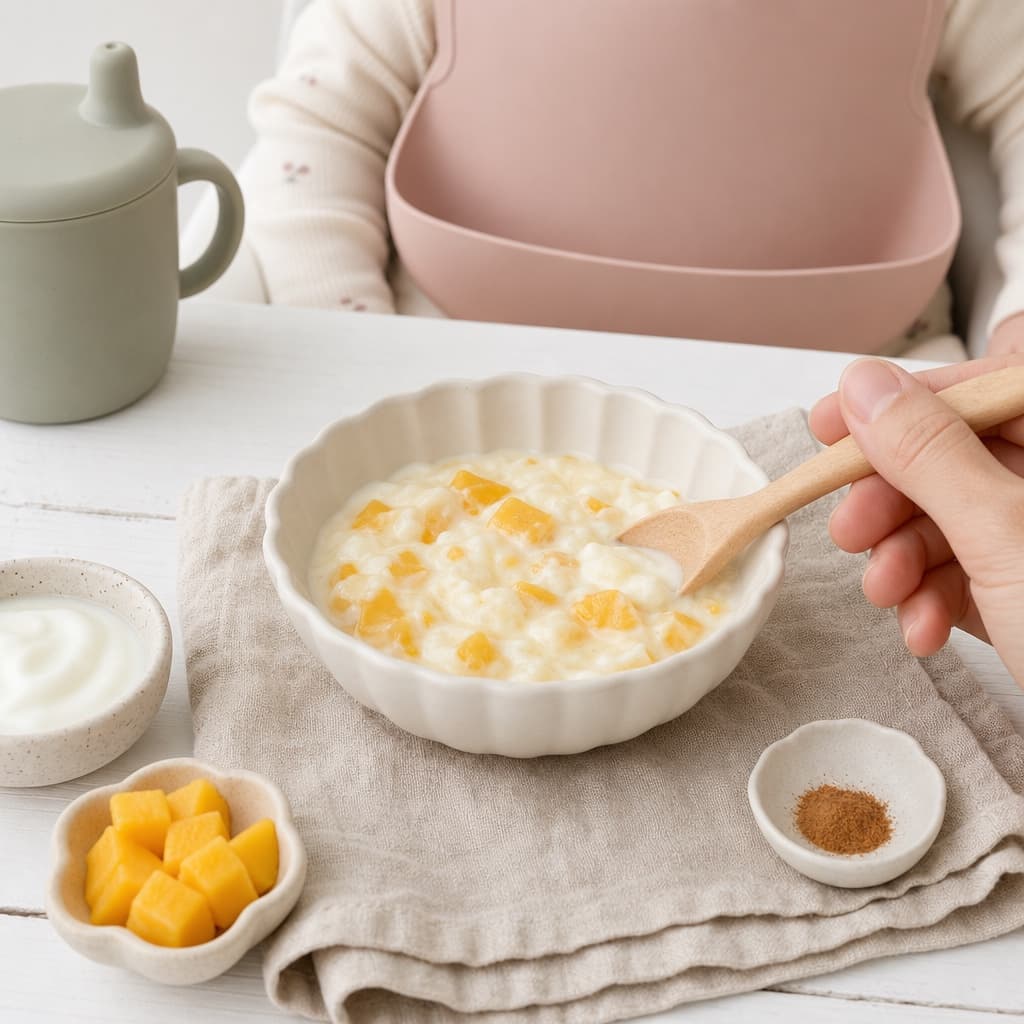
Mango Yogurt Bowl
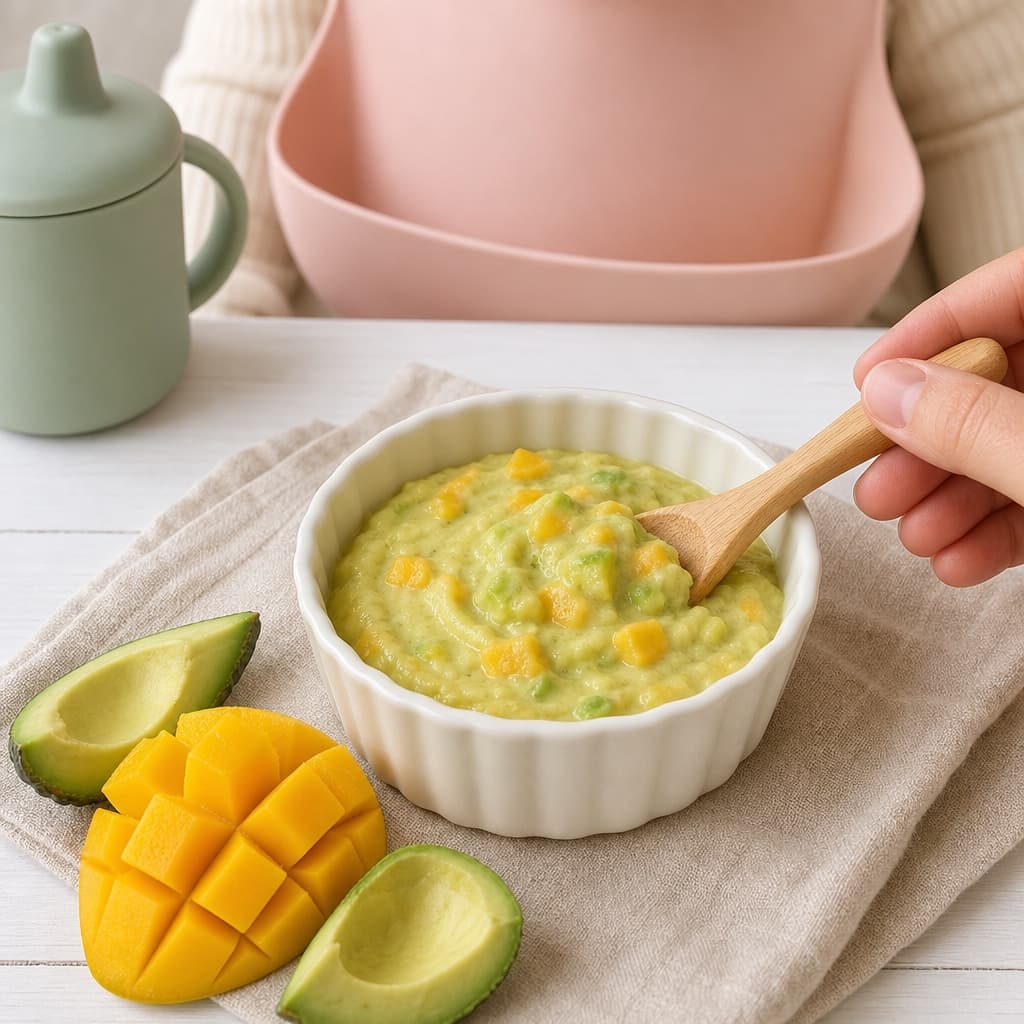
Avocado Mango Mash Cup
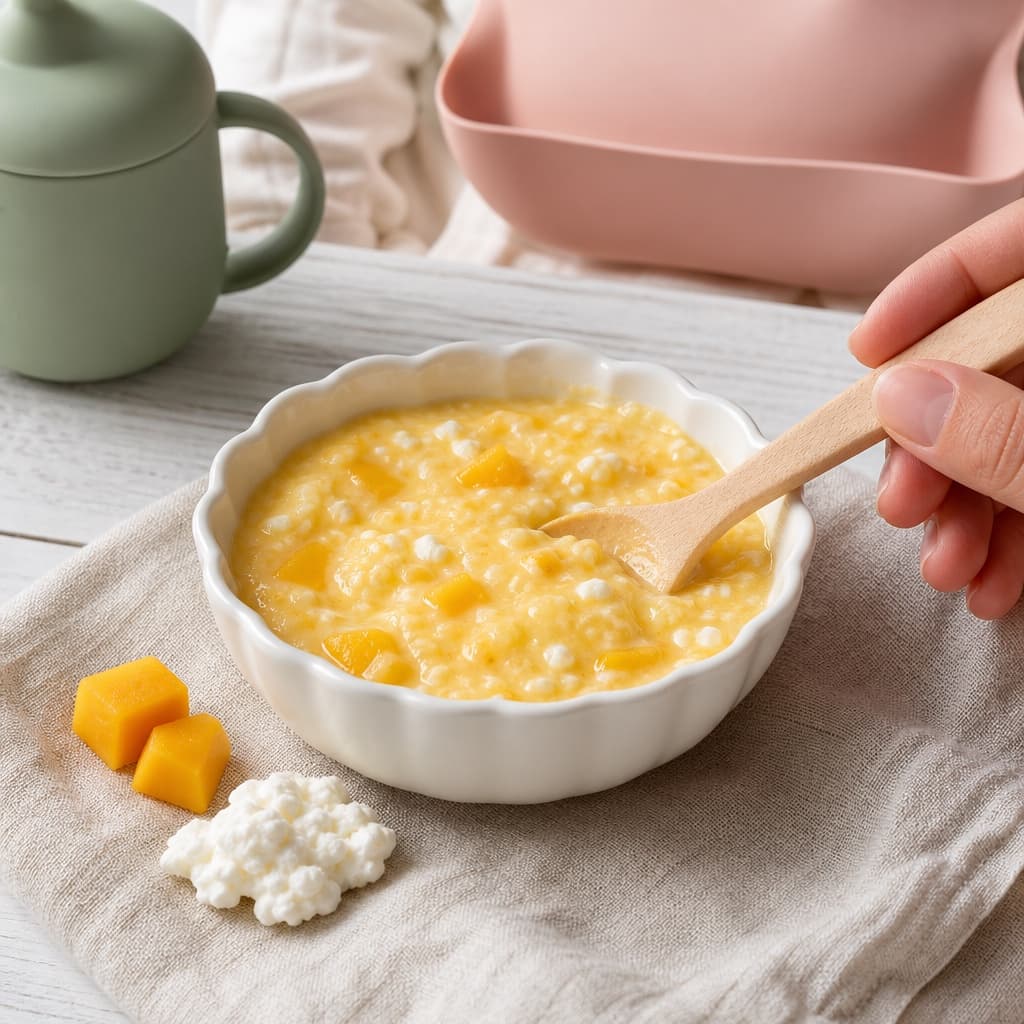
Mango Cottage Cheese Bowl
Mango for babies: common questions
Is mango a choking hazard for babies?
Ripe mango is soft, but its slippery texture can make large chunks risky. For 6 to 9 months, offer peeled 4 to 5 cm finger-size spears so baby can hold and gnaw. After the pincer grasp develops, switch to pea-sized cubes. Always do the squish test and avoid dried mango.
Is mango a common allergen?
Mango allergy is uncommon, but the peel can cause contact dermatitis because of irritants in the skin. Rare cross-reactions can occur in people sensitive to poison ivy or with latex-fruit syndrome. Peel well, start with small amounts, and monitor for hives, vomiting, or wheeze.
Can babies have mango at 4 or 5 months?
Wait until around 6 months and until your baby shows readiness signs like sitting with support and good head control. This aligns with WHO and NHS guidance on starting complementary foods.
Can I mix mango with yogurt or oatmeal?
Yes. From about 6 months you can mix mango puree into oatmeal or serve with pasteurized whole milk yogurt. The vitamin C in mango can help your baby absorb iron when paired with iron-rich foods.
Can babies eat dried mango or mango chips?
Avoid them. Dried mango is tough and sticky, which increases choking risk, and often contains added sugar. Offer fresh ripe mango that is soft and cut to an age-appropriate size.
Can I serve frozen mango?
Yes, thaw thoroughly until the pieces are fully soft, then cut to the right size for your baby’s age. Do not offer hard frozen chunks, which are a choking and gum-injury risk.
Does mango cause diaper rash or diarrhea?
Mango can cause a temporary perioral rash from skin contact and may loosen stools due to fiber and natural sugars. Peel well, use a barrier cream if needed, and space servings. Speak with your pediatrician if symptoms persist or are severe.
Get recipes + a feeding plan for your baby
Save this food to your baby's list, get age-appropriate recipes and follow a personalized feeding schedule - 350+ baby-safe meals in the app.
verifiedSources & References
This guide is informed by current guidelines from leading health organizations:
Related guides
- Mango for Baby
- First foods for baby
- How to cut mango for baby
- Baby-led weaning food list
- Baby allergen introduction guide
- Can Babies Eat Sardines?
- Can Babies Eat Paneer?
- Can Babies Eat Couscous?
- Can Babies Eat Olives?
- Can Babies Have Maple Syrup?
- Can Babies Eat Ice Cream?
- When Can Babies Drink Juice?
- Can Babies Eat Bacon?
- Can Babies Eat Pickles?
- Can Babies Eat Feta?
- Can Babies Eat Cream Cheese?
- Can Babies Eat Pesto?
- Can Babies Eat Lemon?
- Can Babies Eat Persimmon?
- Can Babies Eat Guava?
- Can Babies Eat Crab?
- Can Babies Eat Mussels?