When can babies eat tuna?
Babies can eat tuna from around 6 months when they start solids. Fish is a top-9 allergen, so guidelines recommend early, deliberate introduction to lower allergy risk - introduce on its own and watch for reactions.
The bigger consideration with tuna is mercury. Tuna are large, long-lived predators that accumulate methylmercury, which can affect a developing brain. The FDA and EPA recommend choosing canned light tuna (lower mercury) over albacore for young children, in small portions, and not too often.
How to serve tuna safely
For 6-9 month babies, choose canned light tuna in water, drain well, and flake into very small pieces. Mix with mashed avocado, plain yogurt, or a small amount of breast milk/formula to make a soft, scoopable mash. No added salt or mayonnaise with raw egg.
For 9-12+ month babies, flaked tuna works well stirred into soft pasta, mashed sweet potato, or tucked into a soft toast finger. A simple homemade tuna salad with plain yogurt instead of mayo is fine. Continue limiting to about 1 oz once or twice a week.
Nutritional benefits for babies
- 💚High-quality protein supports muscle and tissue growth.
- 💚Omega-3 fatty acids (DHA) support brain and eye development.
- 💚Vitamin D supports bone health and calcium absorption.
- 💚B vitamins (B12, niacin) and selenium support overall growth.
Safety considerations
- ✓Choose canned light tuna in water - it's lower in mercury than albacore (white), big-eye, or yellowfin.
- ✓Limit to about 1 oz (28 g) once or twice a week for babies and young toddlers, per FDA/EPA guidance.
- ✓Fish is a top-9 allergen - introduce on its own and watch for reactions for 2-3 days.
- ✓Drain canned tuna well to reduce sodium; avoid tuna packed in oil for babies.
- ✓Never serve raw tuna (sashimi/poke) to babies due to listeria and parasite risk.
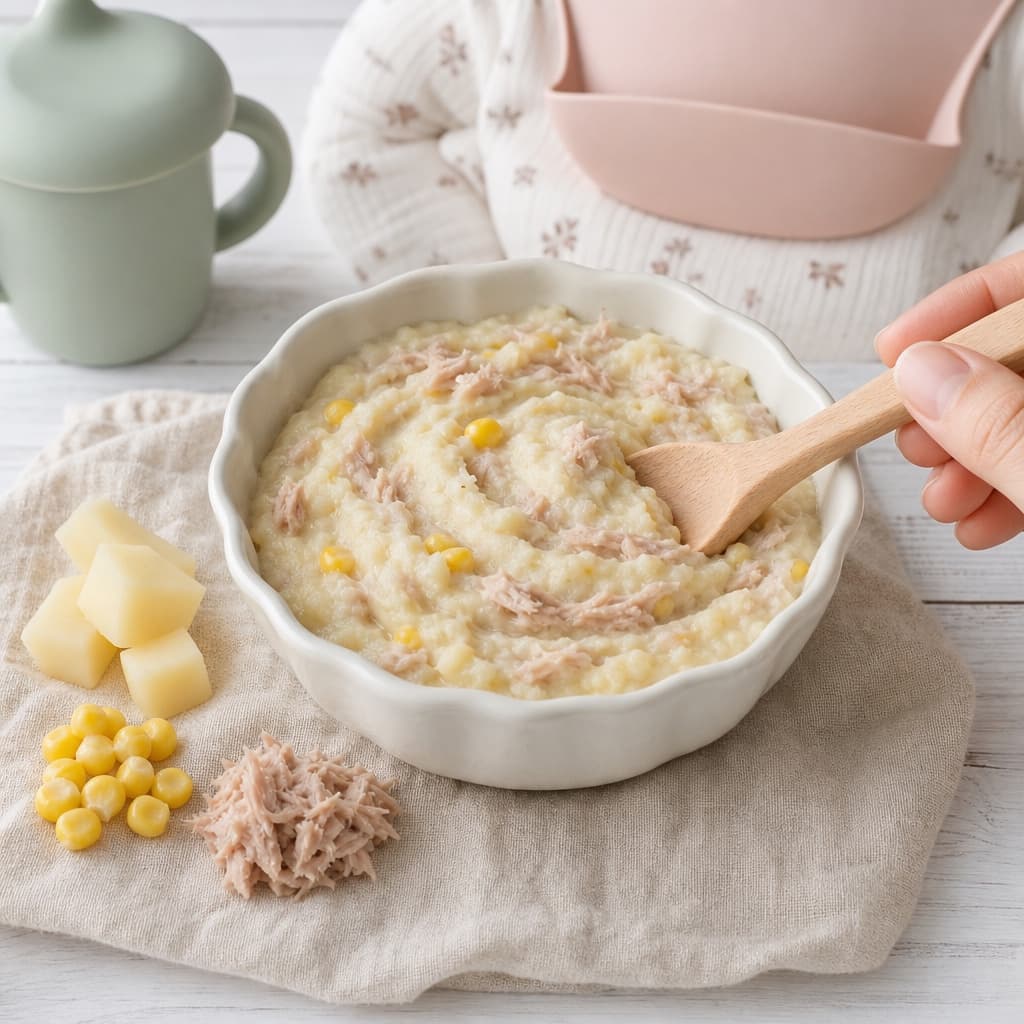
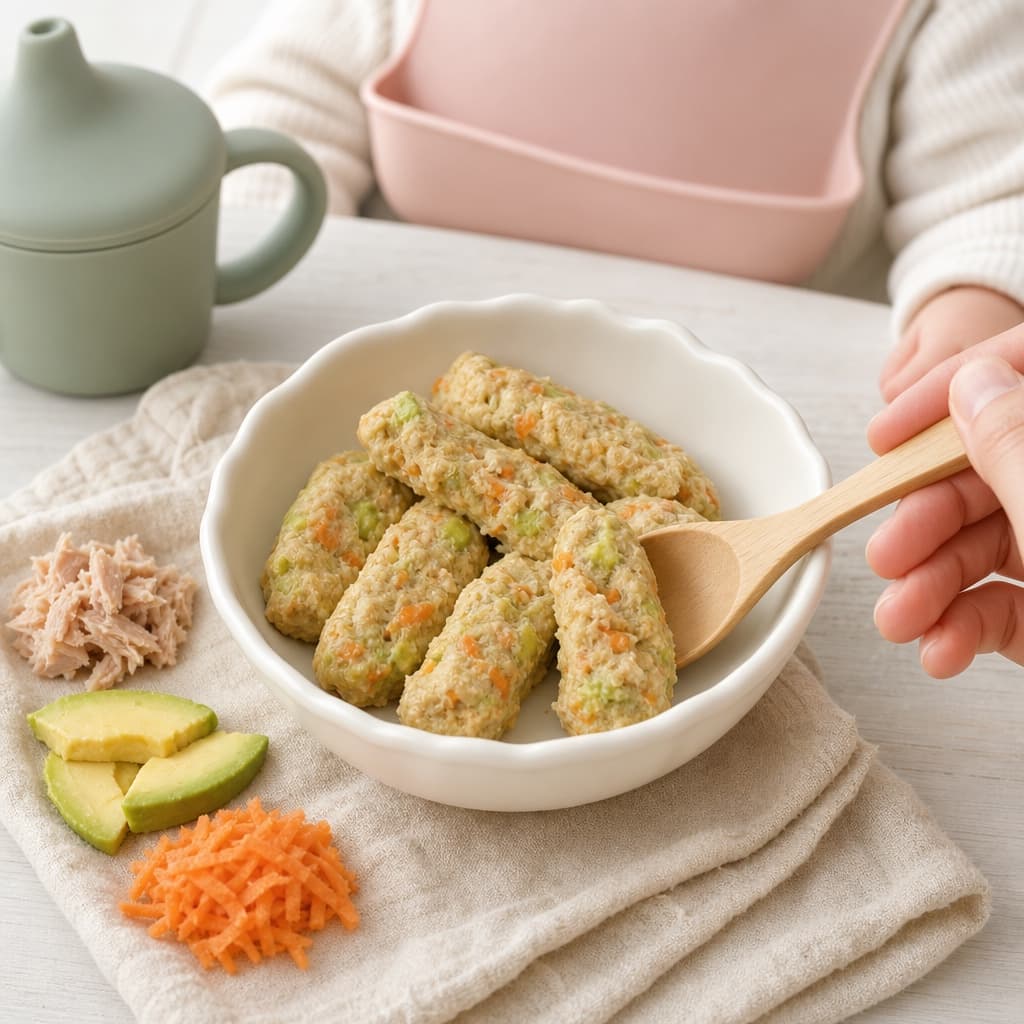
Tuna recipes for babies
Frequently asked questions
How much tuna can a baby safely eat?
Per FDA/EPA guidance, babies and young children can eat up to about 1 oz (28 g) of canned light tuna once or twice a week. Albacore (white) tuna should be limited even further, or avoided. Salmon, sardines, cod, and tilapia are lower-mercury fish you can serve more often.
What's the difference between light tuna and albacore?
Canned light tuna is usually skipjack, a smaller species that accumulates less mercury. Albacore (also labeled 'white' tuna) is a larger species and contains roughly three times more mercury. For babies, choose canned light tuna and reserve albacore for older kids, if at all.
Is mercury in tuna really dangerous for babies?
In small amounts, no. The risk is cumulative exposure during brain development - heavy mercury intake over time can affect cognitive development. Following the FDA's portion limits (about 1 oz once or twice a week for babies) keeps exposure well below risk thresholds while still giving the omega-3 and protein benefits.
Can my baby eat fresh tuna steak?
Fresh tuna steak (often yellowfin, big-eye, or bluefin) tends to be much higher in mercury than canned light tuna and is generally not recommended for babies and young children. If you do serve it occasionally, treat it as albacore-equivalent and keep portions tiny and infrequent.
Can tuna cause an allergic reaction?
Yes, finned fish is one of the top-9 allergens. Reactions usually appear within minutes to a few hours: hives, swelling, vomiting, wheezing. Introduce tuna on its own and watch for 2-3 days before introducing another new allergen. A baby allergic to one fish may or may not react to others.
Is canned tuna in oil OK for babies?
It's better to choose canned light tuna in water for babies. Tuna in oil adds extra fat without nutritional benefit and may include flavorings or higher sodium. Drain water-packed tuna well before serving.
What about tuna salad with mayonnaise?
Standard mayonnaise is generally safe (it uses pasteurized eggs) but is high in fat and may include added sugar and salt. For babies, swap mayo for plain whole-milk yogurt or mashed avocado, and skip the salt. Once your baby is comfortable with the mix, soft toast fingers with tuna mash work well.
Get recipes + a feeding plan for your baby
Save this food to your baby's list, get age-appropriate recipes and follow a personalized feeding schedule - 350+ baby-safe meals in the app.
verifiedSources & References
This guide is informed by current guidelines from leading health organizations: