7 Month Baby Feeding Schedule
Last updated April 2026 · Reviewed by Nibli Editorial Team
A simple daily rhythm as babies add more solid meals.
By seven months, many babies are ready to add a second solid meal each day alongside breastmilk or formula.
Parents often wonder when to add another meal and how to balance milk feeds with solids. A simple schedule helps babies explore new foods while still getting the nutrition they need from milk.

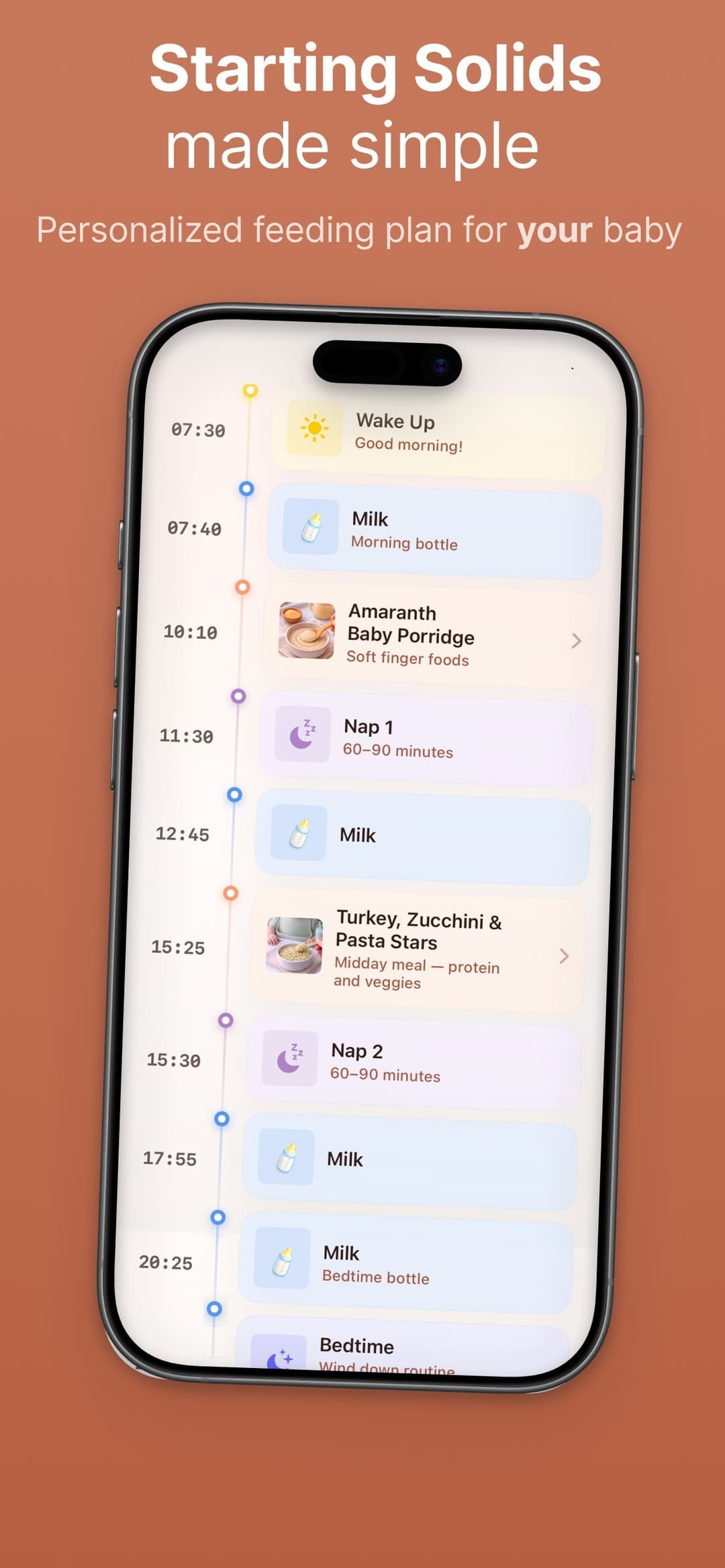
Example 7 Month Baby Feeding Schedule
- 7:00 - Milk feed
- 9:30 - Breakfast (solid meal)
- 12:00 - Milk feed
- 14:30 - Lunch (solid meal)
- 17:00 - Milk feed
- 18:30 - Milk feed before bed
At seven months, breastmilk or formula still provides most of the nutrition. Two solid meals per day help babies explore textures and flavors.
Compare with the 6 month feeding schedule and the 8 month feeding schedule as your baby grows.
Simple Meal Ideas for a 7 Month Old
- • Oatmeal with mashed fruit
- • Scrambled egg with avocado
- • Soft sweet potato wedges
- • Yogurt with mashed banana
- • Steamed vegetables with soft grains
Continue offering soft, graspable foods. See the baby led weaning food list and how to cut food for BLW.
verifiedSources & References
This guide is informed by current guidelines from leading health organizations:
Frequently Asked Questions
What should a 6 month old eat in a day?
At around 6 months babies usually drink breast milk or formula while gradually trying small amounts of solid foods once or twice per day.
How many meals should a 6 month old have?
Many babies start with one or two small meals daily while continuing regular milk feeds.
How much solid food should babies eat?
When starting solids babies may eat only a few spoonfuls. Intake increases gradually as they learn to chew and swallow.
Do babies still need milk after starting solids?
Breast milk or formula remains the main source of nutrition during the first year even after solids are introduced.
What is a typical baby feeding schedule?
A baby feeding schedule often includes several milk feeds and one or more small meals depending on age.
When do babies start eating three meals a day?
Many babies progress to three meals per day sometime between 9 and 12 months as their appetite and skills develop.
Should I feed my baby on a schedule or on demand?
A loose schedule with meals roughly tied to family mealtimes works well for most babies, while milk feeds can stay more responsive. Watch hunger and fullness cues rather than enforcing fixed quantities.
How long after milk should I offer solids?
Many parents offer solids about 30 to 60 minutes after a milk feed so the baby is not too hungry or too full. Adjust timing based on your baby's mood and routine.
Can I give my baby snacks between meals?
From around 9 to 12 months, small snacks between meals can help babies meet their growing energy needs. Choose simple whole foods such as fruit, soft vegetables, or yogurt.
What does a 6 month old feeding schedule with solids and formula look like?
A typical 6-month schedule has 4-5 milk feeds (breast or formula) plus 1-2 small solid meals. For example: 7am milk, 9am solids, 11am milk, 1pm milk, 3pm solids, 5pm milk, 7pm milk before bed. Milk still provides most of baby's calories at this stage.
What does a 7 month old feeding schedule with solids and formula look like?
At 7 months most babies do 4 milk feeds and 2 solid meals. Example: 7am milk, 8:30am breakfast solids, 11am milk, 1pm lunch solids, 3:30pm milk, 6pm small solids and milk before bed. Total 24-32 oz of milk per day.
What does an 8 month old feeding schedule look like?
8-month-olds typically eat 3 solid meals plus 4 milk feeds (24-30 oz total). Schedule: 7am milk and breakfast, 10am milk, 12pm lunch, 2pm milk, 4pm small snack, 5:30pm dinner, 7pm milk before bed.
How many oz of formula should a 6 month old drink per day?
Most 6-month-olds drink about 24-32 oz (700-950 ml) of formula or breast milk per day across 4-5 feeds. As solids increase between 8-12 months, milk intake gradually drops to about 16-24 oz per day.
How long should I wait between solid feeds?
Most babies eat solids every 3-4 hours during the day, mirroring family meal patterns. Don't worry about precise gaps — follow hunger cues. A predictable rhythm of breakfast, lunch, and dinner helps babies recognize hunger and fullness.
What time should I feed my baby solids?
Mid-morning (around 9am) is a popular first solid meal because babies are alert and hungry but not overtired. Once on 2-3 meals, anchor solids to family mealtimes — typically 8am, 12pm, and 5-6pm. Avoid solids within 30 minutes of bedtime.
Can a baby eat too much solid food?
Babies are good at self-regulating in the first year. Stop offering when your baby turns away, closes their mouth, or pushes the spoon away. If a baby consistently overeats and milk feeds drop sharply, talk to your pediatrician.
Should I drop a milk feed when my baby starts solids?
Not at first. Solids complement milk in the first year — they don't replace it. Most babies naturally drop a milk feed between 9-12 months as solids increase. Let your baby lead; never force-drop a feed.
What if my baby is not eating enough solids?
It is normal for new eaters to take only a few spoonfuls. Offer solids consistently 1-3 times per day, vary textures and flavors, and keep meals positive. Most babies eat more by 8-9 months as skills develop. Talk to your pediatrician if growth slows.
Make Starting Solids Simple
Nibli helps parents confidently introduce new foods and build healthy eating habits from the very beginning.
Try Nibli today to get your personalized feeding schedule.