Foods to Avoid for Babies
Last updated April 2026
When babies start eating solid foods, parents often wonder which foods are safe and which foods should be avoided. While many healthy foods can be introduced around six months, some foods are not recommended for babies because they may pose choking risks or are not suitable for infants.
Understanding which foods to avoid helps keep mealtimes safe and enjoyable. This guide explains the most common foods to avoid for babies, along with safer alternatives when introducing solids.
Foods That Can Be Choking Hazards
Babies are still learning to chew and swallow food, so certain foods can be choking hazards if they are not prepared properly.
Foods that may pose choking risks include:
- • whole grapes
- • whole nuts
- • popcorn
- • raw hard vegetables
- • chunks of hard fruit
These foods are small, round, or hard, which can make them difficult for babies to chew.
Instead, foods should be prepared in soft textures and appropriate shapes. Learn more about safe food preparation here: how to cut food for baby-led weaning.
Honey
Honey should not be given to babies under one year old.
This is because honey may contain bacteria that can cause infant botulism, which is rare but serious for young babies.
After the first birthday, honey can usually be introduced safely as part of a balanced diet.
Whole Nuts
Whole nuts are not safe for babies because they can easily cause choking.
However, nut butters can sometimes be introduced in small amounts when thinned with yogurt, milk, or water to create a smooth texture. Nut butters are often used when introducing common allergens.
You can learn more about introducing allergens here: baby allergen introduction guide.
Hard Raw Vegetables
Raw vegetables such as carrots or apples can be too hard for babies to chew safely.
Instead, vegetables should be:
- • steamed
- • roasted
- • cooked until soft
Soft cooked vegetables are easier for babies to mash with their gums.
Sugary and Highly Processed Foods
Babies do not need added sugar or heavily processed foods.
Examples include:
- • candy
- • sugary snacks
- • sweetened drinks
- • heavily salted foods
Offering simple whole foods helps babies develop healthy eating habits.
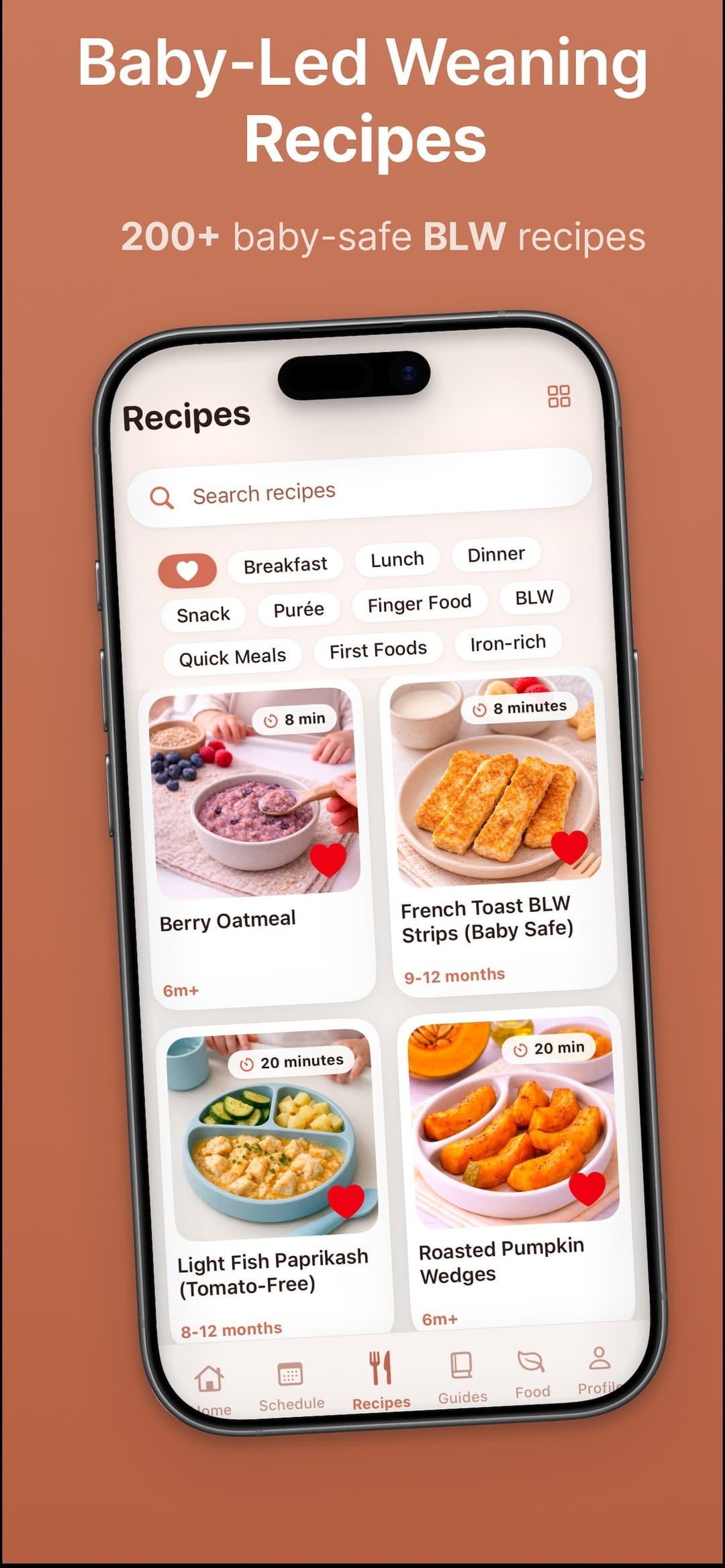
You can explore healthy baby recipes here: baby-led weaning recipes.
Foods That Require Special Preparation
Some foods are healthy for babies but require safe preparation.
Examples include:
- • grapes → cut into small pieces
- • blueberries → lightly smashed
- • cherry tomatoes → cut into small pieces
Preparation is especially important when following baby led weaning.
Learn safe preparation here: how to cut food for baby-led weaning.
Safer Alternatives for Babies
Instead of unsafe foods, offer baby-friendly options such as:
- • avocado slices
- • banana sticks
- • roasted sweet potato
- • steamed broccoli
- • soft mango
You can find more beginner foods here: first foods for baby.
verifiedSources & References
This guide is informed by current guidelines from leading health organizations:
Frequently Asked Questions
What foods should babies avoid when starting solids?
Babies should avoid foods that pose choking risks or are not recommended for infants, such as whole nuts, honey, popcorn, and hard raw vegetables.
Why can't babies eat honey?
Honey should not be given to babies under one year old because it may contain bacteria that infants cannot safely handle.
Are grapes safe for babies?
Whole grapes can be choking hazards for babies. Grapes should be cut into small pieces before serving.
Can babies eat nuts?
Whole nuts are not safe for babies because they can cause choking. Nut butters may sometimes be introduced when prepared safely.
Are sugary foods bad for babies?
Babies do not need added sugar in their diet. Offering simple whole foods helps babies develop healthy eating habits.
Can babies have salt?
Babies under 12 months should have less than 1 g of salt per day (0.4 g sodium). Their kidneys can't process more. Avoid added salt in cooking, processed foods, salty cheeses, and broths. Read labels - many baby-marketed products contain hidden salt.
When can babies have cow milk?
Cow's milk as a drink should wait until 12 months - it lacks iron and is too high in protein and minerals for young kidneys. Small amounts in cooking (yogurt, cheese sauces, oatmeal) from 6 months are fine. After 12 months, limit to 16-20 oz per day.
Can babies eat raw fish or sushi?
No. Raw fish, raw shellfish, and undercooked seafood pose bacterial and parasite risks for babies. All fish and seafood should be cooked to 145°F (63°C) before serving. Wait until at least age 5 for raw fish.
What fruits should babies avoid?
Avoid whole grapes, cherry tomatoes, blueberries (without modification - quarter or squish), unripe fruits (too firm to mash), and citrus before 6 months (acid can irritate sensitive skin around the mouth - not an allergen issue).
Are processed baby snacks safe?
Many commercial baby snacks (puffs, biscuits) are technically safe but contain low-value calories, added sugars, and salt. Use them occasionally; whole foods are nutritionally better. Read labels carefully - "organic" or "natural" claims do not equal "healthy".
Can babies eat chocolate?
Limit chocolate before age 2 due to added sugar, caffeine, and theobromine content. Small tastes are not harmful, but regular chocolate displaces nutritious calories and shapes a sweet tooth. Wait until at least 12 months for first taste, then keep occasional.
Keep Mealtimes Safe with Nibli
Nibli helps you prepare foods safely with cutting guides, personalized feeding schedules, and baby-friendly recipes.
Try Nibli today to start your baby's food journey with confidence.