Baby Feeding Schedule (6–12 Months)
Last updated May 2026
Starting solids can make daily feeding feel confusing.
How many meals should your baby have? When should you introduce snacks? And what foods should you offer first? If you're starting solids, see our guide to first foods for babies or jump to daily meal ideas below.
The good news is that babies don't need a complicated plan. A simple daily rhythm of milk feeds and solid meals helps babies explore new foods while still getting the nutrition they need.
Below is a simple feeding schedule to guide you through the starting solids stage.
Quick Answer: Baby Feeding Schedule
Most babies between 6 and 12 months follow a gradual progression.
6–7 months
- • 1 solid meal per day
- • Breastmilk or formula remains the main nutrition source
8–9 months
- • 2 solid meals per day
- • Milk feeds continue throughout the day
10–12 months
- • 3 meals per day
- • Optional snack
- • Milk feeds continue but gradually reduce
Every baby develops differently, so these schedules are only guidelines.
Example Baby Feeding Schedule (6 Months)
At 6 months, solids are mostly about exploring textures and flavors.
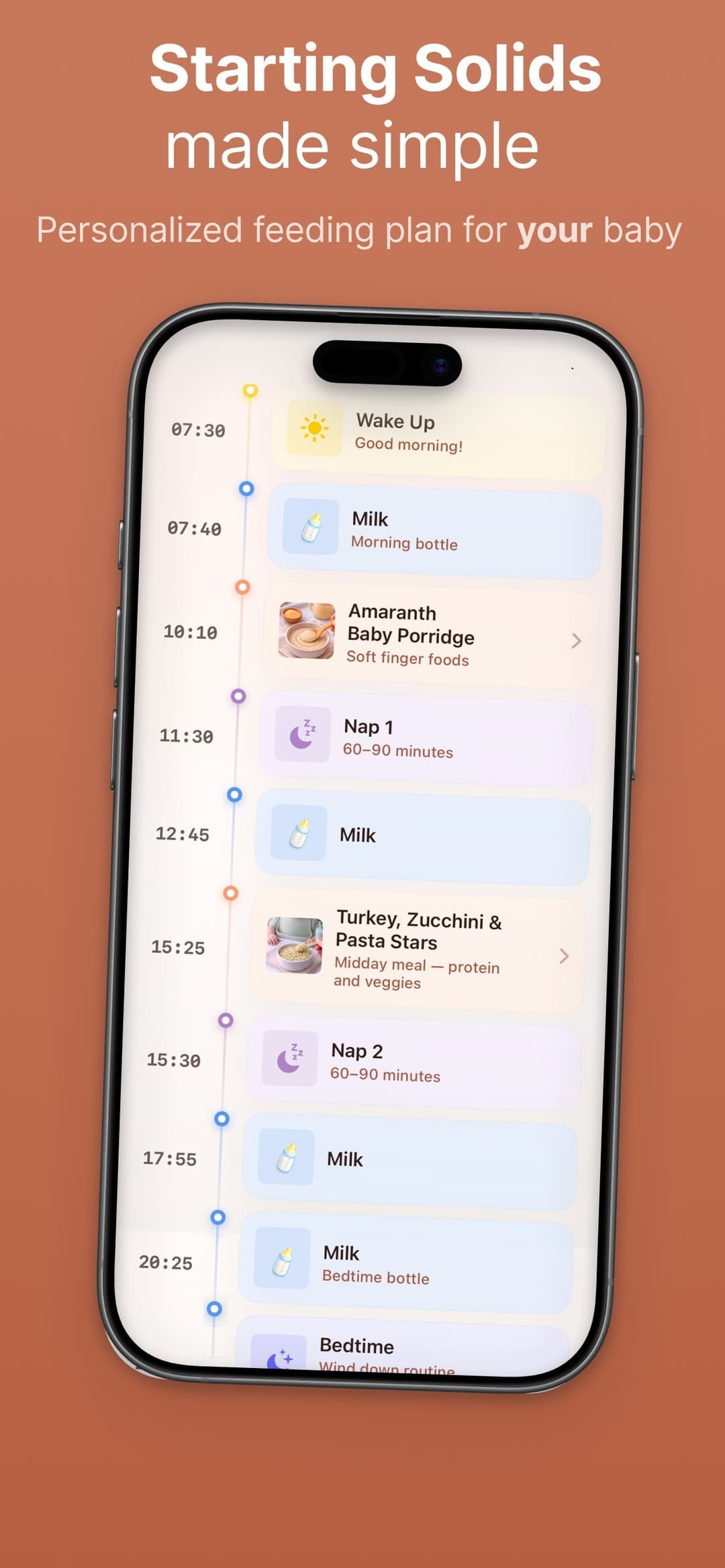
Example day:
- 7:00 – Milk feed
- 9:30 – Solid meal (first foods)
- 12:00 – Milk feed
- 15:00 – Milk feed
- 18:00 – Milk feed
Solid meals can include foods like:
- • mashed avocado
- • soft sweet potato
- • banana
- • oatmeal
- • yogurt
Start with small amounts and let your baby explore. For more ideas, see our first foods for babies and BLW breakfast ideas.
Example Feeding Schedule (8–9 Months)
As babies get more comfortable with food, you can add a second meal.
Example day:
- 7:00 – Milk feed
- 9:00 – Breakfast
- 12:00 – Milk feed
- 13:00 – Lunch
- 16:00 – Milk feed
- 19:00 – Milk feed
At this stage babies can eat a wider range of foods including:
- • soft fruits
- • vegetables
- • eggs
- • yogurt
- • toast fingers
- • pasta
- • soft meat or fish
Example Feeding Schedule (10–12 Months)
By this stage many babies eat three meals per day.
Example schedule:
- 7:00 – Breakfast
- 10:00 – Milk feed
- 12:30 – Lunch
- 15:30 – Snack
- 18:00 – Dinner
- 19:30 – Milk feed
Meals should include a mix of:
- • vegetables
- • fruits
- • protein foods
- • healthy fats
- • grains
What Should My Baby Eat Each Day?
A balanced day of eating might look like this:
Breakfast
• oatmeal with fruit
Lunch
• soft vegetables with shredded chicken
Dinner
• pasta with vegetables
Snack
• yogurt or fruit
Babies don't need perfectly balanced meals every time - variety across the week matters more.
Tips for Feeding Babies Starting Solids
Follow your baby's cues
Babies are naturally good at regulating hunger. Let them decide how much to eat.
Offer iron-rich foods
Iron becomes especially important after 6 months. Examples include:
- • meat
- • lentils
- • beans
- • eggs
- • iron-fortified cereals
Introduce allergens early
Foods like peanut, egg, and yogurt can usually be introduced early in safe forms.
Focus on texture progression
Move gradually from mashed foods to soft finger foods. Learn how to cut food for baby-led weaning to prepare foods safely at each stage.
What Do AAP, WHO, and NHS Say About Starting Solids?
Major health authorities largely agree on starting solids around 6 months, but recommendations differ slightly on first foods and allergen timing. Here is what each says.
| Authority | When to start | First foods | Allergens |
|---|---|---|---|
| AAP (American Academy of Pediatrics) | Around 6 months | No specific food order; iron-rich foods recommended | Introduce around 6 months; earlier (4–6 mo) for high-risk babies |
| WHO (World Health Organization) | 6 months exclusively breastfed | Iron-rich foods first (meat, lentils, fortified cereal) | Introduce alongside other complementary foods from 6 months |
| NHS (United Kingdom) | Around 6 months | Vegetables and fruits suggested first; iron-rich foods soon after | Introduce one at a time from 6 months |
| EFSA / EAACI (Europe) | Between 4–6 months at the earliest, by 6 months | Iron-rich foods early in introduction | Early introduction (4–6 months) reduces allergy risk |
All major authorities now support early, sustained allergen introduction. Always check with your own pediatrician for advice specific to your baby.
How Much Milk vs Solids Should My Baby Have by Age?
Milk (breast or formula) provides most calories in the first year. Solids gradually increase but don't replace milk until after 12 months.
| Age | Milk per day | Solid meals | Snacks |
|---|---|---|---|
| 6 months | 24–32 oz / 700–950 ml | 1–2 small meals | None |
| 7 months | 24–30 oz / 700–890 ml | 2 meals | Optional taste |
| 8 months | 24–30 oz / 700–890 ml | 3 meals | 1 small snack |
| 9 months | 20–28 oz / 590–830 ml | 3 meals | 1–2 small snacks |
| 10–12 months | 16–24 oz / 470–700 ml | 3 meals | 1–2 small snacks |
| 12+ months | 16–20 oz / 470–590 ml whole cow's milk possible | 3 meals | 2 snacks |
These are typical ranges, not targets. Healthy babies vary. Watch hunger and fullness cues - baby's appetite leads.
Common Feeding Schedule Problems and What to Do
If feeding feels stuck or stressful, here are common issues and the practical fix for each.
My baby refuses solids at 6 months. What now?
Try a relaxed approach - offer 1 spoonful at family meal times for 1–2 weeks without pressure. Try different foods (sweet vegetables, ripe fruit, fortified cereal). Some babies need 8–15 exposures to accept new foods. Check readiness signs: head control, sitting with support, mouth opening for spoon. Talk to your pediatrician if no progress by 7–8 months.
My baby eats solids but milk feeds dropped sharply. Should I worry?
Babies should still drink at least 16–20 oz (500–600 ml) of breast milk or formula at 9–12 months. If milk is dropping below this, offer milk before solids, increase milk feed frequency, and reduce solid portions slightly. Talk to your pediatrician if growth slows.
My 8 month old wakes up hungry at night. Should I add a feed?
Night feeds usually drop with solids, but a temporary night feed during a growth spurt is fine. Increase iron-rich foods at dinner and add a protein-rich snack before bed. Most babies don't need night feeds nutritionally after 9–10 months. Talk to your pediatrician if hunger persists.
How do I keep my baby on schedule when traveling?
Stick to milk feed timing as much as possible - solids can flex. Pack familiar foods in safe containers. Hotel-room friendly options: oatmeal, fortified cereal, banana, yogurt pouches, soft fruit, hard-boiled eggs, cheese cubes. Reset to home schedule within 2–3 days of return.
My baby eats too quickly and seems to overeat. Is that OK?
Some babies eat fast - slow it down by offering finger foods (which take longer to chew), pausing between spoonfuls, and serving smaller portions you can refill. Watch fullness cues (turning away, mouth closed). True overfeeding is rare in self-fed babies under 1 year.
My baby refuses the spoon but takes finger foods. Can I skip purées?
Yes - many babies skip spoon-fed purées and do well on baby-led weaning. Offer iron-rich finger foods (meat strips, soft scrambled egg, lentil patties), softly cooked vegetables, soft fruit, and toast fingers with avocado. Make sure all pieces are mashable between two fingers.
Should I wake my baby for a feed?
Generally no - sleep takes priority and most healthy babies wake when hungry. Exceptions: newborns under 4 weeks, babies with poor weight gain, or after a long sleep that's pushed milk intake far below normal. Talk to your pediatrician if you're concerned about intake.
Common Feeding Schedule Mistakes to Avoid
Even well-intentioned routines can backfire. Here are the most common pitfalls and how to fix them.
Forcing the spoon when baby turns away
Pressure breaks trust around food. When your baby turns away or closes their mouth, end the meal calmly. Try again at the next meal - don't fight at this one.
Offering juice or sugary drinks instead of water
Babies under 12 months don't need juice. From 6 months, plain water in an open or straw cup with meals is enough alongside milk. Juice fills bellies without nutrients and shapes a sweet preference.
Replacing milk feeds before 9 months
Milk should still cover most calories until 9 months. Dropping a milk feed too early can short calorie intake. Let your baby's appetite lead - if solids increase naturally, milk drops naturally.
Sticking to bland purées past 9 months
By 9 months babies need progressively textured foods (mashed, soft chunks, finger foods) to develop chewing. Staying on smooth purées too long is linked to texture aversion later.
Adding salt, sugar, or honey
Avoid added salt before 12 months (kidneys can't process it), added sugar before age 2 (shapes preferences), and honey before 12 months (botulism risk). Use herbs and spices for flavor instead.
Skipping iron-rich foods
Iron stores deplete around 6 months. Aim for an iron source at 1–2 meals daily - meat, fish, eggs, lentils, beans, fortified cereal. Pair with vitamin C foods to boost absorption.
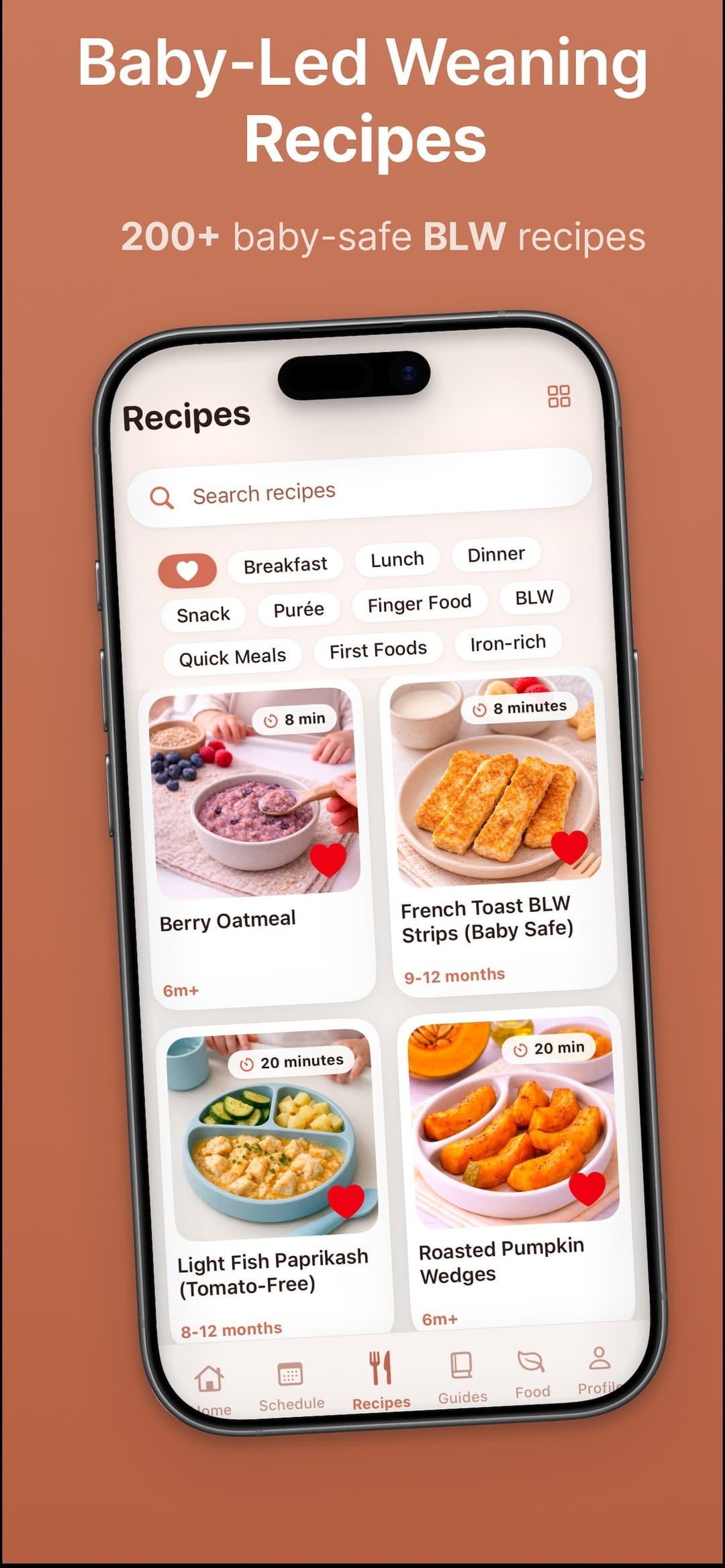
How Nibli Helps Parents Plan Baby Meals
Many parents struggle with one question:
“What should my baby eat today?”
Nibli removes that guesswork.
The app creates a personalized feeding schedule based on your baby's age and development stage, helping you:
- •know what meals to offer each day
- •discover baby-safe recipes
- •learn how to safely prepare foods
- •track foods your baby has tried
Instead of planning every meal yourself, Nibli gives you a clear daily plan.
verifiedSources & References
This guide is informed by current guidelines from leading health organizations:
Frequently Asked Questions
What should a 6 month old eat in a day?
At around 6 months babies usually drink breast milk or formula while gradually trying small amounts of solid foods once or twice per day.
How many meals should a 6 month old have?
Many babies start with one or two small meals daily while continuing regular milk feeds.
How much solid food should babies eat?
When starting solids babies may eat only a few spoonfuls. Intake increases gradually as they learn to chew and swallow.
Do babies still need milk after starting solids?
Breast milk or formula remains the main source of nutrition during the first year even after solids are introduced.
What is a typical baby feeding schedule?
A baby feeding schedule often includes several milk feeds and one or more small meals depending on age.
When do babies start eating three meals a day?
Many babies progress to three meals per day sometime between 9 and 12 months as their appetite and skills develop.
Should I feed my baby on a schedule or on demand?
A loose schedule with meals roughly tied to family mealtimes works well for most babies, while milk feeds can stay more responsive. Watch hunger and fullness cues rather than enforcing fixed quantities.
How long after milk should I offer solids?
Many parents offer solids about 30 to 60 minutes after a milk feed so the baby is not too hungry or too full. Adjust timing based on your baby's mood and routine.
Can I give my baby snacks between meals?
From around 9 to 12 months, small snacks between meals can help babies meet their growing energy needs. Choose simple whole foods such as fruit, soft vegetables, or yogurt.
What does a 6 month old feeding schedule with solids and formula look like?
A typical 6-month schedule has 4-5 milk feeds (breast or formula) plus 1-2 small solid meals. For example: 7am milk, 9am solids, 11am milk, 1pm milk, 3pm solids, 5pm milk, 7pm milk before bed. Milk still provides most of baby's calories at this stage.
What does a 7 month old feeding schedule with solids and formula look like?
At 7 months most babies do 4 milk feeds and 2 solid meals. Example: 7am milk, 8:30am breakfast solids, 11am milk, 1pm lunch solids, 3:30pm milk, 6pm small solids and milk before bed. Total 24-32 oz of milk per day.
What does an 8 month old feeding schedule look like?
8-month-olds typically eat 3 solid meals plus 4 milk feeds (24-30 oz total). Schedule: 7am milk and breakfast, 10am milk, 12pm lunch, 2pm milk, 4pm small snack, 5:30pm dinner, 7pm milk before bed.
How many oz of formula should a 6 month old drink per day?
Most 6-month-olds drink about 24-32 oz (700-950 ml) of formula or breast milk per day across 4-5 feeds. As solids increase between 8-12 months, milk intake gradually drops to about 16-24 oz per day.
How long should I wait between solid feeds?
Most babies eat solids every 3-4 hours during the day, mirroring family meal patterns. Don't worry about precise gaps - follow hunger cues. A predictable rhythm of breakfast, lunch, and dinner helps babies recognize hunger and fullness.
What time should I feed my baby solids?
Mid-morning (around 9am) is a popular first solid meal because babies are alert and hungry but not overtired. Once on 2-3 meals, anchor solids to family mealtimes - typically 8am, 12pm, and 5-6pm. Avoid solids within 30 minutes of bedtime.
Can a baby eat too much solid food?
Babies are good at self-regulating in the first year. Stop offering when your baby turns away, closes their mouth, or pushes the spoon away. If a baby consistently overeats and milk feeds drop sharply, talk to your pediatrician.
Should I drop a milk feed when my baby starts solids?
Not at first. Solids complement milk in the first year - they don't replace it. Most babies naturally drop a milk feed between 9-12 months as solids increase. Let your baby lead; never force-drop a feed.
What if my baby is not eating enough solids?
It is normal for new eaters to take only a few spoonfuls. Offer solids consistently 1-3 times per day, vary textures and flavors, and keep meals positive. Most babies eat more by 8-9 months as skills develop. Talk to your pediatrician if growth slows.
Plan Your Baby's Meals With Confidence
Nibli creates a personalized starting solids plan so you always know what to feed your baby next.
Try Nibli today to start building your baby's feeding routine.