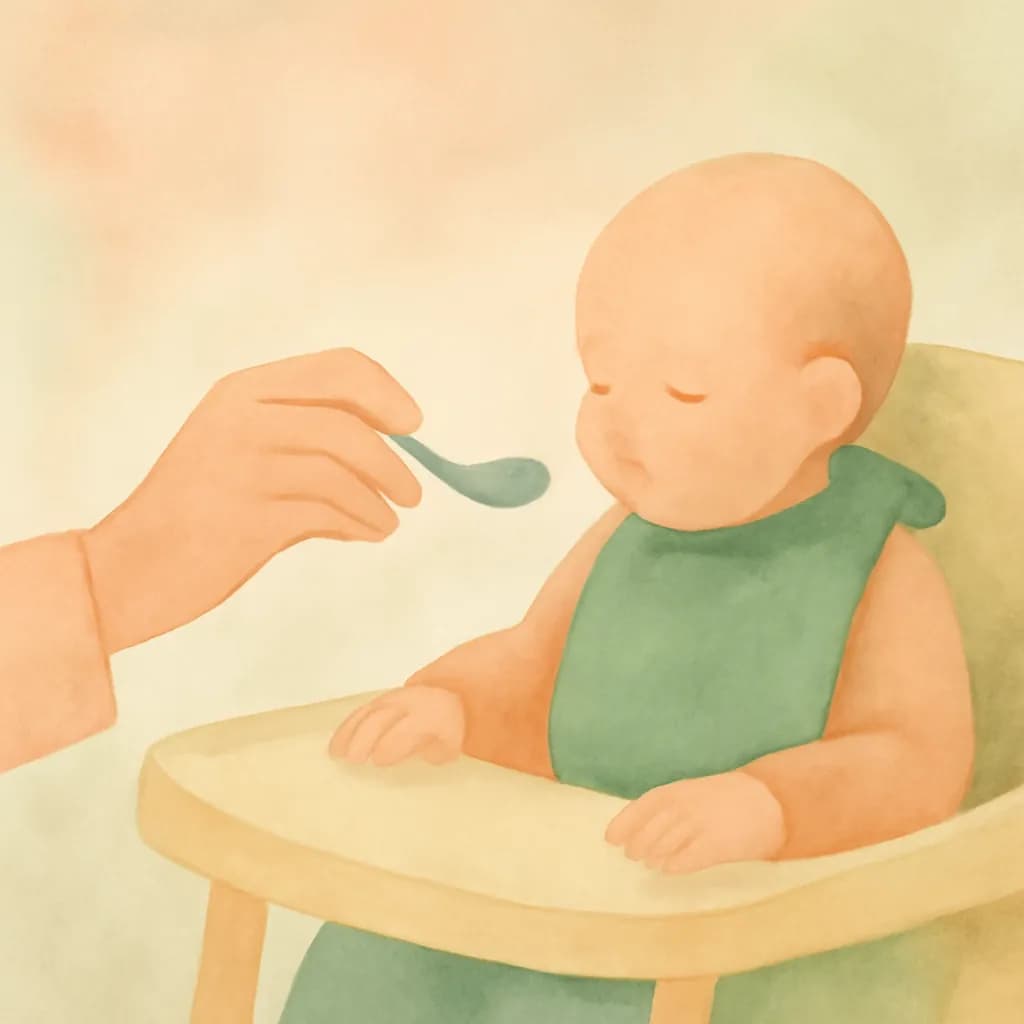
Is this normal?
Yes - refusing solids in the first weeks is one of the most common worries in baby feeding, and almost always temporary. Babies are still learning what food is, how to move it around their mouth, and how to swallow. The early weeks are about exploration, not nutrition.
Through about 9-10 months, breast milk or formula provides nearly all of your baby's calories and nutrients. Solid food at this stage is practice. If your baby is growing, has wet diapers, and is generally happy and alert, a slow start to solids is not a problem to solve - it's a phase to ride out gently.
Why your baby might be refusing solids
- Not yet developmentally ready - some babies need a few extra weeks even past 6 months.
- Tongue-thrust reflex still strong - food gets pushed back out automatically.
- Pressure or stress at mealtimes - babies sense urgency and resist.
- Unfamiliar texture or temperature - new sensations can be overwhelming.
- Tiredness, teething, or feeling unwell that day.
- A full milk feed right before solids - leaves no appetite for food.
When to call your pediatrician
- Weight loss or no weight gain across 2-3 weeks.
- Lethargy, unusual sleepiness, or significant change in behavior.
- Repeated vomiting after foods (not just spit-up).
- Signs of dehydration: fewer wet diapers, dry mouth, sunken soft spot.
- Persistent total refusal beyond 3-4 weeks despite a relaxed approach.
- Any signs of an allergic reaction during introductions.
What to try
Reduce pressure and lower expectations
Aim for 'baby looks at food' as a successful meal in the first weeks. No coaxing, no airplane spoons, no praise for bites. The less it feels like a performance, the more likely your baby will engage.
Offer small portions
Put 1-2 small pieces or 1-2 teaspoons of food on the tray - not a full plate. A loaded plate can overwhelm. You can always offer more if your baby wants it.
Eat together at the same time
Sit down with your own food and eat in front of your baby. Modeling is one of the most effective tools - babies learn that eating is normal and enjoyable by watching you.
Vary textures and presentations
If purees aren't landing, try soft finger-food strips. If finger foods are being thrown, try a pre-loaded spoon. Some babies just have strong preferences from day one - follow what works.
Check the seating and timing
Make sure baby is sitting fully upright in a high chair (not reclined) and is alert but not hungry-cranky. Try offering food about 30-60 minutes after a milk feed - hungry enough to be interested, not so hungry they're falling apart.
Keep meals short
10-15 minutes is plenty. End the meal calmly when your baby signals done (turning head, throwing food, pushing away) - don't extend it hoping for more bites. Forcing usually backfires.
Wait, then re-offer
Some babies need 10-15 exposures to a food before accepting it. Keep offering the same foods every few days without pressure. Refusal today doesn't mean refusal forever.
Frequently asked questions
How long can a baby refuse solids before it's a problem?
In the first weeks of solids, refusal is normal and not a problem at all - milk covers nutrition through about 9-10 months. If total refusal continues beyond 3-4 weeks despite a relaxed approach, or if your baby is losing weight, lethargic, or showing other concerning signs, check in with your pediatrician.
Should I force my baby to eat solids?
No - forcing is counterproductive and damages the eating relationship. It teaches babies that mealtimes are stressful battles, and many babies who are forced develop longer-term feeding aversions. Trust your baby's appetite cues; offer food regularly, but let your baby decide whether and how much to eat.
Will refusing solids cause iron deficiency?
Iron stores from birth start running low around 6 months, so iron-rich foods become important. If your baby is mostly refusing solids past 7-8 months, talk to your pediatrician - they may recommend iron-fortified cereals, an iron supplement, or specific iron-rich foods to focus on once your baby is eating more.
What if my baby only wants milk?
Through 9-10 months this is fine - milk is still the primary food. After that, you can space milk feeds further from solid meals so baby is hungry for solids, but never withhold milk to force solids. Keep offering food in a low-pressure way alongside milk feeds.
Is it OK to skip a meal if my baby refuses?
Yes - end the meal calmly and try again at the next regular mealtime. Don't snack-bridge with extra milk or different foods to compensate; that can train babies to hold out for preferred items. Consistent meal opportunities matter more than any single meal.
Can teething cause my baby to refuse solids?
Yes - sore gums can make eating uncomfortable, especially harder textures. Try cooler foods (chilled cucumber spears, plain yogurt, soft fruit), softer textures, or a teething ring before meals. The refusal usually passes within a few days as the tooth comes through.
Should I switch to purees if finger foods aren't working?
Absolutely - or vice versa. Some babies prefer one over the other from day one. There's no rule that says BLW is better than purees or that you have to pick one method. Many families combine both, and offering whatever works is the right answer.
Get unstuck + a plan for your baby
Personalized, age-aware troubleshooting plus a feeding schedule and recipes built around your baby, so mealtimes get easier from here.
verifiedSources & References
This guide is informed by current guidelines from leading health organizations: