How to start baby-led weaning, step by step
Last updated October 2026
Around six months, start baby-led weaning when your baby shows feeding-readiness skills: supported upright sitting, steady head control, interest in bringing food to the mouth and the ability to swallow it. Let your baby explore appropriately prepared foods while you stay close; usual breast milk or infant formula feeds continue.
Baby-led weaning (BLW) usually means encouraging self-feeding from the beginning of complementary feeding. In practice, many families combine finger foods and purées or offer a preloaded spoon. Self-feeding itself does not guarantee protection from choking: food preparation, upright seating, developmental ability and continuous supervision matter.
Start with the next useful step
Choose the path that fits your baby
There's no requirement to follow one feeding philosophy perfectly. Focus on developmental readiness, a calm first experience and foods prepared for the child in front of you.
Ready to explore food
If your baby has good head control, can sit with support, reaches for food and is able to swallow, choose a relaxed moment. Have your own meal nearby so you can model eating without putting food into your baby's mouth.
Interested, but not quite ready
A birthday alone doesn't make a baby ready. Keep their usual breast milk or infant formula feeds, and discuss readiness or development concerns with your pediatric clinician, especially after premature birth.
Already using purées
You can keep spoon-feeding and also allow practice with appropriately prepared finger foods or a preloaded spoon. Self-feeding does not require abandoning purées or forcing a completely separate menu.
Your first sitting: a five-point checklist
Choose a calm time
A tired, very hungry or distressed baby may not be interested. There's no prescribed start hour or need to skip a normal milk feed.
Check the eating position
Use supported, upright seating appropriate for your child. Stay within arm's reach and supervise throughout the food opportunity.
Prepare a small amount
Start with appropriately textured food, including iron-containing choices over time. Follow food-specific preparation guidance rather than relying on an age label or a one-size-fits-all cut.
Let your baby lead
Place food within reach and let them decide whether to look, touch, taste or stop. Do not put pieces into their mouth or praise/pressure them to finish.
Respond, then stop
Follow fullness cues, continue regular milk feeding and try again another day. Seek individualized advice for persistent feeding difficulty, coughing or choking.
Continue with the baby-led weaning food list, read the gagging vs choking guide, or get individual steps from the food preparation guide. For introducing potential allergens, use the allergen guide.
Source context: CDC guidance on developmental readiness and choking precautions; NHS guidance on finger foods and combining self-feeding with spoon-feeding. This is an editorial checklist, not a medical assessment.
What happens after the first sitting?
A few touches or tastes count as exploring food. Continue normal responsive milk feeding, repeat familiar options without pressure and add variety gradually, including iron-containing foods. There is no requirement to complete a food checklist in a week.
Need a realistic routine?
Start with an example six-month day or browse the age directory.
Looking for more food ideas?
Use the food list, then check the food-specific prep before offering it.
Unsure about progress?
Read about gagging versus choking or texture development. Ask your clinician about persistent swallowing difficulties.
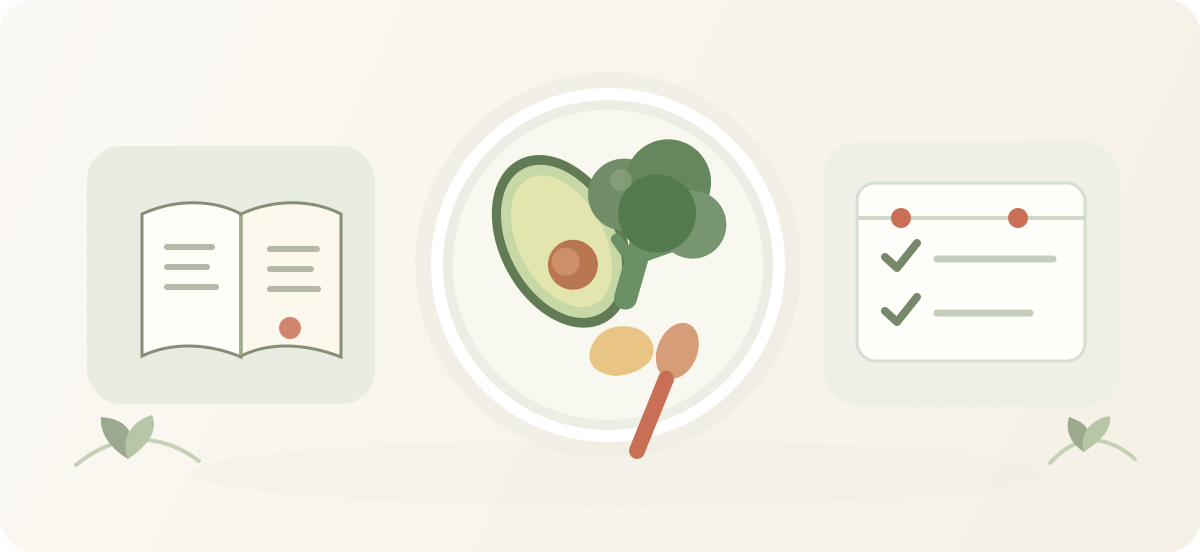
What baby-led weaning means in practice
Baby-led weaning is one way to introduce solid foods while letting your baby practice picking food up and bringing it to their own mouth. It is not a contest to avoid spoons or a set of age-labelled cutting shapes; the goal is independent exploration with foods that match your baby's abilities.
In practice:
- • you decide what goes on the tray; your baby decides what to pick up and how much to eat
- • your baby sits upright in a high chair, ideally at the table while you eat
- • breast milk or first infant formula carries on as before
- • early meals are practice, so very little may be swallowed at first
You can combine methods. Smooth or mashed food on a spoon, a preloaded spoon for self-feeding, and suitable finger foods can all fit the same journey. What matters is that your baby can manage the food offered, receives adequate nutrition over time, and is never pressured to eat.
Step 1: Check your baby is ready
Age alone isn't enough. The CDC and NHS recommend introducing solids around six months and watching for developmental skills rather than treating a birthday as permission to offer finger foods.
Your baby can:
- • stay in a sitting position and hold their head steady
- • look at food, pick it up and put it in their mouth by themselves
- • swallow food rather than spit it back out
Night waking or chewing on fingers is not proof of readiness. If your baby was born prematurely, has delayed head or trunk control, or has a swallowing concern, talk with your pediatric clinician about individual timing before starting.
You can also explore first foods for babies.
Step 2: Choose a few soft first foods
Choose foods with a texture your baby can manage, often soft-cooked or mashable at the beginning. Include iron-containing choices such as soft beans, lentils, meat and iron-fortified cereal as eating progresses. A food group or age number alone cannot tell you whether a particular cut is safe.
Examples to investigate in the food-specific preparation guide (texture and shape must be checked for your child):
- • broccoli or cauliflower florets, steamed until soft
- • sweet potato, carrot or parsnip batons, cooked until soft
- • ripe avocado, sliced
- • ripe banana, cut into finger-length pieces
- • fully cooked egg, served in a texture your baby can manage; take individual allergy precautions where needed
- • thoroughly cooked, tender meat with all bones removed, prepared for demonstrated eating skills rather than a standard strip size
- • lightly toasted bread fingers
- • pasteurized plain dairy such as unsweetened yogurt where appropriate; check allergen exposure and avoid hard or large cheese chunks
For more foods by food group, see our baby-led weaning food list.
Step 3: Make every piece soft and the right shape
The NHS offers a long, graspable finger-food shape as one early example, but preparation varies significantly with the food's firmness, shape and the baby's skills. No single finger-width rule makes every food safe. For clinical reassurance or difficulties progressing, seek professional advice.
Before offering an individual food, check all of the following rather than assuming every food needs the same cut:
- • easy to grasp or self-feed at the child's actual skill level; a long shape is not universally suitable
- • suitable in texture; firm fruits and vegetables often need cooking until thoroughly soft
- • free of bones, pips, stones and tough skin
- • not a whole small round food such as a grape or cherry tomato; consult a food-specific cutting guide rather than relying on quartering as a guarantee
For example:
- • broccoli: cook until thoroughly soft and assess the particular piece and eating skills before offering
- • apple: cook firm apple until thoroughly soft; hard raw apple pieces are choking hazards
- • sweet potato: cook until easily mashable; the appropriate presentation depends on actual texture and feeding skills
- • chicken: cook thoroughly and remove bones and skin; avoid tough or large chunks and follow food-specific guidance
- • toast: lightly toast and cut into narrow fingers
For shapes and sizes food by food, see our guide on how to cut food for baby-led weaning.
Step 4: Start with one small meal a day
At first, one small food opportunity is a reasonable example, not a limit or a required daily dose. Choose a calm time around usual milk feeds; offer a few tastes and stop when your baby is no longer interested. NHS (UK) materials commonly suggest extra milk rather than snacks before 12 months, while US AAP sample routines may include snacks later in infancy. Neither is a rigid universal meal timetable.
A morning plate
- • porridge made with your baby's usual milk, thick enough to scoop with fingers or a preloaded spoon
- • soft pear slices, cooked if the pear is firm
A midday plate
- • steamed broccoli florets
- • avocado slices
An evening plate
- • sweet potato batons, cooked soft
- • hard-boiled egg wedges
You can find more ideas here: baby breakfast recipes, baby lunch recipes.
Step 5: Stay with your baby, and avoid these common mistakes
Several common problems are avoidable with the right setup, realistic expectations and food-specific preparation. Watch for:
- • leaving your baby alone with food. Keep them sitting upright in a high chair with the harness fastened, and stay with them for the whole meal
- • food that is too hard, small or round, such as raw apple, whole nuts or whole grapes
- • putting food into your baby's mouth. In baby-led weaning, let them pick it up
- • judging the meal by how much is eaten. The NHS says it may take 10 tries or more for a baby to get used to a new food
- • cutting milk feeds to make room for solids. Breast milk or formula still provides most of your baby's energy at first
- • adding salt, sugar, stock cubes or honey
Gagging may occur while babies develop eating skills, but choking cannot be classified by noise alone: ineffective coughing, inability to cry or breathe, and unusual silence can be urgent warning signs. If a child cannot breathe effectively, call emergency services and follow appropriate infant choking first aid immediately.
Sources & References
This guide is informed by current guidelines from leading health organizations:
- ●NHS - Your Baby's First Solid Foods NHS
- ●NHS - Feeding your baby from around 6 months NHS
- ●NHS - Feeding your baby: 7 to 9 months NHS
- ●NHS - Preparing Food Safely for Babies NHS
- ●NHS Best Start in Life - Choking and gagging on food NHS
- ●NHS - How to stop a child from choking NHS
- ●WHO - Complementary Feeding WHO
- ●AAP - Starting Solid Foods AAP

Frequently Asked Questions
When should babies start baby-led weaning?
Around 6 months, when your baby shows all three readiness signs together: sitting with a steady head, picking food up and bringing it to their mouth, and swallowing food rather than spitting it back out. Chewing fists or waking at night are normal and not signs of readiness on their own.
What foods should I start with?
Soft-cooked vegetable sticks, slices of soft fruit, avocado pieces and other foods soft enough to squash between your finger and thumb, plus iron-rich options such as egg, fish or meat strips.
Is baby-led weaning more likely to cause choking?
The NHS says there's no more risk of choking when a baby feeds themselves than when they're fed with a spoon. Keep your baby sitting upright, always supervise, avoid hard and small round foods, and know the first-aid steps. Call your local emergency number if your baby is choking and can't cough, cry or breathe effectively, and start baby choking first aid straight away.
Can I combine BLW with purées?
Yes. Many families combine finger foods with spoon-feeding; there's no right or wrong way.
How much should my baby eat at first?
Only small amounts. At the beginning, getting used to eating matters more than quantity; breast milk or infant formula provides most of their nutrition.
Do babies need teeth for baby-led weaning?
No. Babies use their gums to squash soft foods before teeth appear, which is why early finger foods need to be soft.
How fast does it progress?
It varies. From about 7 months most babies move towards 3 meals a day, and by around 10 to 12 months they're usually managing mashed, lumpy, chopped and finger foods at 3 meals a day alongside their milk.
What equipment do I need?
A highchair that keeps your baby sitting upright with good support, a bib, a plate or bowl, a soft spoon if you're also spoon-feeding, and an open or free-flow cup for sips of water with meals.
Plan first meals with Nibli
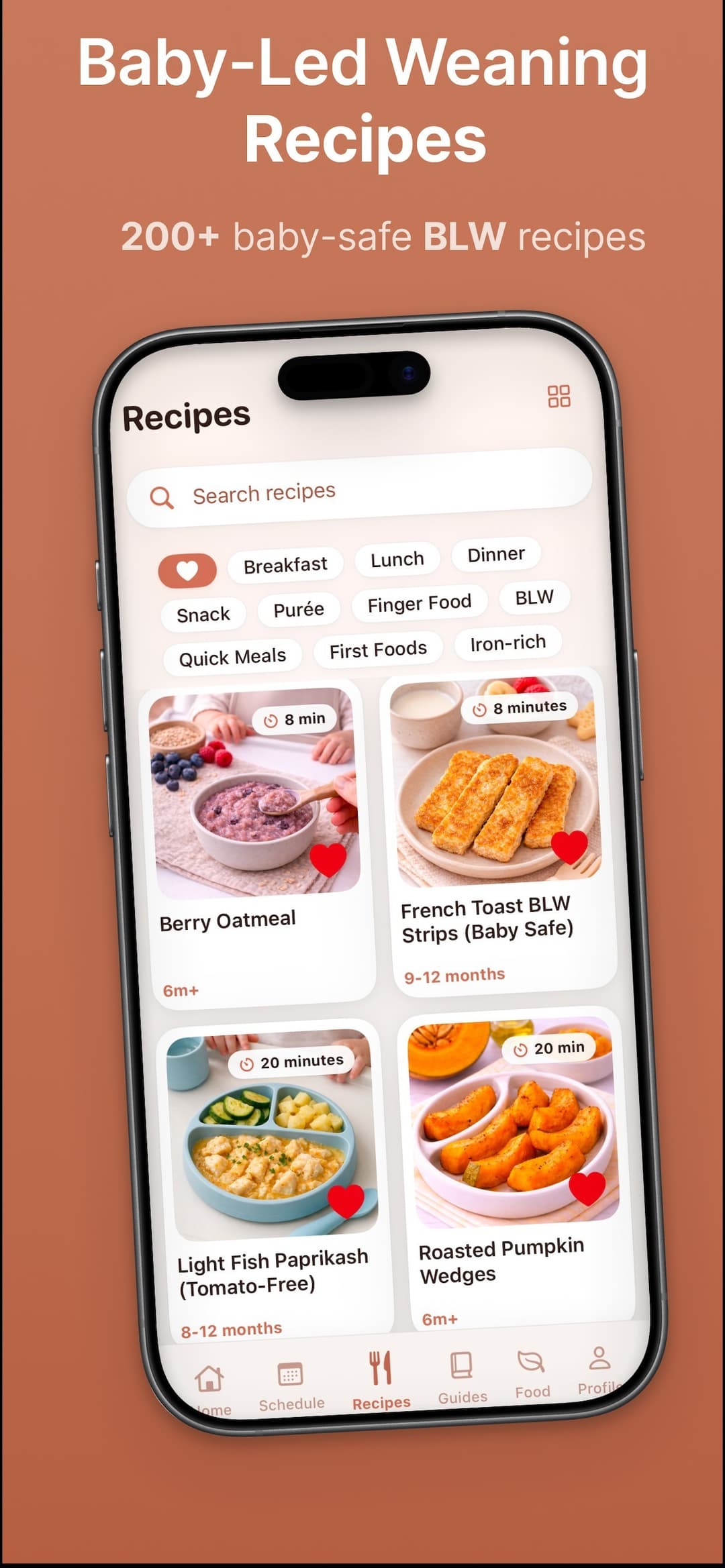
Nibli is an iPhone app that suggests a daily feeding plan, offers meal ideas for baby-led weaning and spoon-feeding, and tracks the foods your baby has tried.
Free to download; Premium unlocks personalised plans, recipes and tracking.
Get Nibli for iPhone