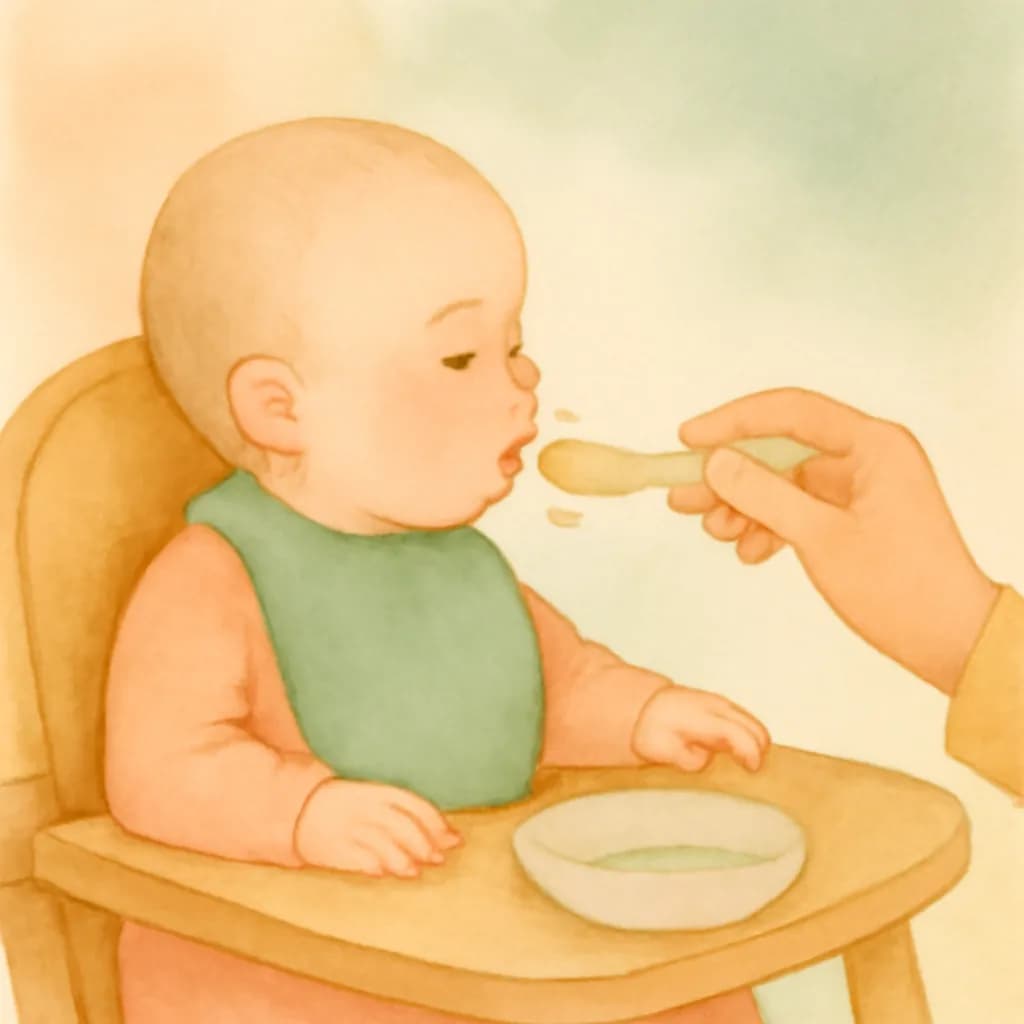
Is this normal?
Yes - completely. The tongue-thrust reflex (which pushes things out of the mouth to prevent choking on small objects) is still active in many 6-month-olds and fades over weeks. Beyond that reflex, babies are also exploring textures, flavors, and the new mechanics of moving food around their mouth - much of which involves food coming back out.
Spitting out food doesn't mean your baby dislikes it, won't ever eat it, or has a problem. Most babies need 10-15 exposures to a new food before accepting it. The journey from spit-out to swallowed is usually slow and bumpy - and entirely normal.
Why babies spit out food
- Tongue-thrust reflex still present - automatic, not chosen.
- Exploring texture - food in, food out, food in again is sensory learning.
- Genuinely doesn't like the flavor or texture this time.
- Oral motor skills still developing - moving food back is a learned skill.
- Already full - spitting can be a 'done' signal as much as a reaction.
- Curious about cause and effect - they spit and you react, fascinating.
When to call your pediatrician
- Weight loss or no weight gain across 2-3 weeks.
- Persistent total refusal beyond a few weeks despite a relaxed approach.
- Signs of an allergic reaction during introductions: hives, swelling, vomiting, breathing changes.
- Coughing, choking, or apparent oral discomfort with every meal.
- Vomiting (not just spit-out) that doesn't resolve.
- Concerns about oral motor development or texture aversion that don't improve over time.
What to try
Don't force or scoop food back in
If food comes out, leave it. Never try to push spit-out food back in - it teaches babies that mealtimes are battles and damages trust. Wipe and move on calmly.
Try different textures
If purees are coming straight out, try soft finger foods or vice versa. Babies have surprisingly strong texture preferences early on. The food that gets swallowed is the right one for now.
Keep offering the same food repeatedly
Research shows it can take 10-15 exposures before a baby accepts a flavor. Offer the same vegetable or protein every few days, in small portions, without pressure. Today's spit-out is often next week's favorite.
Offer small amounts
Put 1-2 small pieces or 1-2 teaspoons on the tray. Big plates are overwhelming and create more spit-out. You can always offer more if your baby wants it.
Stay neutral and low-pressure
Don't praise eating or react negatively to spitting. Babies are watching for cues, and either reaction can shape behavior. Your job is to offer good food calmly and let your baby decide.
Keep modeling at family meals
Sit down with your own food and eat alongside your baby. Watching you enjoy a food without pressure is one of the strongest ways to build acceptance over time.
End the meal calmly when baby signals done
Persistent spitting can mean 'I'm done.' Wipe up, take baby down, and move on without making it a big deal. The next meal opportunity comes soon.
Frequently asked questions
Is my baby spitting out food because they hate it?
Not necessarily - young babies don't yet have strong food opinions, and spitting is mostly mechanical (tongue-thrust reflex) or exploratory. Even when there's a flavor preference, many babies need 10-15 exposures before they accept a new food. Keep offering calmly without pressure.
How many times should I offer a rejected food?
Research suggests 10-15 exposures over weeks before declaring a true rejection. Offer the same food every few days in small amounts, without pressure or comment. Pair it with foods your baby already eats. Most foods eventually land if you keep offering without stress.
Should I hide vegetables in foods my baby likes?
It's fine to mix vegetables into foods your baby enjoys (purees, oatmeal, pasta sauces) for nutritional balance, but also offer them visibly so your baby learns to recognize and accept the actual vegetable. Both approaches together build long-term variety.
Why does my baby spit out food they ate before?
Babies' acceptance of foods is non-linear - a food eaten happily last week can be rejected this week, and back to favorite next week. This is incredibly normal. Keep offering, don't escalate, and trust the average over time.
Is spitting up the same as spitting out food?
No - spitting up usually means small amounts of milk or food coming back up after a meal, often related to reflux. Spitting out is voluntary mouth-to-tray rejection. Spit-up that becomes forceful, large-volume, or includes weight loss should be checked by a pediatrician.
Could spitting out food mean my baby has a tongue-tie?
Tongue-tie can affect oral motor function and contribute to feeding challenges. If your baby seems to struggle mechanically with food (food persistently pools in the front of the mouth, can't move it back, or struggled with breast/bottle earlier), ask your pediatrician about an evaluation.
When should I worry about persistent food refusal?
Most spitting and refusal is normal and resolves over weeks. Worry signs include weight loss, lethargy, no progression in textures over months, every meal seeming distressing, or signs of allergic reactions. If your gut tells you something is off, talk to your pediatrician - early support is always reasonable.
Get unstuck + a plan for your baby
Personalized, age-aware troubleshooting plus a feeding schedule and recipes built around your baby, so mealtimes get easier from here.
verifiedSources & References
This guide is informed by current guidelines from leading health organizations: