Blueberries for Babies: When and How to Serve Them
Last updated October 2026
Yes, babies can try blueberries when ready for solid food, usually around 6 months. A whole blueberry is small and round, which makes it a choking hazard, so change its shape before serving. Mash soft berries or prepare suitable non-round pieces, checking firmness as well as your baby's eating skills.
Quick answer
Most babies start solid foods at about 6 months, once they can sit with support, control their head and neck, and show other signs that they are ready to eat. Blueberries can be one of the fruits offered at this stage; they do not need to be delayed simply because they are berries.

How to prepare blueberries for your baby
Starting solids: wash ripe berries and mash them completely with a fork or spoon. Check for any intact firm berries before mixing into a food your child already manages.
Picking up pieces: flatten soft berries or cut appropriately into non-round pieces; NHS guidance describes quartering small round fruits. Inspect the actual berry's skin and firmness.
Later stages: continue adjusting the serving shape to your child's ability instead of treating nine, twelve or twenty-four months as automatic permission for whole blueberries.
Frozen fruit: follow product handling instructions, thaw or cook if necessary and do not give hard whole frozen berries. Mash or reshape after softening.
The right shape and size depend on your baby's eating skills, not on age alone. Step-by-step preparation: See blueberry preparation examples
Also check how to cut food for baby-led weaning for general BLW cutting tips.
When can babies start eating blueberries?
Choose soft berries and prepare them for your child's current ability to handle food. Do not assume that a baby can safely manage a whole blueberry at 9, 12 or 24 months simply because their age has changed.
Blueberries can be offered simply with soft porridge or another familiar food. You do not need a special recipe or a promise that any specific cut is universally safe. A pincer grasp and a first birthday do not, by themselves, make a whole berry suitable.
See our first foods for baby guide for more ideas.
Points worth remembering
Whole, small round berries can obstruct a young child's airway. Mash, flatten or cut them into appropriate non-round pieces instead.
Check that the berry is genuinely soft; frozen, firm or dried berries need particular care rather than being served as whole pieces.
Seat your child upright for food and supervise every meal. Never rely on preparation alone to eliminate choking risk.
Wash fresh blueberries before preparing them, and check recipe additions such as yoghurt or oats for ingredients your baby has not yet tried.
The examples are general information, not a test of whether an individual child can safely manage a particular piece. Seek individualized advice if feeding or swallowing is a concern.
Blueberry recipes you can make
View all recipes
Blueberry Oat Pancake Strips

Blueberry Purée
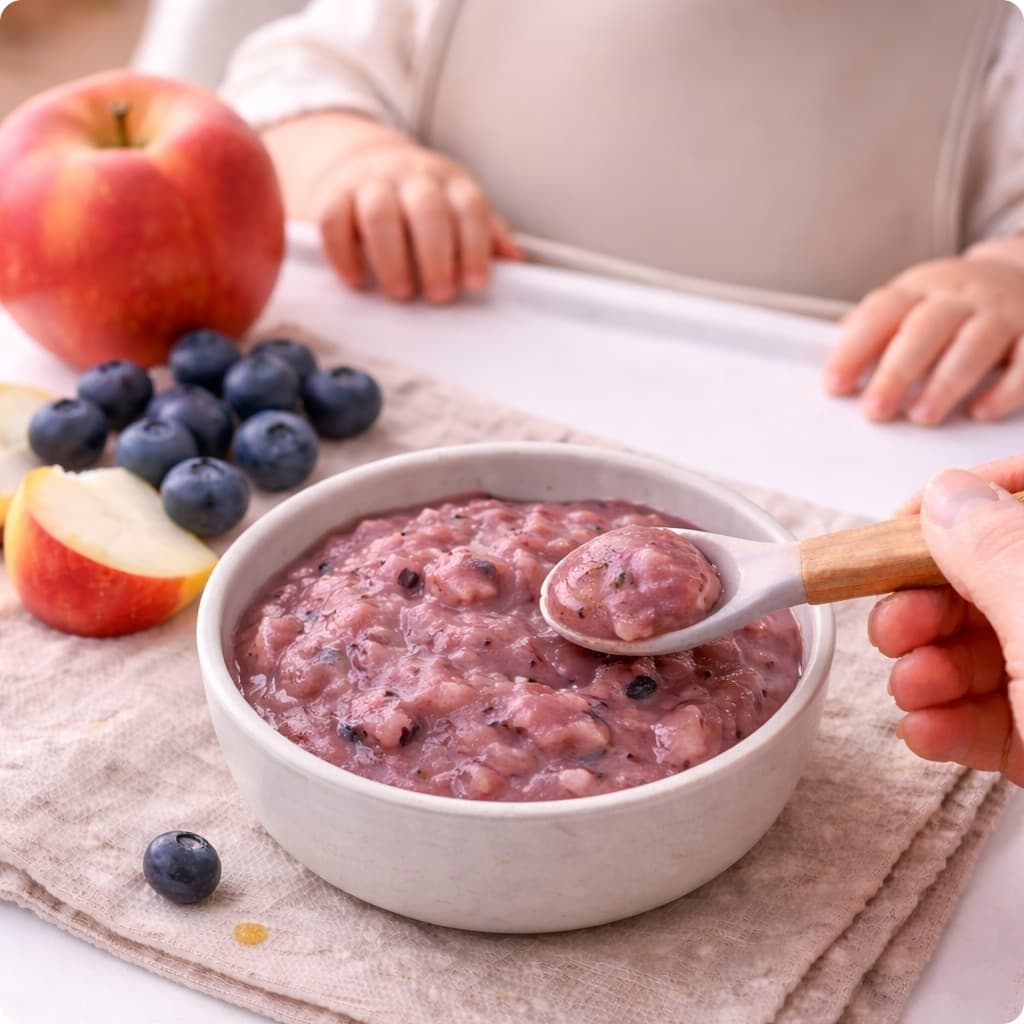
Apple & Blueberry Mash

Berry Oatmeal
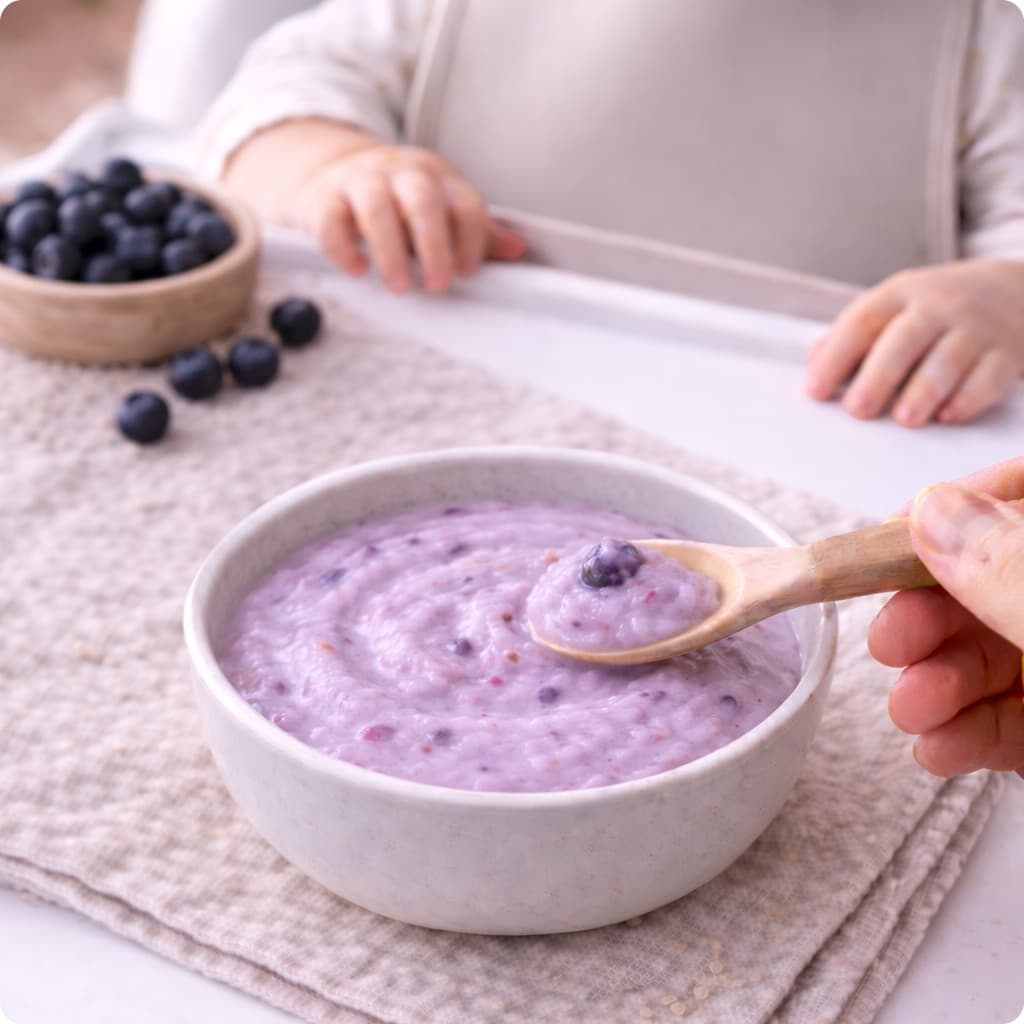
Berry Greek Yogurt
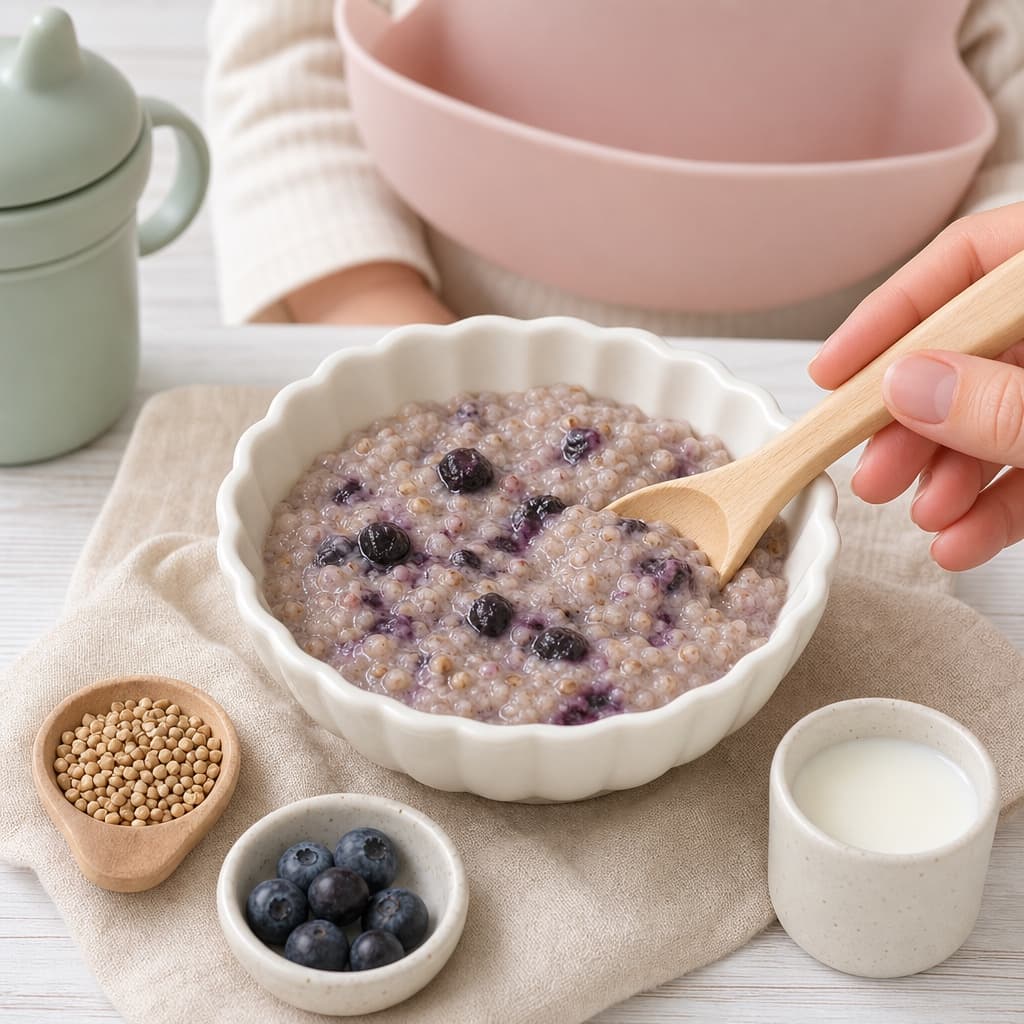
Blueberry Buckwheat Porridge
See all blueberries recipes for babies. Explore baby breakfast recipes, baby-led weaning recipes and first foods for baby for more ideas.
Related Guides
Frequently Asked Questions
Can babies eat whole blueberries at twelve months?
A birthday does not make whole round fruit automatically suitable. Continue reshaping and checking firmness for the child's skills.
Can I serve frozen blueberries?
Do not serve frozen berries hard and whole. Thaw or cook according to product instructions, then prepare a manageable soft texture.
Do blueberry skins and seeds need to be removed?
Usually the more important step is changing the whole berry's round shape and checking that it is soft. If texture is difficult for your child, mash or seek tailored advice.
Sources & References
This guide is informed by current guidelines from leading health organizations:
- ●CDC — Choking Hazards (reviewed March 2026) CDC
- ●NHS - Preparing Food Safely for Babies NHS
- ●CDC - When, What, and How to Introduce Solid Foods CDC
