Baby Feeding Schedules by Age (6 Months to Toddler)
Last updated May 2026
Clear, age-by-age plans for milk, meals, textures, and milestones.
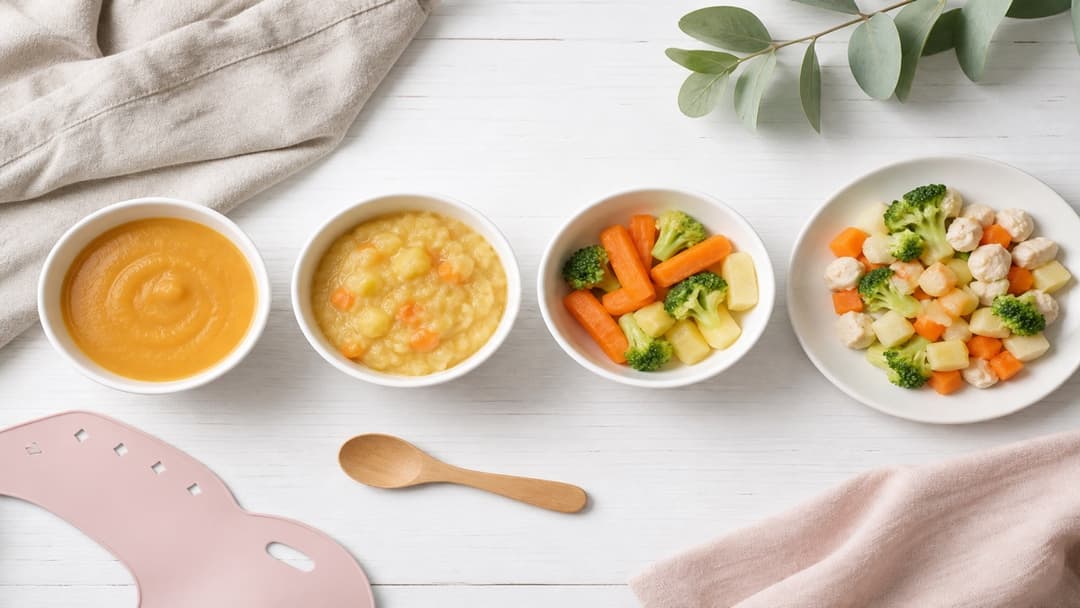
Starting solids is exciting-and confusing. How much milk should your baby have? When do meals increase? What textures are safe? This hub brings everything together in one place, from first tastes at 6 months through toddler routines.
Feeding needs change quickly in the first two years. As your baby grows, milk gradually makes room for solid meals, textures move from smooth to family foods, and self-feeding skills take off. Following an age-based plan helps you meet nutrition needs without guesswork.
Use this page to jump to your baby’s exact age, then follow the linked schedule for daily timing, portion ideas, and sample menus. All guidance aligns with major health bodies (WHO, AAP, NHS) and supports both spoon-feeding and baby-led weaning.
Complete roadmap from first tastes to toddler meals
Big-picture guide to milk, meals, textures, and transitions across ages.
- Milk/day
- Varies by age
- Solid meals
- 1–3+ meals/day
See how feeding evolves from milk-first to balanced family meals.
First solids: simple tastes and smooth textures
Begin with iron-rich foods alongside regular milk feeds.
- Milk/day
- 700–900 ml breast milk or formula
- Solid meals
- 1 small meal/day
Baby can sit with support and shows readiness for solids.
Building routine with two gentle meals daily
Increase variety and introduce slightly thicker textures.
- Milk/day
- 700–900 ml
- Solid meals
- 2 meals/day
Improved swallowing and interest in self-feeding.
Textures advance: mashed, soft finger foods begin
Encourage chewing skills and introduce soft finger foods.
- Milk/day
- 600–800 ml
- Solid meals
- 2–3 meals/day
Pincer grasp emerging; more independent eating.
Three meals and growing feeding independence
Balanced meals with proteins, grains, fruits, and vegetables.
- Milk/day
- 600–800 ml
- Solid meals
- 3 meals/day
Better hand control; enjoys self-feeding.
More texture, more variety, steady meal routine
Introduce chopped foods and shared family meals.
- Milk/day
- 500–700 ml
- Solid meals
- 3 meals + 1 snack
Chewing improves; eats a wider range of foods.
Transition period toward family-style eating patterns
Shift from milk-first to food-first routines.
- Milk/day
- 400–700 ml
- Solid meals
- 3 meals + 1–2 snacks
Meals become primary nutrition source over time.
Confident eating with meals and daily snacks
Offer diverse textures and balanced mini-meals.
- Milk/day
- 400–600 ml
- Solid meals
- 3 meals + 1–2 snacks
Strong self-feeding skills and appetite patterns.
One year: joining family meals more regularly
Transition to whole milk and structured meal times.
- Milk/day
- 350–500 ml
- Solid meals
- 3 meals + 2 snacks
Eats most family foods with minimal modification.
Toddler patterns begin with consistent meal rhythm
Regular meals and snacks support steady growth.
- Milk/day
- 300–450 ml
- Solid meals
- 3 meals + 2 snacks
Appetite fluctuates; independence increases.
Balanced eating with snacks and growing autonomy
Encourage variety while respecting preferences.
- Milk/day
- 300–400 ml
- Solid meals
- 3 meals + 2 snacks
Strong opinions about food; self-feeding mastered.
Flexible routines for busy, independent little eaters
Family-style eating with structure and flexibility.
- Milk/day
- 250–400 ml
- Solid meals
- 3 meals + 2 snacks
Eats independently with a varied, balanced diet.
Quick Comparison: Milk vs Solids by Age
See how milk, meals, and textures evolve month by month.
| Age | Milk/day | Meals | Snacks | Texture |
|---|---|---|---|---|
| 6m | 700–900 ml | 1/day | 0 | Smooth purée |
| 7m | 700–900 ml | 2/day | 0 | Thick purée |
| 8m | 600–800 ml | 2–3/day | 0–1 | Mashed, soft lumps |
| 9m | 600–800 ml | 3/day | 0–1 | Soft finger foods |
| 10m | 500–700 ml | 3/day | 1 | Chopped soft foods |
| 11m | 400–600 ml | 3/day | 1–2 | Minced/chopped |
| 12m | 350–500 ml | 3/day | 2 | Family foods |
| 13m | 300–450 ml | 3/day | 2 | Family foods |
| 18m | 300–400 ml | 3/day | 2 | Family foods |
| 24m | 250–400 ml | 3/day | 2 | Family foods |
Principles Behind Every Nibli Schedule
These evidence-based ideas guide all feeding plans from 6 to 24 months.
Milk remains essential early on
Breast milk or formula provides most nutrition until around 9–12 months, then gradually decreases.
Iron-rich foods from the start
Introduce iron sources at 6 months to support brain development and prevent deficiency.
Texture progression builds skills
Move from purées to finger foods to support chewing, speech, and oral development.
Responsive feeding over rigid rules
Follow hunger and fullness cues rather than forcing fixed portions.
Allergens introduced early and safely
Introduce common allergens in age-appropriate forms to reduce allergy risk.
Consistency creates confident eaters
Predictable meal and snack times help regulate appetite and behavior.
Topics You'll Need Alongside the Schedule
First foods for baby
Best starter foods and how to introduce them.
Baby-led weaning food list
Safe finger foods by age.
Allergen introduction guide
How and when to introduce allergens safely.
Baby portion sizes
How much to serve at each age.
How to cut food safely
Reduce choking risk with proper cutting.
How to start baby-led weaning
Step-by-step guide for BLW beginners.
Foods to avoid
Key safety rules for under 1s and toddlers.
Iron-rich foods
Top foods to support healthy development.
Weekly baby meal plan
Simple, balanced meal planning ideas.
Snack ideas by age
Healthy snack options for every stage.
Frequently Asked Questions
When should I start a feeding schedule for my baby?
Around 6 months, when your baby shows readiness signs like sitting with support and good head control.
How much should a 6 month old eat per day?
Mostly milk (700–900 ml) plus one small solid meal focused on iron-rich foods.
When do babies move to 3 meals a day?
Typically around 8–9 months, depending on appetite and developmental readiness.
Do I reduce milk when starting solids?
Not immediately-milk remains the main nutrition source until closer to 9–12 months.
How many snacks should a baby have?
Snacks are usually introduced around 10–12 months, starting with one and increasing to two.
What is the right texture for each age?
Start with smooth purées, progress to mashed and soft lumps, then move to finger and family foods by 12 months.
Can I combine purées and baby-led weaning?
Yes, many families use a mixed approach combining spoon-feeding and self-feeding.
How do I know if my baby is eating enough?
Look for steady growth, wet diapers, and responsiveness to hunger/fullness cues rather than exact quantities.
When should babies eat the same food as the family?
Around 12 months, with appropriate modifications like low salt and safe textures.
What if my toddler refuses meals?
Keep a consistent schedule, offer variety, and avoid pressure-appetite fluctuations are normal.
verifiedSources & References
This guide is informed by current guidelines from leading health organizations:
Find your baby’s exact feeding plan by age now
Choose your baby’s age above to get a detailed daily schedule, portion guidance, and sample menus tailored to their stage. Take the guesswork out of feeding and feel confident at every step.