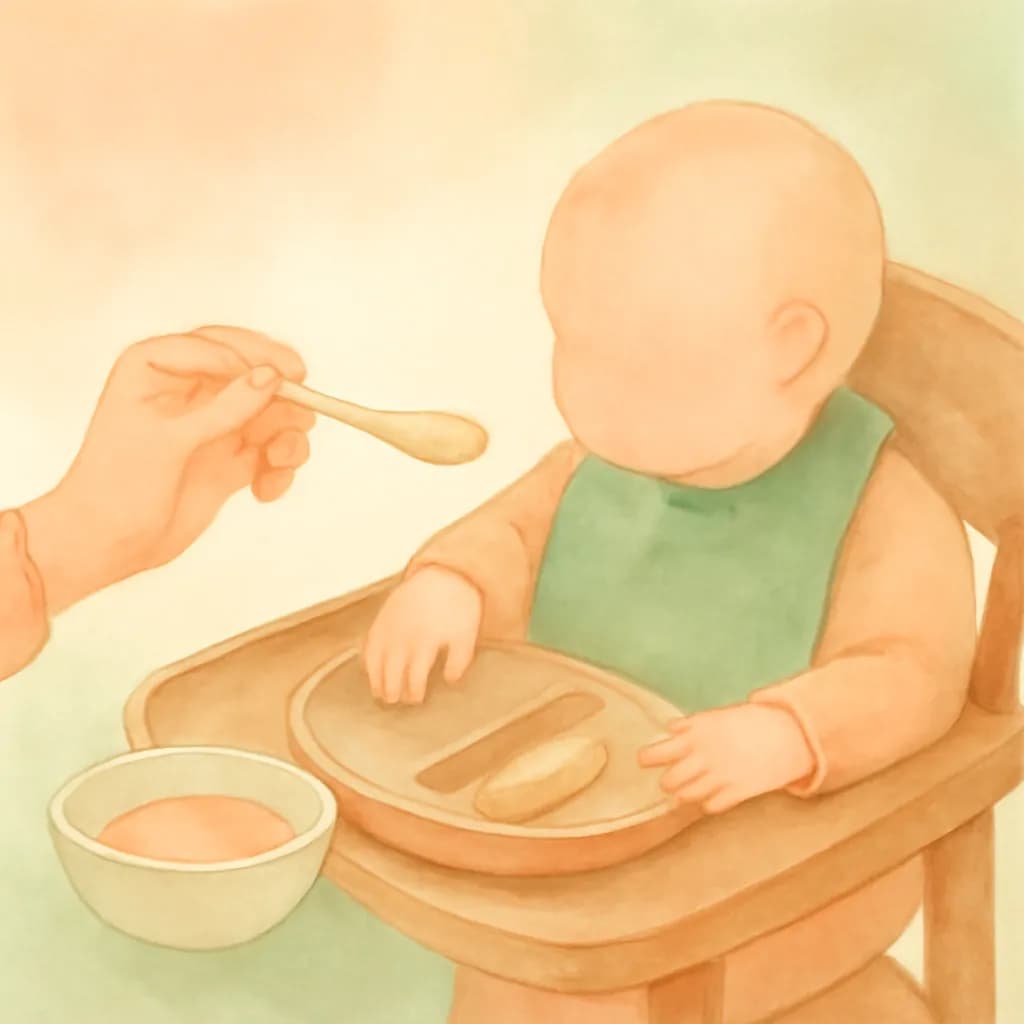
Quick answer: which is better?
Neither is objectively better. Studies looking at baby-led weaning vs traditional spoon-feeding show similar outcomes for nutrition, growth, and acceptance of varied foods by 12 months. The differences come down to texture exposure timing, parental comfort, and how mealtimes feel day to day.
Most babies do best with a flexible, mixed approach: soft finger foods alongside spoon-fed purees, adjusted to your baby's stage. You don't need to pick one and stick to it. Choose what feels manageable and sustainable for your family.
Key differences between BLW and purees
- BLW: baby self-feeds soft finger foods from the start (around 6 months). Builds chewing, hand-eye coordination, and self-regulation early.
- Purees: parent spoon-feeds smooth or mashed food, gradually progressing to lumps and finger foods. Easier portion control and less mess at first.
- Texture exposure: BLW jumps straight to varied textures; purees ease in stage by stage.
- Mess: BLW is messier early on; purees are tidier but can lead to texture aversion if the transition to lumps is delayed.
- Choking risk: studies show similar rates for both when foods are sized correctly and supervision is constant.
- Iron intake: purees with iron-fortified cereal or meat puree can deliver iron easily; BLW iron foods (meat strips, lentil patties) need more chewing skill.
- Mealtime feel: BLW lets baby eat with the family; purees can be slower but offer more bonding through spoon-feeding.
When to talk to your pediatrician
- Baby shows no readiness signs by 7-8 months.
- Persistent feeding difficulties: refuses both purees and finger foods.
- Choking events that are silent and require intervention.
- Weight loss or no weight gain over multiple weeks.
- Developmental concerns: limited head control, can't sit upright with support.
- Strong gag reflex that doesn't improve with practice over many weeks.
How to decide and start
Check readiness signs first
Either method requires the same readiness: stable head control, sitting with minimal support, interest in food, lost tongue-thrust reflex. Start when these appear, usually around 6 months.
Assess your comfort level
If watching your baby gag feels overwhelming, start with purees and add soft finger foods over weeks. If you'd rather avoid spoon-feeding battles, start with BLW. Your sustained calm at meals matters more than the method.
Try a mixed approach
Many families do both: a spoonful of yogurt or oatmeal alongside soft strips of banana or steamed sweet potato. This is normal and effective. There's no rule that you must pick one.
Sample a BLW meal
Examples: avocado strips, ripe banana spears, steamed broccoli florets, scrambled egg pieces, soft-cooked sweet potato wedges. Cut so baby can grip with a fist (about pinky-finger size).
Sample a puree meal
Examples: smooth pureed carrot or sweet potato, mashed banana, oatmeal with breast milk or formula, plain whole-milk yogurt, iron-fortified infant cereal mixed with milk.
Watch for what works for your baby
Some babies grab the spoon and feed themselves; others want to be fed. Some love textures; others prefer smooth. Adjust to what your baby leans toward - their preference is real information.
Don't worry about doing it right
By 12 months, almost all healthy babies are eating finger foods alongside the family. The path matters less than the destination. Stay relaxed, supervise every meal, and trust the process.
Frequently asked questions
Is BLW safer than purees?
Research shows similar choking rates between BLW and traditional purees when foods are sized correctly and babies are supervised. Risk comes from inappropriate shapes (whole grapes, hot dog rounds) and inattention, not the method itself. Both are safe with the right preparation.
Can I do BLW and purees together?
Yes - this is sometimes called 'combination feeding' or 'mixed approach' and is what most families actually do. Offer a few soft finger foods alongside spoon-fed purees at the same meal. There's no need to commit to one method exclusively.
Which method is better for picky eaters?
BLW exposes babies to varied textures earlier, which may reduce texture aversion later. But purees followed by a timely transition to lumps and finger foods (by 9 months) achieves the same. The biggest predictor of varied eating is repeated exposure without pressure, regardless of method.
Does BLW help babies regulate appetite better?
Some studies suggest babies who self-feed may regulate appetite more accurately because they control intake. Spoon-fed babies can also learn this if parents follow hunger and fullness cues rather than 'finishing the jar.' Either way, responsive feeding is what matters.
Will my baby get enough iron with BLW?
Yes, but you need to plan for it. Iron-rich BLW foods include soft-cooked meat strips, mashed beans, lentil patties, iron-fortified oatmeal, and tofu. Pair with vitamin C foods (strawberries, bell peppers) to boost absorption. If you're worried, talk to your pediatrician.
When should I start adding finger foods if I'm doing purees?
Start introducing soft finger foods alongside purees by 8-9 months at the latest. Delaying texture beyond 10 months can lead to texture aversion. Begin with very soft, melt-in-mouth options and progress gradually.
Start BLW with a plan for your baby
A step-by-step baby-led weaning plan, 350+ recipes, allergen tracking and cutting guides - all matched to your baby's age in the Nibli app.
verifiedSources & References
This guide is informed by current guidelines from leading health organizations: