When can babies eat yogurt?
Yogurt can be introduced from around 6 months, when babies start solids. Although plain cow's milk shouldn't replace breast milk or formula until 12 months, yogurt and cheese are fine earlier because the fermentation and culturing process changes the milk proteins and concentrates calcium.
Cow's milk protein is a top-9 allergen, so introduce a small spoonful of yogurt on its own and watch for reactions over the next few days before pairing with other new foods.
How to serve yogurt safely
For 6-9 month babies, offer plain whole-milk yogurt on a pre-loaded spoon, or let them dip safe finger foods (toast strips, soft fruit) into a small bowl. Pair with mashed fruit, smooth nut butter, or a sprinkle of cinnamon for flavour - no honey before 12 months and no added sugar.
For 9-12+ month babies, yogurt becomes a versatile base: mix into oatmeal, blend into smoothies, swirl with fruit puree, or freeze into baby-safe yogurt drops. Greek yogurt is fine and offers more protein, but choose plain.
Nutritional benefits for babies
- 💚Calcium and phosphorus support strong bones and teeth.
- 💚Protein supports muscle development and growth.
- 💚Live active cultures (probiotics) support gut health.
- 💚Vitamin B12 supports brain and nerve development.
Safety considerations
- ✓Cow's milk protein is a top-9 allergen - introduce on its own and watch for hives, vomiting, or eczema flare-ups.
- ✓Choose plain, unsweetened whole-milk yogurt - flavoured and 'baby' yogurts often contain added sugars.
- ✓Avoid honey-flavoured yogurt before 12 months due to infant botulism risk.
- ✓Skip low-fat or fat-free yogurt for babies under 2 - they need fats for brain development.
- ✓Look for 'live and active cultures' on the label for probiotic benefits.
Yogurt recipes for babies
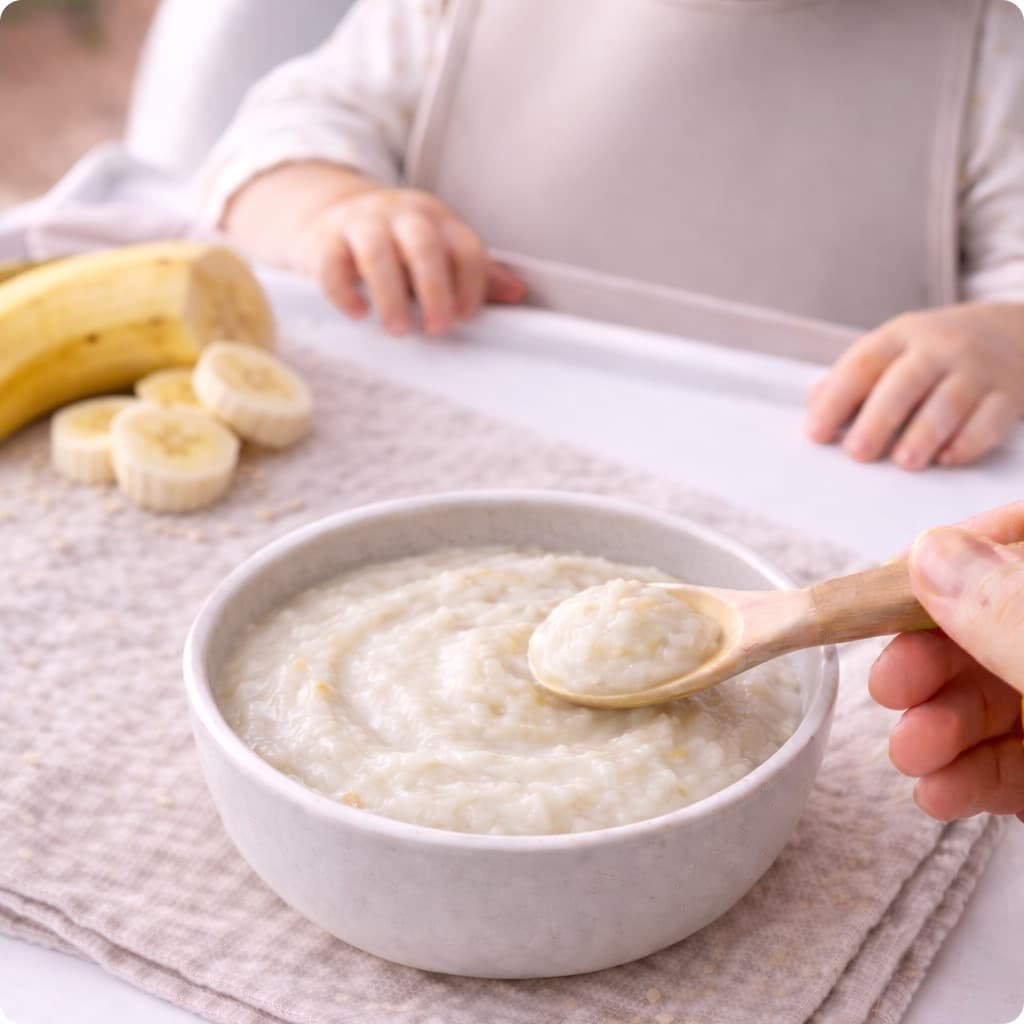
Banana Greek Yogurt
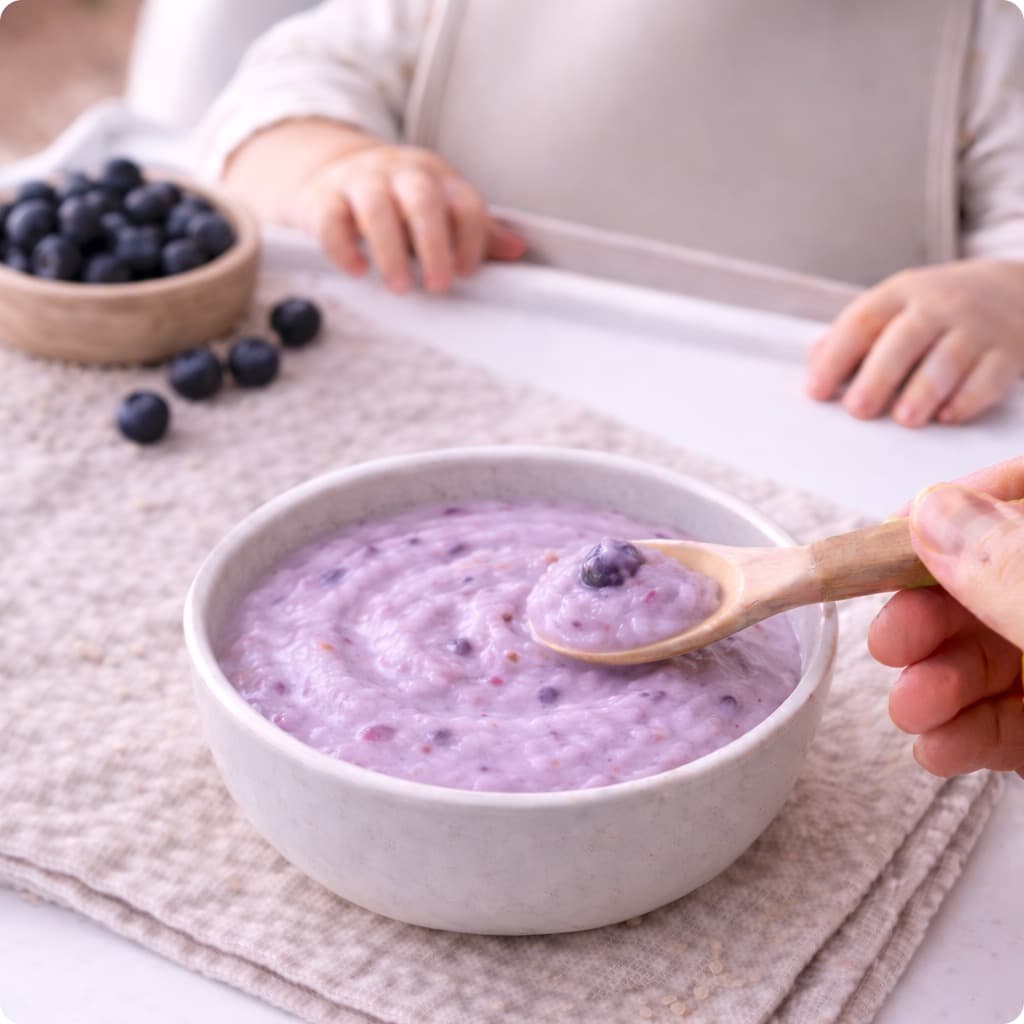
Berry Greek Yogurt

Yogurt & Baby Biscuits
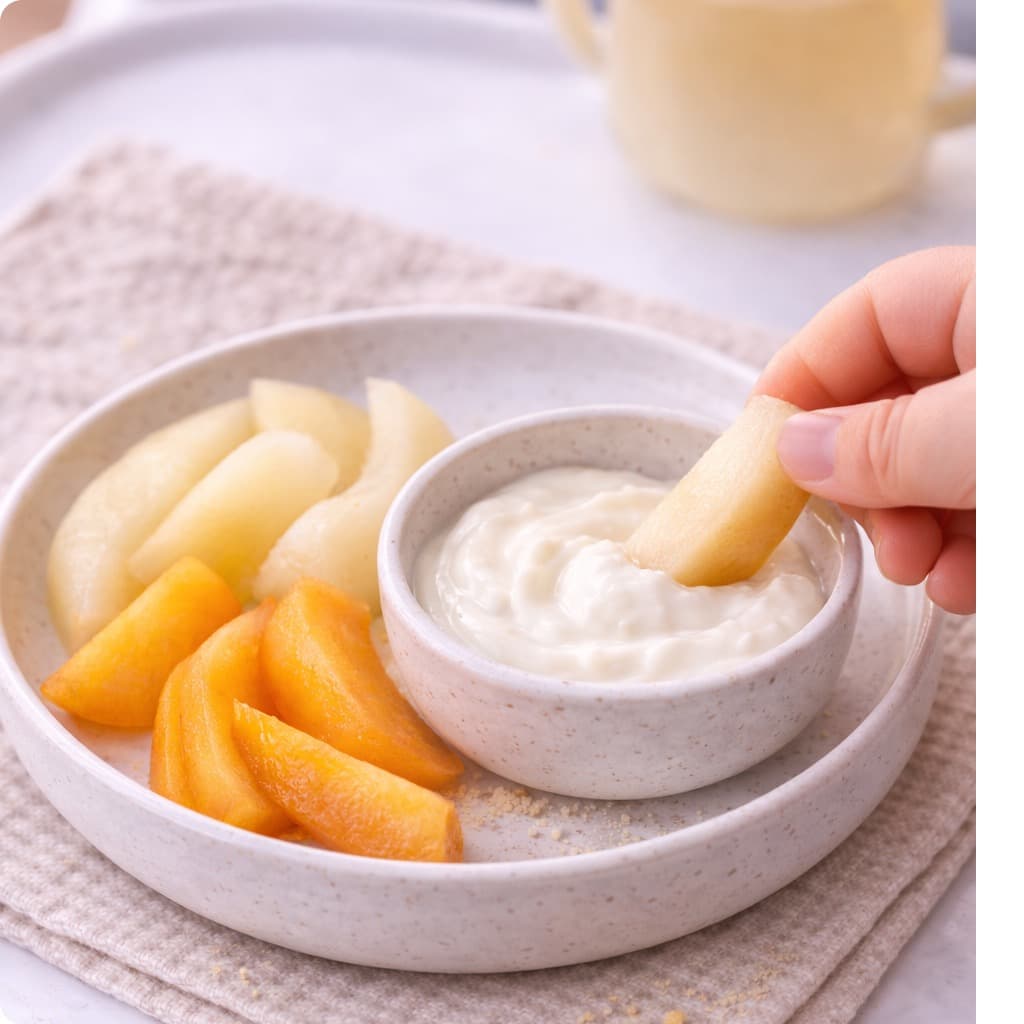
Fruit Wedges & Yogurt Dip
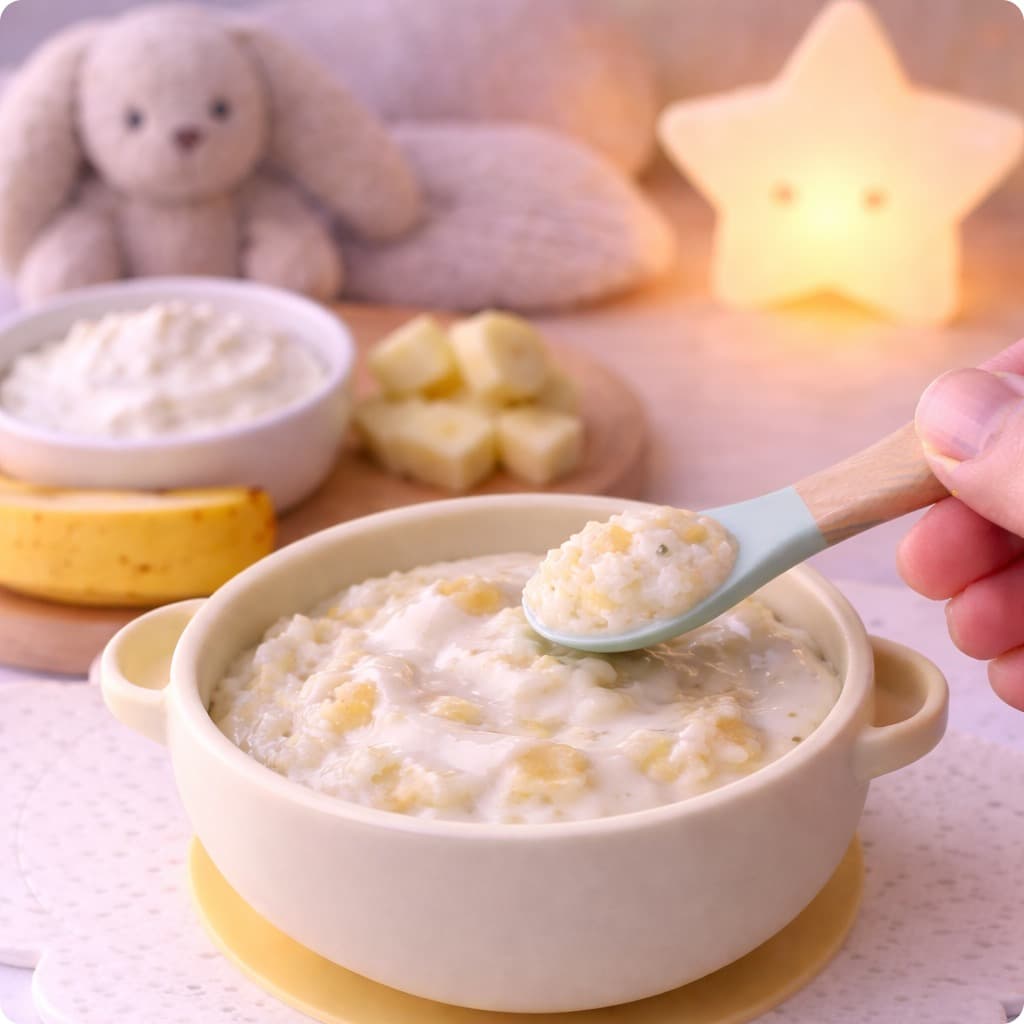
Banana Greek Yogurt Bowl
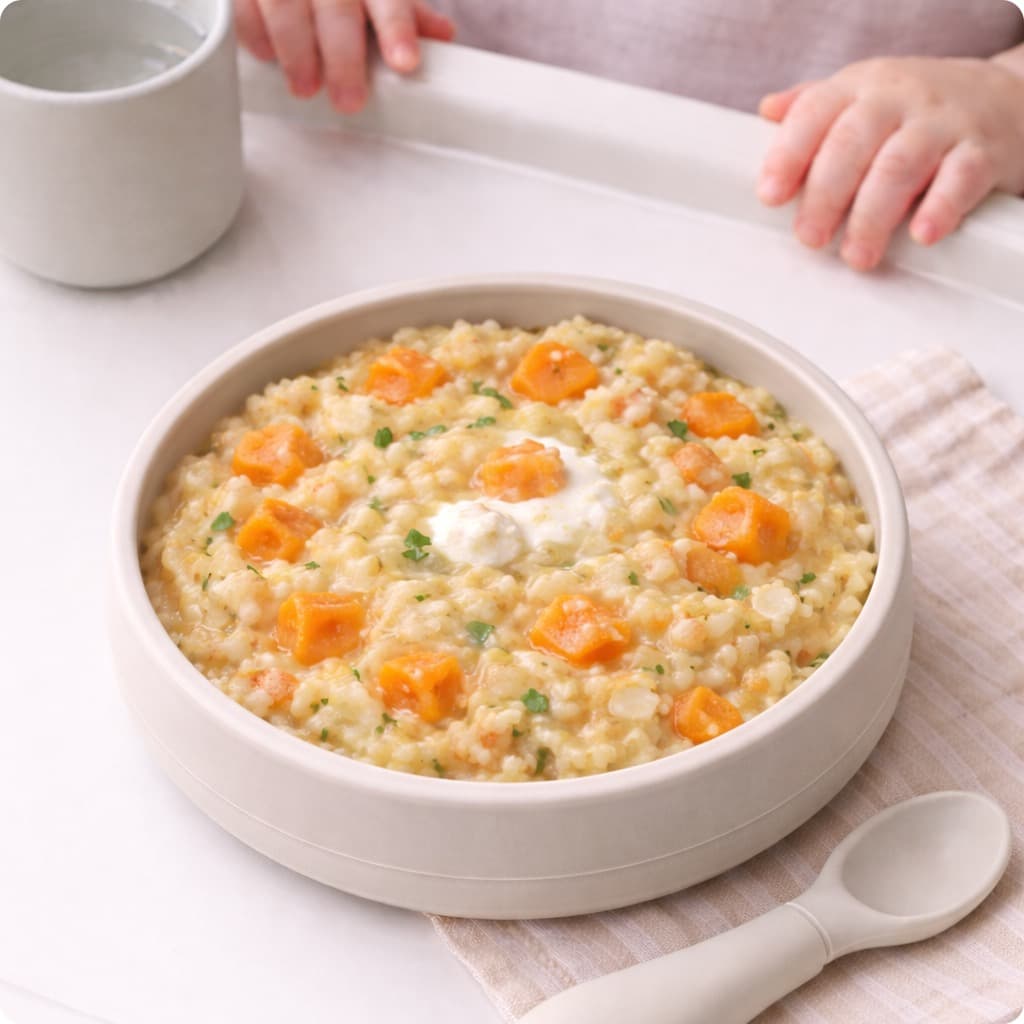
Carrot + Millet + Yogurt Cream Bowl
Frequently asked questions
Why is yogurt OK before 12 months but cow's milk isn't?
Whole cow's milk as a drink isn't recommended before 12 months because it can crowd out iron-rich foods and the high mineral load is hard on a baby's kidneys. Yogurt is fine earlier because fermentation breaks down some milk proteins and concentrates calcium, and yogurt is eaten in smaller amounts as a food, not a fluid replacement.
What kind of yogurt is best for babies?
Plain, unsweetened, whole-milk yogurt is the gold standard - ideally with live active cultures. Greek yogurt is fine and higher in protein but slightly tangier; skyr is similar. Avoid 'kids' or 'baby' yogurts with added sugar, low-fat varieties, and any flavoured yogurt with honey before 12 months.
How much yogurt can a baby eat per day?
There's no strict limit, but most pediatricians suggest around 2-4 oz (about a small pot) per day for 6-12 month babies, alongside breast milk or formula as the primary source of nutrition. Too much dairy can suppress appetite for iron-rich foods.
Can yogurt cause an allergic reaction?
Yes - cow's milk protein is one of the top-9 allergens. Reactions can be immediate (hives, vomiting, swelling) or delayed (eczema, reflux, blood in stool). If your baby has a known dairy allergy, avoid cow's milk yogurt and consult your pediatrician about alternatives like coconut or oat yogurt fortified with calcium.
Can babies eat flavoured yogurt or fruit-on-the-bottom yogurt?
It's better to avoid flavoured yogurts for babies because they typically contain a lot of added sugar - sometimes more than a soft drink. Offer plain yogurt and stir in mashed fruit, a swirl of fruit puree, or smooth nut butter instead.
Is Greek yogurt safe for babies?
Yes, plain whole-milk Greek yogurt is safe from 6 months and is higher in protein than regular yogurt. Some babies find the thicker texture easier to scoop. As with all yogurt, avoid sweetened or flavoured versions and confirm there's no added honey if your baby is under 12 months.
Can my baby have plant-based (coconut, soy, oat) yogurt?
Plant-based yogurts can work, but check the label: many are low in protein and fat compared to dairy yogurt. Choose unsweetened, whole-fat versions fortified with calcium and vitamin D. Soy is a top-9 allergen, so introduce as you would any new allergen.
Get recipes + a feeding plan for your baby
Save this food to your baby's list, get age-appropriate recipes and follow a personalized feeding schedule - 350+ baby-safe meals in the app.
verifiedSources & References
This guide is informed by current guidelines from leading health organizations: