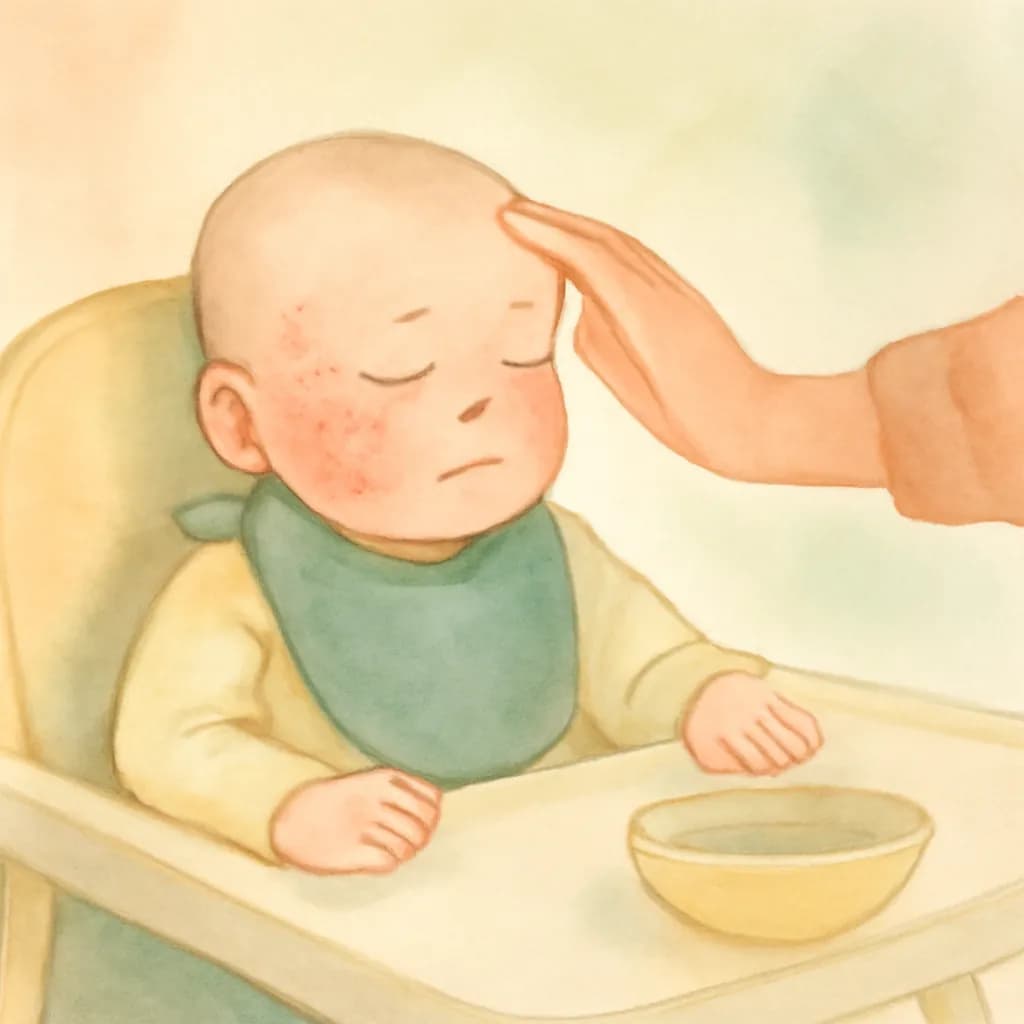
Is it normal for babies to have allergic reactions to food?
Mild allergic reactions such as hives or slight swelling can occur as babies try new foods. This is relatively common and often manageable with guidance from your pediatrician.
Severe reactions are less common but require immediate medical attention. Early allergen introduction is encouraged to help reduce the chance of allergies developing.
Why do allergic reactions happen in babies?
- The immune system mistakenly identifies a harmless food protein as a threat.
- Exposure to common allergens like milk, eggs, peanuts, or tree nuts.
- Genetic predisposition to allergies or family history of allergic conditions.
- Early immune system development and environmental factors.
- Cross-reactivity between different allergens.
- Delayed introduction or avoidance of allergens in infancy.
When to call your doctor or emergency services
- Swelling of lips, tongue, or face
- Difficulty breathing or wheezing
- Persistent vomiting or diarrhoea
- Lethargy or unresponsiveness
What to do if your baby has an allergic reaction
Stop feeding the suspected food
Immediately stop giving your baby the food you think caused the reaction to prevent further exposure.
Document the reaction
Write down the food given, the amount, and the symptoms observed to share with your pediatrician.
Call your pediatrician for advice
Contact your child’s doctor to discuss the symptoms and get guidance on next steps, especially if symptoms are mild.
Use prescribed epinephrine if severe
If your baby has a known allergy and an epinephrine auto-injector, use it immediately at the first sign of severe symptoms like breathing difficulty.
Call emergency services for severe reactions
If your baby shows signs of anaphylaxis such as difficulty breathing, swelling of the face or tongue, or lethargy, call 911/112/999 immediately.
Frequently asked questions
Can introducing allergens early prevent food allergies?
Yes, current NHS and AAP guidance recommends introducing common allergens like peanuts and eggs early in infancy to help reduce the risk of developing food allergies.
What are the first signs of an allergic reaction in babies?
Early signs include hives (red, itchy bumps), swelling of lips or face, vomiting, diarrhoea, and mild breathing difficulties.
When should I use an epinephrine auto-injector?
Use epinephrine immediately if your baby shows severe symptoms such as difficulty breathing, swelling of the tongue or face, or signs of shock, and call emergency services.
Is it safe to continue feeding my baby after a mild allergic reaction?
Stop feeding the suspected food and contact your pediatrician for advice. Do not reintroduce the food until you have medical guidance.
How can I document my baby’s allergic reactions effectively?
Keep a detailed record of the foods given, amounts, timing, and any symptoms observed. This information helps healthcare providers assess and manage allergies.
Are allergic reactions common during baby-led weaning?
Allergic reactions can occur during baby-led weaning as babies try a variety of foods. Early introduction of allergens is encouraged, but always watch closely for any signs of reaction.
Track allergens + plan your baby's meals
Introduce the top-9 allergens on a safe schedule, then get age-matched recipes and a daily feeding plan built around your baby - all in the Nibli app.
verifiedSources & References
This guide is informed by current guidelines from leading health organizations: