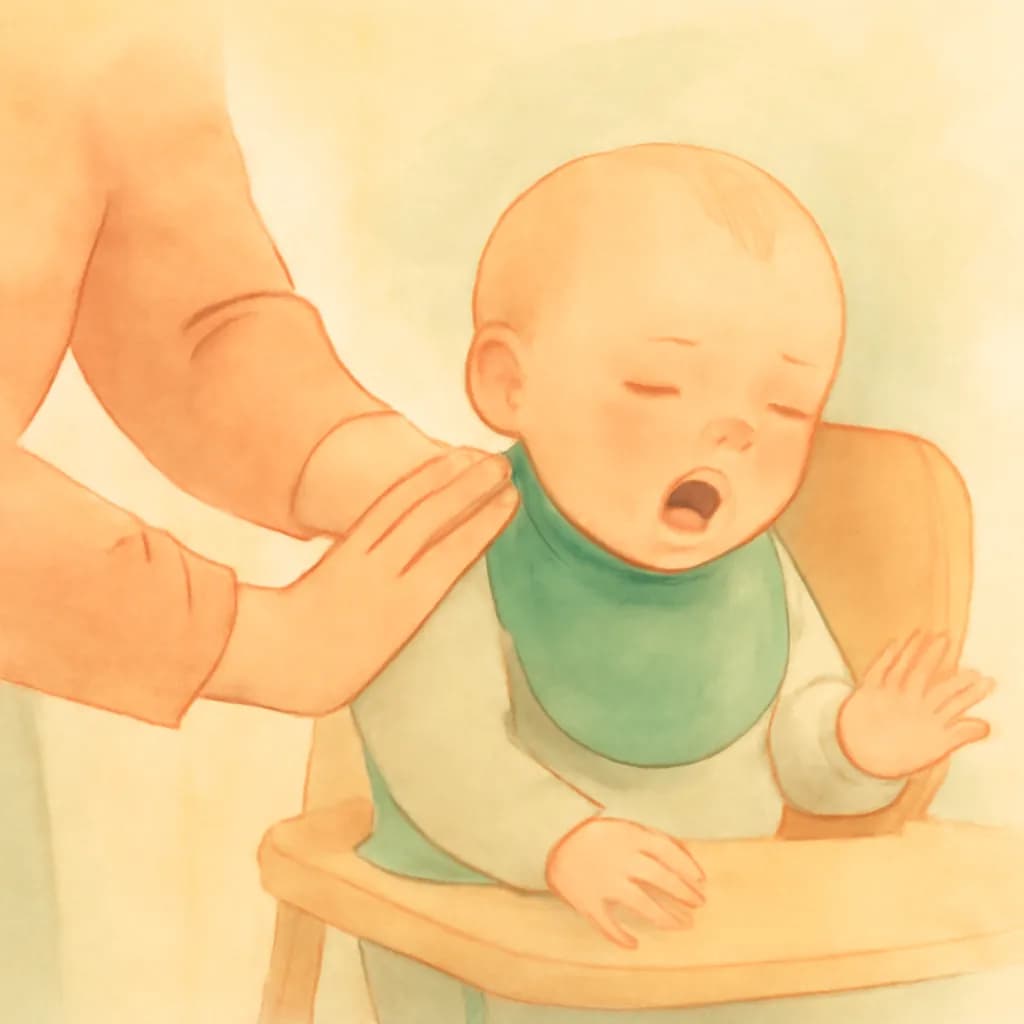
Choking vs gagging - know the difference
Choking is silent and dangerous: a choking baby cannot cry, cough, or breathe. Lips may turn blue and the baby's face panicked. This is a 911/112 emergency and requires immediate intervention.
Gagging is loud and protective: a gagging baby coughs, sputters, makes noise, and may turn red. Gagging is the body's normal way of moving food forward away from the airway. Stay calm and let your baby work it out - intervening can make it worse.
Why grapes are so dangerous
- Whole grapes match the exact size and round shape of a baby or toddler's airway.
- The smooth, slippery skin makes grapes hard to grip with teeth or tongue.
- Grapes are firm enough to fully plug the airway without breaking apart.
- Children under 4 don't yet have the molars or chewing skill to safely break grapes down.
- Distraction while eating - walking, playing, riding in a car - hugely increases choking risk.
When to go to the ER even after the choke clears
- Any choking episode that required back blows, chest thrusts, or CPR.
- Persistent cough, wheeze, or noisy breathing afterwards (possible aspirated piece in the lung).
- Difficulty swallowing, drooling, or refusing to eat or drink.
- Blue or grey color around the lips during the episode.
- Vomiting blood or signs of injury after the maneuver.
- If the baby was unconscious at any point.
Step-by-step infant choking response (under 1 year)
Confirm the airway is blocked
Look for silence, no coughing, no crying, blue or grey lips, panicked face. If your baby is coughing or making noise, do NOT intervene - that means air is moving and gagging is doing its job.
Call 911 / 112 immediately
If you're alone, put the call on speaker and start the response. If someone else is there, have them call right away while you begin. Do not delay help to look for advice online.
5 back blows
Lay the baby face-down along your forearm, head lower than chest, supporting the jaw. With the heel of your free hand, deliver five firm back blows between the shoulder blades.
5 chest thrusts
Turn the baby face-up along your other forearm, head lower than chest. Place two fingers on the lower breastbone and give five quick chest thrusts (about 1.5 inches deep).
Repeat back blows and chest thrusts
Continue alternating 5 back blows / 5 chest thrusts until the object comes out, the baby starts crying or breathing, or help arrives.
If baby goes unconscious, start infant CPR
Lower the baby to a firm surface. Begin 30 chest compressions and 2 rescue breaths. Continue CPR until paramedics take over. Even after recovery, take your baby to the ER to be checked.
Always halve grapes lengthwise - no whole grapes under 4
Cut every grape lengthwise into quarters for babies and into halves lengthwise for toddlers. The same rule applies to cherry tomatoes, blueberries, and large beans. Children should always sit upright at a table to eat - never in a car seat or while running around.
Frequently asked questions
What size should I cut grapes for a baby?
For babies and toddlers under 4, cut every grape lengthwise into quarters (4 long, thin pieces). Round halves still match the airway. Lengthwise quarters break the round shape that makes grapes so dangerous. Never offer whole grapes to a child under 4.
Are grapes safe for 1 year olds?
Yes, but only if cut lengthwise into quarters. The 'no whole grapes under 4' rule applies through age 4 because younger children don't yet have the molars or chewing skills to break grapes down safely. The same rule applies to cherry tomatoes, large blueberries, and similar round, firm foods.
What's the difference between gagging and choking on a grape?
Gagging is loud and protective - your baby coughs, sputters, makes noise, may turn red. Choking is silent - your baby can't cry, cough, or breathe and may turn blue. Gagging means stay calm and let baby work it out. Choking means call 911/112 and begin infant choking response immediately.
Should I do a finger sweep if my baby is choking?
No - blind finger sweeps are not recommended and can push the object deeper into the airway. Only attempt to remove an object if you can clearly see it and it's easy to grab. Otherwise, stick to back blows and chest thrusts (under 1) or abdominal thrusts (over 1).
Do I still need to go to the ER if the grape came out?
Yes, take your baby to be checked any time the choking required back blows, chest thrusts, or CPR. Pieces of food can sometimes be aspirated into the lung and cause infection later. Check for any persistent cough, wheeze, or breathing change in the hours and days after.
What other foods are common choking hazards like grapes?
The top choking foods for young children include whole grapes, cherry tomatoes, hot dogs/sausages (in coin shapes), whole nuts, popcorn, hard candy, large blueberries, raw carrot pieces, and chunks of apple. The AAP advises avoiding hard, round, and slippery foods until age 4 unless cut lengthwise.
Should every parent learn infant CPR?
Yes - infant CPR and choking response are quick to learn (a few hours) and can save your child's life. Take a Red Cross or American Heart Association infant CPR class before solids start, and refresh every 1-2 years. Many hospitals and community centers offer free or low-cost classes.
Serve every food safely, plan what's next
In-app cutting guides for every food by age, plus a personalized feeding schedule and 350+ baby-safe recipes, so you always know what to serve next.
verifiedSources & References
This guide is informed by current guidelines from leading health organizations: