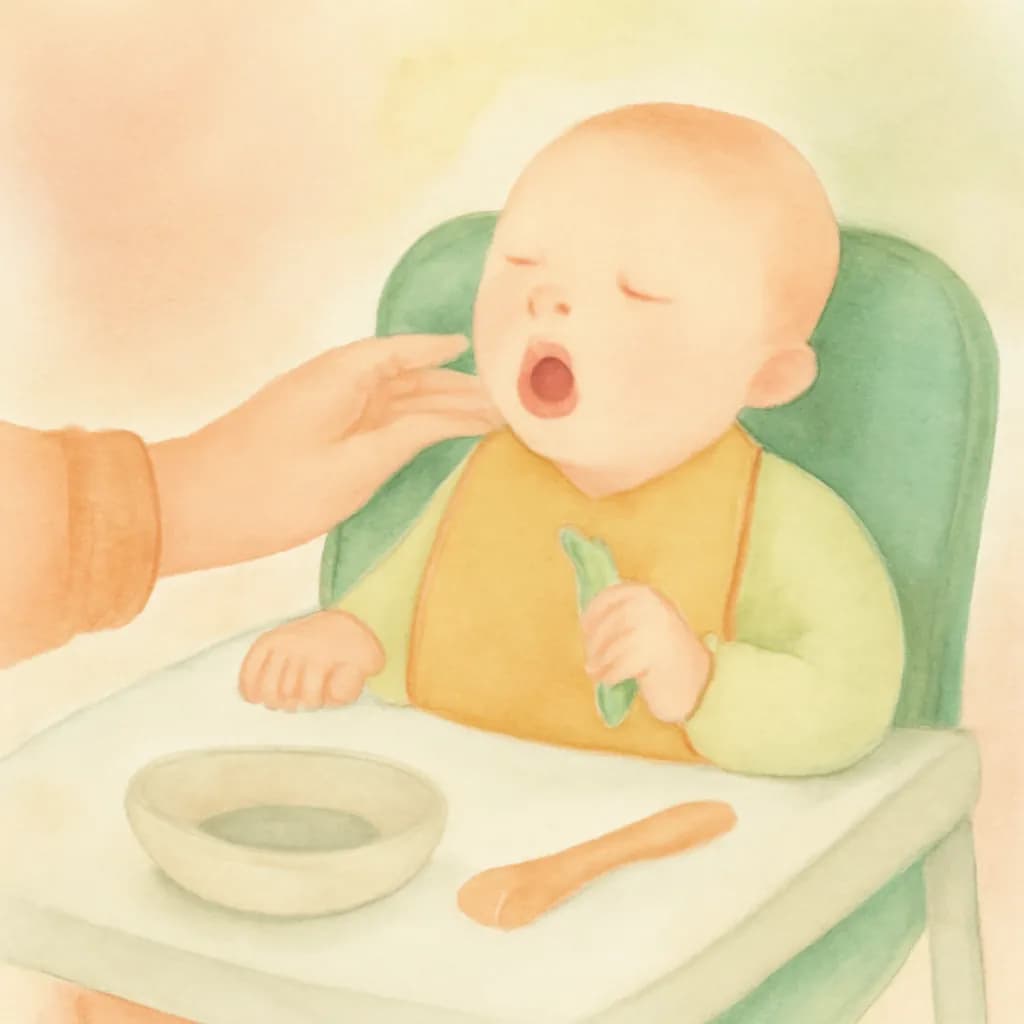
Is gagging normal?
Yes - gagging is a normal, expected, and protective reflex when babies are learning to eat. Babies have a gag reflex placed much further forward in the mouth than adults, which is exactly what you want at this age. It triggers easily, pushes food forward before it can reach the airway, and gradually moves back as your baby learns to manage textures.
Most gagging happens in the first few weeks of solids and decreases as babies build oral motor skills. A loud, noisy gag with red eyes and watery cough is the body doing its job - not an emergency. The key skill is telling gagging apart from choking, which is silent.
Why babies gag during BLW
- Forward-placed gag reflex - normal in babies and protective.
- Learning to move food from front to back of mouth - food touches the trigger zone.
- Trying a new texture for the first time - the body reacts cautiously.
- Taking too big a bite - common with self-feeding.
- Tiredness or feeling rushed at meals - reduces coordination.
When it's a real emergency - call 911
- Silent choking: baby cannot cough, cry, or make any sound.
- Skin turning blue, gray, or purple - especially around lips and face.
- Prolonged choking that doesn't clear within seconds.
- Visible food stuck in the mouth/throat that baby can't dislodge.
- Loss of consciousness - call emergency services immediately and start CPR.
- Persistent breathing difficulty after a choking event.
What to try
Stay calm and let your baby work it out
If your baby is gagging (loud, noisy, coughing, eyes watering), they are clearing the food themselves. Stay close, stay calm, and don't reach into their mouth - intervening can push food deeper or trigger a real choking event.
Learn the difference between gagging and choking
Gagging is loud and protective. Choking is silent: the airway is blocked, the baby cannot cough, may turn blue or gray, and needs immediate help. Memorize this difference before every meal.
Take an infant CPR / choking response class
An in-person or online infant CPR course teaches you what to do in the rare case of true choking - back blows, chest thrusts, when to call emergency services. Confidence is built by training, not by hoping it never happens.
Cut foods correctly for baby's stage
For 6-9 months, palm-sized strips that stick out of a fist. From 9 months, pea-sized soft pieces for pincer practice. Halve all blueberries, grapes, cherry tomatoes. No round slices of any food.
Sit baby fully upright in a high chair
Never feed a reclined or slumped baby. Upright posture lets gravity help, keeps the airway in the right position, and gives baby control over chewing and swallowing.
Supervise every bite, distraction-free
Stay within arm's reach, don't leave the room, and put the phone down. Most choking incidents happen during a moment of inattention. Active supervision is the single biggest safety tool.
Offer water in an open or straw cup
Small sips of water with meals from an open cup or straw cup help babies learn to clear their mouths and provide a moment to pause. Avoid sippy cups with valves; they don't build the same swallow skill.
Frequently asked questions
What's the difference between gagging and choking?
Gagging is loud, noisy, and protective - the baby coughs, splutters, eyes water, face may turn red, and food gets pushed forward. Choking is silent: the airway is blocked, the baby cannot cough or make sound, may turn blue or gray, and needs immediate intervention. Gagging needs no help; choking is a 911-level emergency.
Should I pat my baby on the back when they gag?
No - if your baby is gagging (making noise, coughing), let them work it out themselves. Patting or reaching into the mouth can push food deeper and turn a gag into a real choke. Stay close, stay calm, and intervene only if they go silent and cannot breathe.
Is BLW more dangerous than purees because of choking?
Studies show similar choking-incident rates between baby-led weaning and traditional purees when foods are sized correctly and supervision is constant. The risk comes from inappropriate food shapes (whole grapes, hot dog rounds), unsupervised eating, or incorrect baby positioning - not from BLW itself.
How often is gagging normal?
In the first few weeks of solids, gagging at most meals is common and expected. It typically decreases dramatically by 8-9 months as babies learn to manage textures. If your baby is still gagging on every bite at 10+ months, or seems to have trouble with textures generally, a feeding therapist can help.
Can my baby gag too much?
Frequent gagging usually means the food is too dry, too big, or being eaten too fast. Try smaller portions, softer textures, more moisture (yogurt, mashed avocado), and slower meals. If gagging is severe, prolonged, or accompanied by feeding aversion, talk to your pediatrician or a feeding therapist.
Should I avoid certain foods to prevent gagging?
Avoid known choking-shape foods: whole grapes, cherry tomatoes (always halve), hot dog rounds, popcorn, whole nuts, hard chunks of raw vegetable or fruit. Beyond those, offering varied textures actually helps babies build the skills that reduce gagging over time.
What should I do if my baby actually chokes?
If your baby is silent and cannot breathe, that's choking - call 911 immediately and start infant choking response: 5 firm back blows between the shoulder blades, then 5 chest thrusts, repeating until food dislodges or help arrives. If you haven't taken an infant CPR class, do it before solids start. Knowing the steps in advance saves seconds that matter.
Serve every food safely, plan what's next
In-app cutting guides for every food by age, plus a personalized feeding schedule and 350+ baby-safe recipes, so you always know what to serve next.
verifiedSources & References
This guide is informed by current guidelines from leading health organizations: