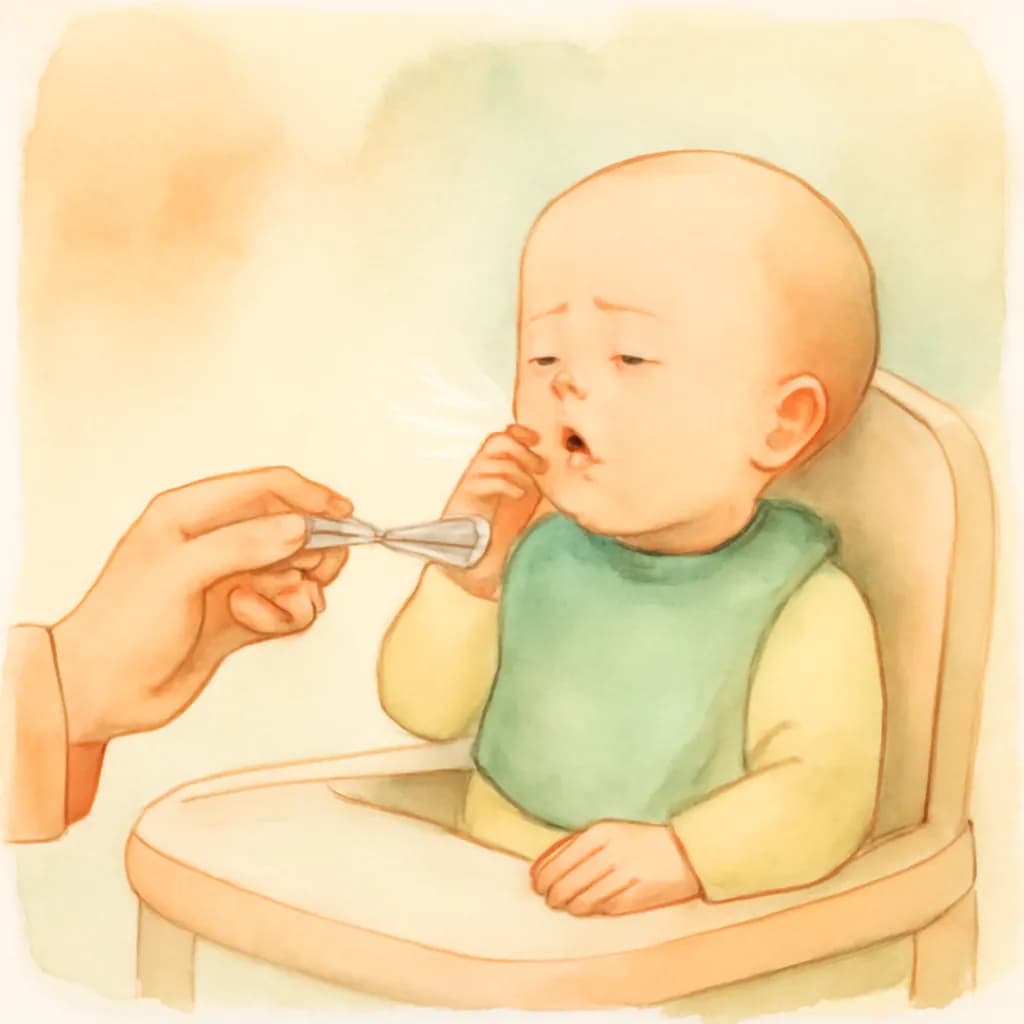
Is this normal?
Yes, gagging during eating is a normal protective reflex that helps prevent choking. It often sounds noisy but your baby will still be breathing and usually recovers quickly without intervention.
However, it’s important to understand the difference between gagging and choking to keep your baby safe and know when to act.
Why it happens
- Babies are still developing coordination between swallowing and breathing.
- New textures or sizes of food can trigger the gag reflex as a safety mechanism.
- Positioning during feeding affects how easily food moves down the throat.
- Babies explore food with their mouth, which can cause coughing or gagging.
- Rapid eating or excitement may lead to temporary coughing.
- Immature swallowing muscles can cause occasional food misdirection.
When to call your doctor
- Silent choking where your baby cannot breathe or make noise
- Blue or pale lips or face during or after eating
- Prolonged episodes of gagging or coughing that don’t improve
- Repeated coughing or choking after meals that might suggest aspiration
What to try
Stay calm
Keep a relaxed demeanor to help your baby feel safe. Your calmness supports them in managing the gag reflex.
Avoid patting the back during gagging
Patting can make gagging worse. Instead, allow your baby to work through it while you watch closely.
Ensure upright seating
Feed your baby in a seated, upright position to help food move safely down the throat.
Cut food appropriately
Offer age-appropriate food sizes and textures to reduce gagging and support safe swallowing.
Offer small bites
Smaller pieces are easier to manage and reduce the chance of gagging or choking.
Supervise meals closely
Always watch your baby while eating to respond quickly if needed.
Frequently asked questions
What is the difference between gagging and choking?
Gagging is a noisy reflex where your baby is still able to breathe and usually recovers on its own. Choking is silent, with difficulty breathing and may cause blue lips, requiring immediate help.
Is gagging a sign my baby is not ready for solids?
Not necessarily. Gagging is common as babies learn to handle new textures. It often decreases as they gain experience and confidence with eating.
Should I intervene when my baby gags?
Usually, it’s best to stay calm and let your baby manage the gag reflex. Avoid patting the back during gagging, but always supervise closely.
How can I reduce gagging during meals?
Feed your baby in an upright position, offer small, age-appropriate pieces of food, and introduce new textures gradually to help reduce gagging.
When is coughing during eating a medical emergency?
If your baby has silent choking, cannot breathe, turns blue, or has prolonged coughing episodes, seek medical help immediately.
Can coughing after meals indicate a problem?
Repeated coughing after eating may suggest aspiration or other swallowing difficulties. If this happens often, consult your healthcare provider.
Is it safe to continue baby-led weaning if my baby gags?
Yes, gagging is a normal part of baby-led weaning. With careful supervision and appropriate food preparation, it supports safe eating skills.
Get unstuck + a plan for your baby
Personalized, age-aware troubleshooting plus a feeding schedule and recipes built around your baby, so mealtimes get easier from here.
verifiedSources & References
This guide is informed by current guidelines from leading health organizations: