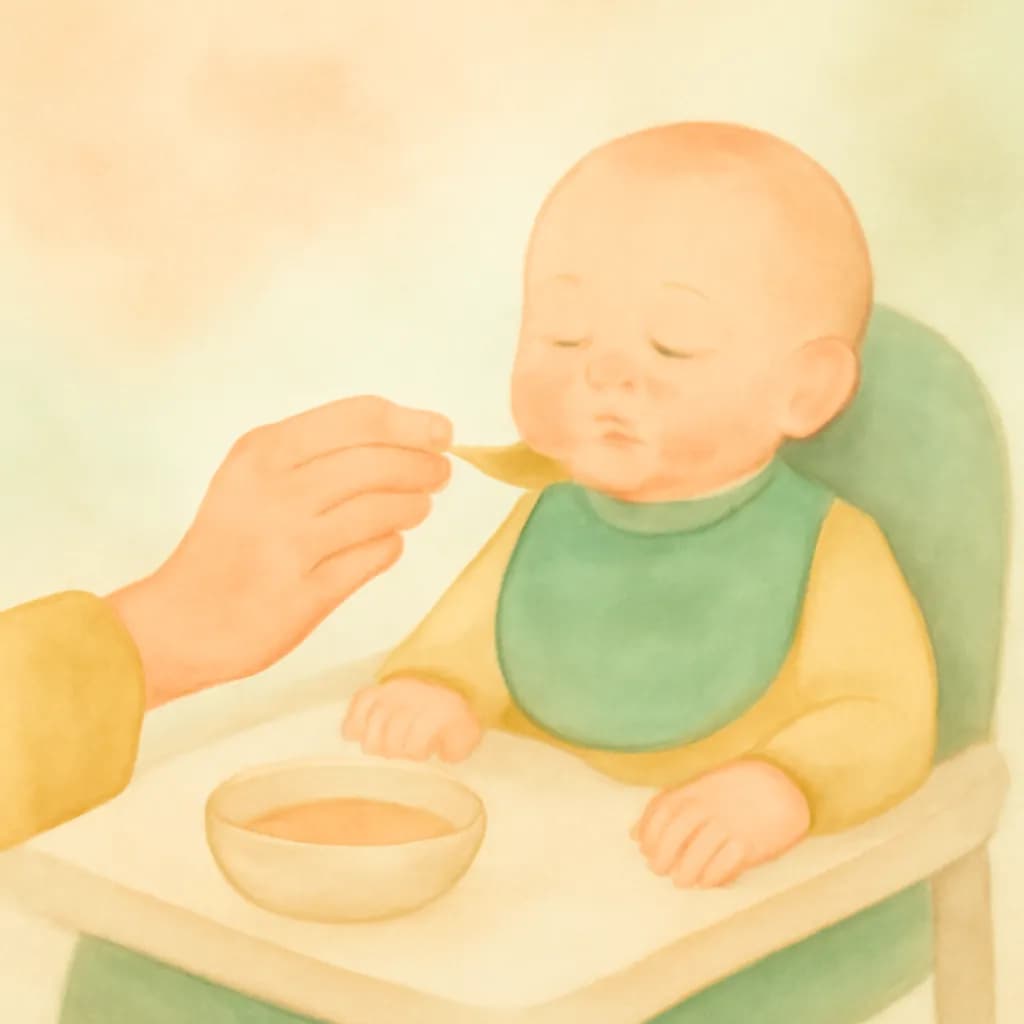
Is this normal?
A rash around the mouth after eating acidic foods like strawberries, tomatoes, or citrus fruits is usually a mild skin reaction caused by contact with these foods. It typically appears as redness or irritation and fades within about 30 minutes without other symptoms.
This reaction is different from a true food allergy, which would involve symptoms such as hives on other parts of the body, swelling, vomiting, or breathing difficulties. These more serious signs require urgent medical attention.
Why it happens
- Acidic foods can irritate the sensitive skin around your baby's mouth.
- Repeated contact with these foods may cause mild inflammation or redness.
- Babies’ skin is delicate and can react more easily to certain food acids.
- Saliva combined with acidic food can increase skin sensitivity.
- Lack of a protective barrier cream before feeding acidic foods can allow irritation.
- This is a contact reaction, not an immune system allergy.
When to call your doctor
- Hives appearing on other parts of the body
- Swelling of the face, lips, tongue, or throat
- Vomiting or diarrhea after eating
- Difficulty breathing, wheezing, or persistent coughing
What to try
Rinse gently
After feeding, gently rinse your baby’s mouth and the skin around it with cool water to remove any food residue that might cause irritation.
Apply barrier cream
Before offering acidic foods, apply a gentle barrier cream around your baby’s mouth to protect the skin from irritation.
Continue offering foods
Keep offering these healthy foods as part of your baby’s diet, as avoiding them unnecessarily can delay acceptance and variety.
Use soft cloths
Use a soft cloth to pat the area dry instead of rubbing, which can further irritate the skin.
Monitor skin
Watch the rash to ensure it fades within 30 minutes and does not worsen or spread.
Frequently asked questions
Is a rash around the mouth a sign of food allergy?
A rash around the mouth after eating acidic foods is usually a mild contact irritation, not a true allergy. True allergies often involve hives elsewhere, swelling, vomiting, or breathing problems.
How long does the rash usually last?
The rash typically fades within 30 minutes after the food is removed or rinsed away. If it persists longer or worsens, consult your healthcare provider.
Should I stop giving my baby acidic foods if they get a rash?
No, it’s important to continue offering a variety of foods. Using a barrier cream and rinsing the skin after feeding can help reduce irritation while your baby gets used to these foods.
What is a barrier cream and how do I use it?
A barrier cream is a gentle protective layer applied around your baby's mouth before feeding acidic foods. It helps shield the skin from irritation caused by food acids.
When should I seek emergency help for a rash?
Seek immediate medical help if your baby develops hives on other parts of the body, swelling of the face or throat, vomiting, or any breathing difficulties after eating.
Can this rash lead to a food allergy later?
This type of rash is a contact reaction and does not mean your baby is allergic. Introducing a variety of foods early, as recommended by health authorities, supports healthy immune development.
Get unstuck + a plan for your baby
Personalized, age-aware troubleshooting plus a feeding schedule and recipes built around your baby, so mealtimes get easier from here.
verifiedSources & References
This guide is informed by current guidelines from leading health organizations: