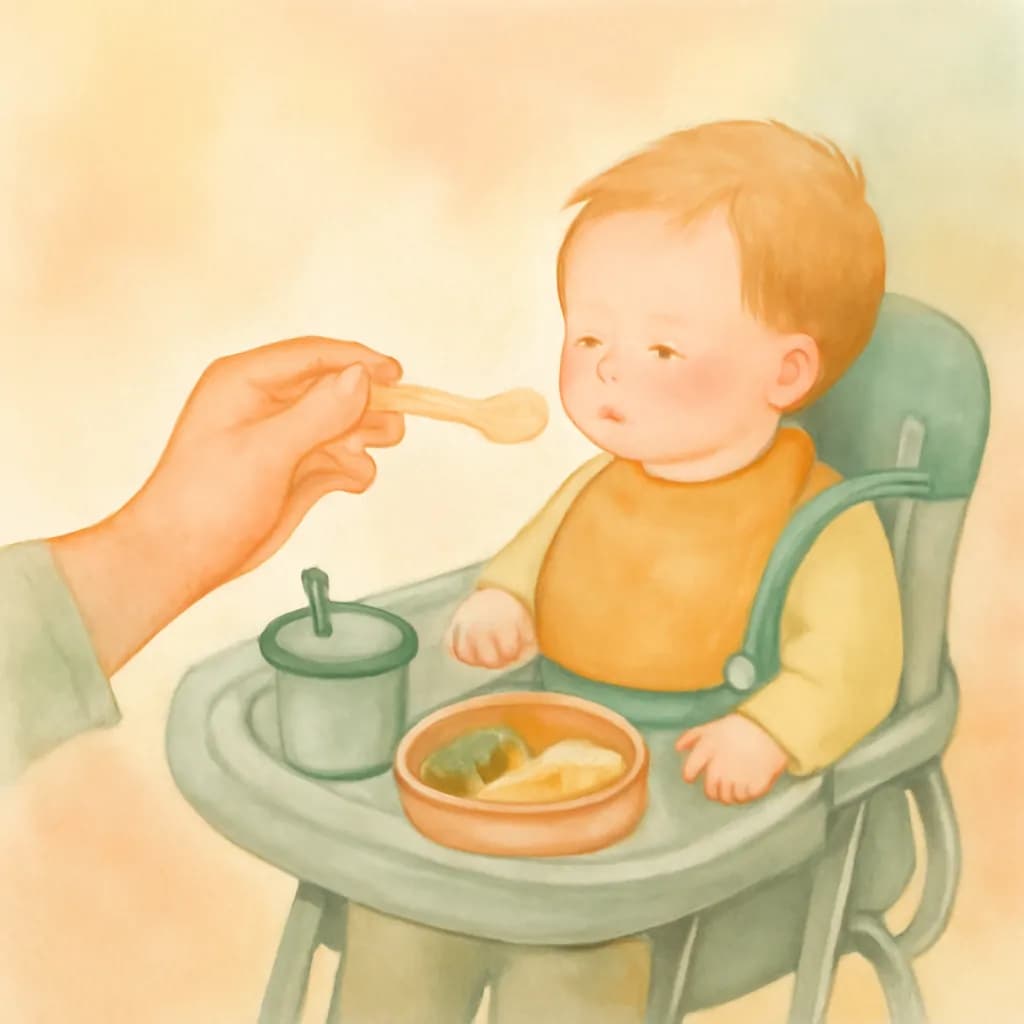
Plan the feed before packing the bag
Choose the trip length, whether you can reliably wash equipment, where food can be refrigerated and whether your baby is already eating solids. Short trips often need fewer foods than expected. Breast milk or infant formula remains the main milk drink before 12 months; do not replace feeds with convenience snacks to fit a timetable.
Pack enough normal feeds, one or two familiar foods if a meal falls during the journey, a clean spoon or cup, a bib, hand-cleaning supplies and spare clothes. For any family member with food allergies, keep usual emergency medication and the written action plan accessible.
Unopened shelf-stable foods can reduce cold-chain needs, but check packaging, age suitability, allergens and serving shape. Once opened or prepared, follow the relevant food-safety instructions, not the unopened product's shelf life.
When to seek help while travelling
- Emergency: breathing difficulty, severe choking, collapse or swelling of the tongue or throat after food.
- Seek urgent medical advice for very few wet diapers, unusual drowsiness, refusal of milk or fluids, or persistent vomiting and diarrhea.
- If powdered formula cannot be prepared safely, ask a local health professional or pharmacist about an appropriate sterile ready-to-feed option, especially for younger or higher-risk infants.
- If your baby has medical feeding needs, food allergies or swallowing problems, agree a travel plan with their care team before departure.
Decide which storage method is safe
- Chilled homemade food, yogurt, meat, eggs and cut produce need a reliable cool bag with ice packs or verified refrigeration. A bag alone does not guarantee a safe temperature.
- NHS guidance for batch-cooked baby food recommends cooling cooked dishes promptly, refrigerating within 1–2 hours and using refrigerated food within 2 days; cooked rice has stricter cooling and 24-hour refrigerator guidance.
- Infant formula is different from ordinary solids. The NHS recommends preparing powdered feeds fresh with water hot enough to address bacteria in powdered formula, or using unopened ready-to-feed formula when you cannot prepare it safely.
- Expressed breast milk has its own storage guidance. CDC describes a 24-hour transport allowance for freshly expressed milk in an insulated cooler with frozen ice packs under its US guidance; do not apply that allowance to prepared infant formula or perishable solids.
- Travel rules differ by airport and country. US TSA treats milk, formula and baby food as medically necessary liquids that can exceed the usual 3.4 oz limit; UK government guidance permits enough baby food and milk for the journey under separate screening rules.
- Place, posture and supervision matter. CDC advises against feeding a child in a moving car or stroller; schedule a safe stop for a seated meal instead.
Six steps for safer feeding on the move
Decide what feeds the trip actually crosses
Mark usual milk feeds, likely meal times, possible delays and a safe place to stop. Bring a modest buffer of unopened formula or familiar shelf-stable food, if appropriate. You do not need a solid-food snack every time your baby becomes restless, especially under 12 months.
Choose low-risk, familiar foods
Consider a sealed age-appropriate puree to spoon into a bowl, a soft banana mashed at serving time, or prepared soft food kept properly chilled. Avoid first-ever allergens, whole nuts, hard crackers, whole grapes, sticky nut-butter spoonfuls and foods whose texture is unsafe for your baby's skills.
Separate formula, breast milk and solids
For powdered formula, follow the preparation instructions used in your country. NHS guidance advises a flask of freshly boiled hot water and measured powder for making feeds as needed, with ready-to-feed formula when safe preparation is not possible. Keep expressed breast milk under the applicable milk-specific storage guidance. Do not use the breast-milk cooler limits for mixed formula.
Maintain the cold chain and handle leftovers
Pack perishables in an insulated cooler with frozen ice packs, and use a refrigerator promptly on arrival. Check actual temperature and duration; if chilling cannot be maintained, take an unopened shelf-stable alternative. Discard food remaining on a spoon-fed plate or anything contaminated by your baby's saliva rather than saving it for the next stop.
Check the airports and destination
For US departures, declare baby food, breast milk and formula over 100 mL to TSA for separate screening; frozen gel and ice packs are allowed. For UK departures, government guidance separately covers baby food, milk and sterilised water, and some rules depend on the baby travelling. Confirm your departure, transit and return airports and any destination food-import restrictions.
Stop, seat and supervise
During car journeys, stop the vehicle and use a suitable high chair or stable upright seat for solids; never feed a child solids in a moving car or stroller. On a plane, feed only when you can hold or seat the baby safely and actively supervise, following crew instructions during takeoff, landing and turbulence. Use a clean spoon rather than encouraging continuous sucking from puree pouches.