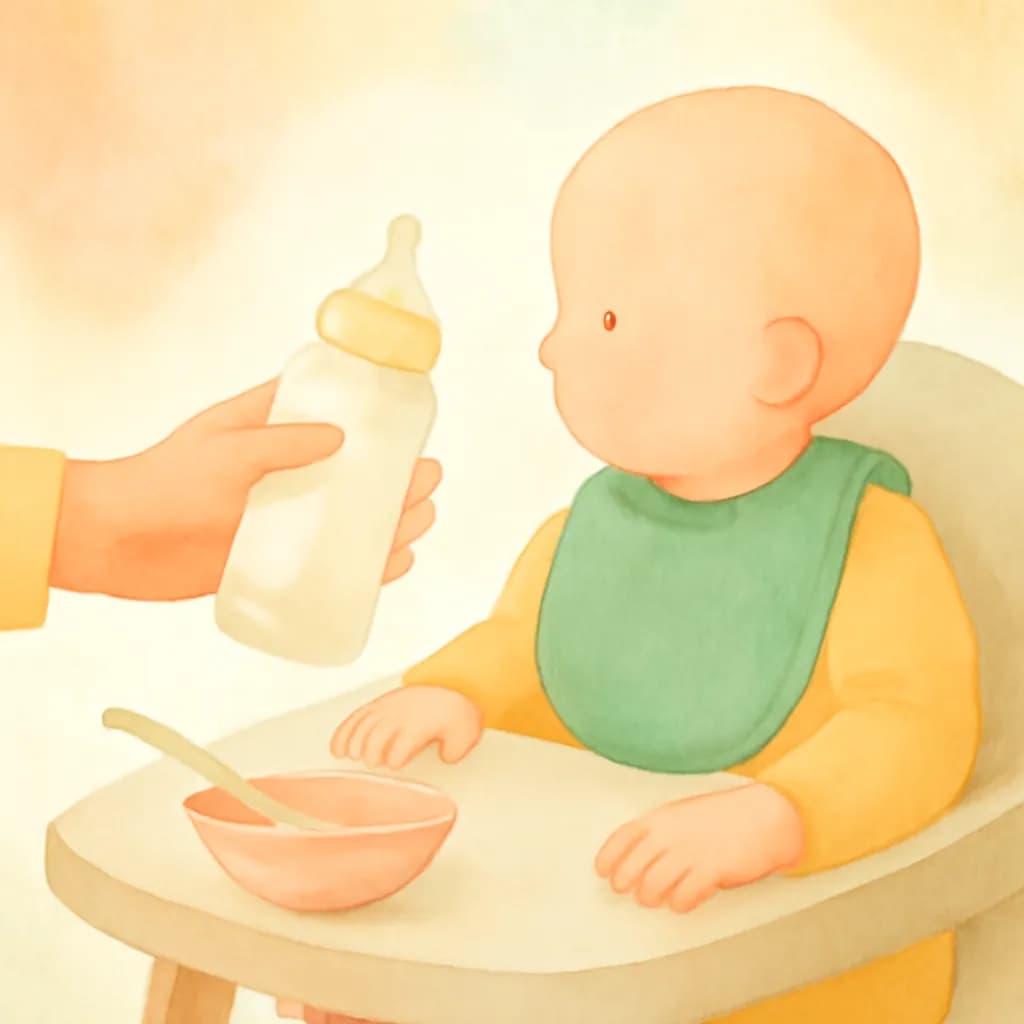
Is this normal?
Yes - preferring the bottle over food is one of the most common worries between 6-12 months. The bottle is familiar, the milk flow is easy, and it comforts your baby. Solids require chewing, swallowing new textures, and accepting unfamiliar tastes - all hard work for a baby learning to eat.
Through about 9-10 months, breast milk or formula provides nearly all your baby's calories and nutrients. From around 10-12 months, the balance shifts and solids become the primary source - if your baby is still mostly drinking milk past 12 months, it's worth checking in with your pediatrician about gentle next steps.
Why your baby might prefer the bottle
- Bottle feeds are easier - milk flows without effort while solids require chewing and swallowing.
- Milk before meals - a full bottle leaves no appetite for solids.
- Comfort association - the bottle is calm, predictable, and tied to closeness.
- Texture or taste sensitivities - some babies need many exposures to accept new textures.
- Teething or feeling unwell - solids feel uncomfortable, milk feels soothing.
- Limited variety - if the same foods are offered, baby may grow bored and prefer the reliable bottle.
When to call your pediatrician
- Weight loss or no weight gain over 2-3 weeks.
- Lethargy, unusual sleepiness, or significant change in behavior.
- Repeated vomiting after foods (not just spit-up).
- Signs of dehydration: fewer wet diapers, dry mouth, sunken soft spot.
- Total refusal of solids beyond 12 months despite gentle approaches.
- Choking or gagging excessively on age-appropriate solids.
- Iron deficiency signs (pale skin, fatigue) at routine checks.
What to try
Offer solids before milk at meals
Start meals with food, not milk. Offer solids when baby is hungry but not starving (about 30-60 minutes after the last bottle). If baby is screaming-hungry, give a small portion of milk first to take the edge off, then offer solids, then top up with milk if still hungry.
Reduce daytime milk gradually after 9 months
After 9 months, gently space milk feeds further from solid meals. By 12 months, aim for around 16-20 oz (500-600 ml) of milk total per day, with the rest of nutrition coming from food. Reduce slowly - don't cut milk suddenly, which causes distress and dehydration.
Eat together at mealtimes
Sit down with your own food and eat in front of your baby. Modeling is one of the most effective tools - babies learn that eating is normal and enjoyable by watching you. Make positive, no-pressure faces while eating.
Offer variety, including baby's favorites
Rotate flavors, textures, and presentations. If purees aren't landing, try soft finger foods. Pair new foods with one familiar favorite. Don't make every meal new - some predictability helps.
Use a cup, not a bottle, with meals
Offer water in an open or straw cup with solid meals from 6 months. The cup doesn't carry the same comfort association as the bottle and helps separate eating from milk drinking. Move toward dropping bottles by 12-15 months.
Stay calm if baby refuses
Don't beg, bribe, or chase with the spoon. Offer the food, eat your own, and end the meal calmly after 15-20 minutes. Pressure increases bottle preference because it associates eating with stress.
Be patient and persistent
Babies often need 10-15 exposures to a food before accepting it. Keep offering the same foods every few days without pressure. Refusal today doesn't mean refusal forever - bottle preference usually fades over weeks, not days.
Frequently asked questions
How much milk should a baby drink while learning to eat solids?
From 6-9 months, milk should still cover most nutrition - aim for around 24-32 oz (700-950 ml) per day. From 9-12 months, gradually reduce to 16-24 oz (500-700 ml) as solids ramp up. After 12 months, around 16-20 oz (500-600 ml) of whole cow's milk or continued breast milk.
Should I cut bottles to force my baby to eat solids?
No - never withhold milk to force solids. Babies who lose milk suddenly become distressed, dehydrated, and develop more food aversions, not less. Gradually space milk feeds from solid meals so baby is hungry for food, but always meet baby's milk needs.
When should a baby drop the bottle entirely?
Most pediatricians recommend transitioning off bottles between 12-15 months, replacing them with cups for milk and water. Long-term bottle use can affect dental health, increase ear infection risk, and reinforce milk over solid food preferences. Start cup practice from 6 months alongside meals.
Why won't my baby eat anything but the bottle?
Common reasons: full from milk before meals, texture/taste sensitivity needing more exposures, comfort association with the bottle, or simply not yet developmentally interested. Try offering solids first, eating together, varying foods, and being patient. If baby is gaining weight and milk-fed, time often solves this.
Will my baby ever choose food over milk?
Yes - the shift typically happens between 9-12 months as solids become more interesting and the body needs more iron and calories than milk alone provides. Steady, low-pressure exposure is the best path. Most babies who 'only want the bottle' at 8 months are eating real meals by 14 months.
Should I switch from formula to whole cow's milk to encourage solids?
Whole cow's milk as a drink starts at 12 months, not earlier. Switching has nothing to do with solid food acceptance. After 12 months, replacing formula with whole cow's milk in a cup (not a bottle) can naturally reduce milk volume and increase solid food intake, but the milk type itself doesn't drive food preference.
Is it okay to mix food into the bottle?
No - cereal or purees in the bottle is not recommended. It increases choking risk, can cause overfeeding, and doesn't teach the baby the chewing and swallowing skills needed for solids. Some pediatricians recommend it for severe reflux, but only under specific medical advice.
Get unstuck + a plan for your baby
Personalized, age-aware troubleshooting plus a feeding schedule and recipes built around your baby, so mealtimes get easier from here.
verifiedSources & References
This guide is informed by current guidelines from leading health organizations: