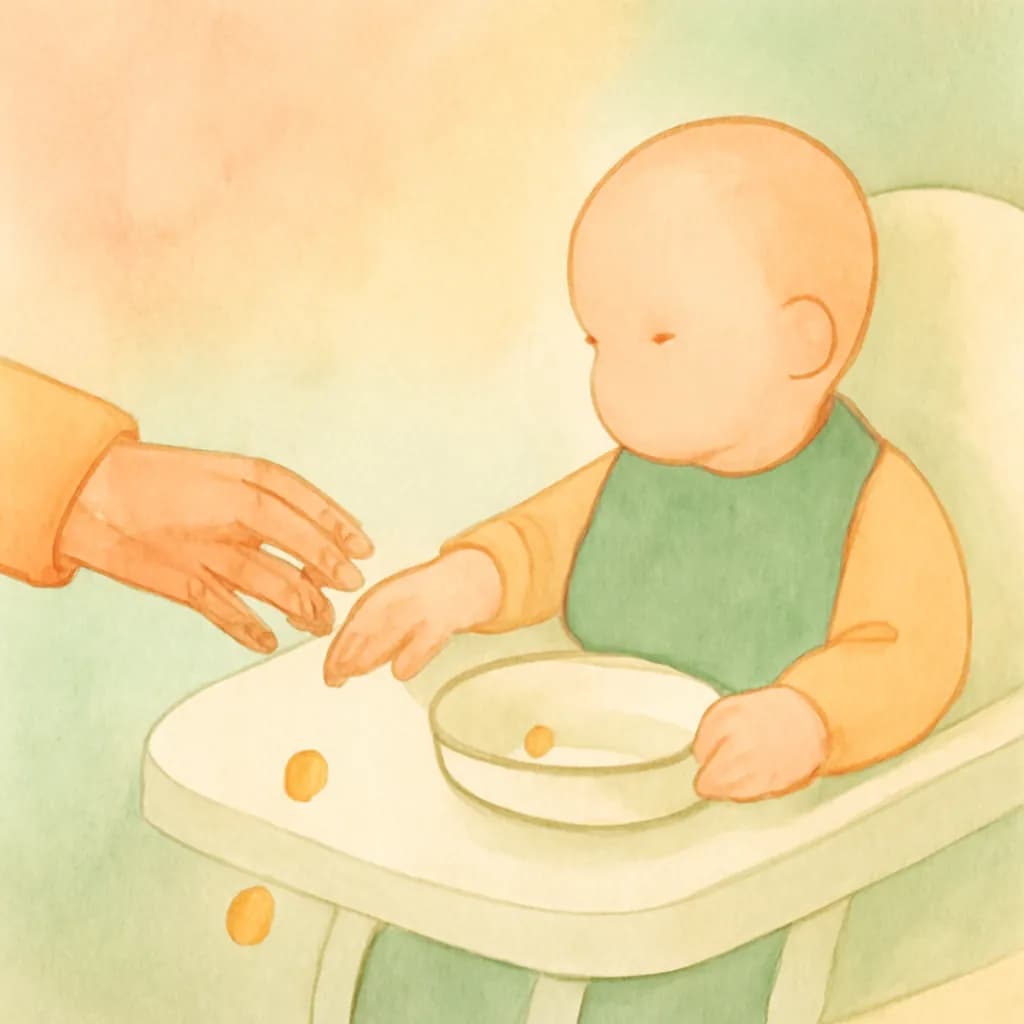
Is this normal?
Completely normal. Around 8-12 months, babies discover cause and effect - drop something, it falls, parent reacts. This is fascinating, scientifically important, and incidentally hilarious to them. Throwing food is the developmental experiment of choice because babies have full control of their hands and lots of food.
It's also often a communication tool: 'I'm done', 'I don't want this anymore', or 'I want a reaction'. Most food-throwing peaks between 9-15 months and decreases as babies develop language to express the same things in less messy ways.
Why babies throw food
- Cause-and-effect milestone - dropping/throwing is a major cognitive leap.
- 'I'm done' signal - they've finished and the food is in the way.
- Sensory exploration - texture, sound, splash all interesting.
- Attention-seeking - watching the parental reaction is part of the fun.
- Frustration - too much food, wrong texture, or wanting something else.
- Tiredness or end-of-meal restlessness - common at the end of meals.
When to call your pediatrician
- Throwing food alongside other concerning symptoms - this is rarely a medical issue on its own.
- Significant feeding regression: stops eating most foods, not just throws them.
- Weight loss or failure to gain weight over weeks.
- Loss of previously developed skills (signing, eating with utensils, language).
- Other developmental concerns alongside meal struggles.
What to try
Stay calm and neutral
The parental reaction is half the fun. A big response (laughing, scolding, dramatic pickup) reinforces the behavior. Stay neutral, calm, and unbothered. Boring is your friend here.
Treat throwing as 'done'
When food starts going on the floor, calmly say 'all done' and end the meal. Wipe baby up, get them down. The pattern teaches: throw food = meal ends. This is not punishment - it's clear communication.
Use suction plates and bowls
Plates and bowls that suction to the high chair tray make throwing harder and reduce the temptation. Many babies throw the empty bowl too - normal.
Offer smaller portions
Put 2-3 small pieces of food on the tray at a time. A loaded plate invites throwing. You can always add more as your baby finishes the first round.
Teach an 'all done' sign or word
Around 9-12 months, babies start learning communication signs. Show them 'all done' (open hands rotating outward) or use the word consistently. Babies often switch from throwing to signing once they have the tool.
Don't pick up and re-offer thrown food
Picking up dropped food and offering it back teaches that throwing is fine because the food comes back. Once it's on the floor, it's done. This reduces the cycle.
Watch the timing
Many babies throw food when tired, overstimulated, or near nap time. If throwing is consistently end-of-meal, your baby is probably done. End meals before the throwing-frenzy starts to break the pattern.
Frequently asked questions
Is my baby being naughty when they throw food?
No - babies under 18 months are not capable of intentional defiance in the way older children are. Throwing food at this age is developmental: cause-and-effect learning, communication, sensory play. Reframing it as 'normal stage' rather than 'bad behavior' makes responding much easier.
Should I scold my baby for throwing food?
No - scolding doesn't work at this age and often backfires by making mealtimes stressful. A calm, neutral response ('all done!') and ending the meal teaches the same lesson without negative emotion. Babies learn from consistent patterns, not from anger.
How long does the food-throwing phase last?
Most babies throw food most often between 9-15 months. It usually decreases as language develops and your baby has other ways to say 'I'm done' or 'I don't want this'. Some throwing in toddlerhood is normal too, but the constant phase usually fades by 18-24 months.
Should I put a mat under the high chair?
Yes - a splat mat or shower curtain makes cleanup much easier and lowers your stress, which helps you stay calm. Some families let dogs handle the cleanup; others use a wipeable mat that gets washed at the end of the day.
What if my baby throws every meal?
Look at portion size, timing, and your reaction. Smaller portions, ending the meal at the first throw, and a neutral response usually reduce throwing within a week. If your baby is throwing because they're tired, try moving the meal earlier.
Should I make my baby pick up the food they throw?
Babies under 18 months don't yet have the cognitive ability to understand a clean-up consequence. From around 18 months you can model picking up together as part of the routine, but at 8-12 months, calm endings and patterns work better than clean-up requirements.
Is throwing food a sign of food refusal?
Sometimes - throwing can mean 'I don't like this' or 'I'm done'. If your baby consistently throws certain foods while eating others, they may genuinely not like it. Keep offering it occasionally without pressure and don't make it the only option. Other times, throwing is just play.
Get unstuck + a plan for your baby
Personalized, age-aware troubleshooting plus a feeding schedule and recipes built around your baby, so mealtimes get easier from here.
verifiedSources & References
This guide is informed by current guidelines from leading health organizations: