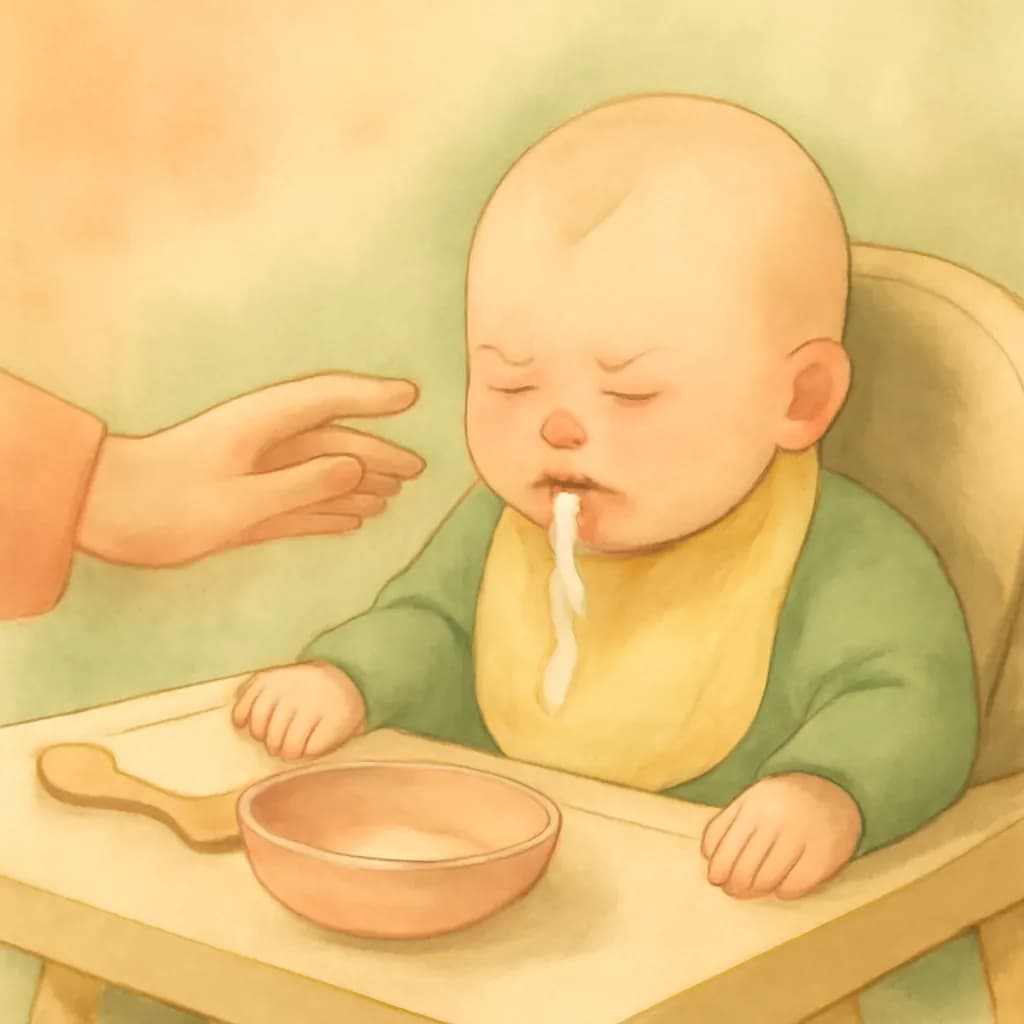
Is this normal?
Occasional vomiting after solids is quite common in babies starting on solid foods. It often happens when they eat too much, too fast, or when their gag reflex is sensitive.
Most of the time, this is not a sign of allergy or illness, especially if vomiting happens without other symptoms like rash or swelling.
Why it happens
- Babies learning to manage new textures and tastes may gag or vomit as part of this process.
- Overeating can overwhelm a baby’s small stomach, leading to vomiting.
- A sensitive gag reflex is common and helps protect the airway but can trigger vomiting.
- Eating too quickly or while lying down can cause discomfort and vomiting.
- Certain new foods might be harder to digest or cause mild irritation.
- Vomiting due to allergy usually occurs within 30 minutes and includes other symptoms like rash or swelling.
When to call your doctor
- Projectile vomiting that is forceful and repeated
- Vomiting accompanied by blood or green bile
- Persistent vomiting lasting more than 24 hours
- Signs of dehydration such as dry mouth, no tears, or fewer wet nappies
What to try
Offer smaller portions
Serve smaller amounts of food to avoid overwhelming your baby’s stomach and reduce the chance of vomiting.
Keep baby upright
Make sure your baby is sitting up during and after feeding to help food settle and prevent reflux.
Slow down feeding
Allow your baby to eat at their own pace, pausing between bites to reduce gagging and vomiting.
Watch for triggers
Notice if certain foods or textures seem to cause vomiting and try offering alternatives.
Keep a food diary
Track what your baby eats and any vomiting episodes to help identify patterns or possible allergies.
Frequently asked questions
Is vomiting always a sign of allergy?
Vomiting alone is not usually a sign of allergy. Allergic reactions typically include vomiting within 30 minutes along with other symptoms like rash, swelling, or diarrhea. If you notice these, seek medical advice promptly.
How can I tell if my baby is overeating?
If your baby vomits regularly after meals or seems uncomfortable and full, they might be eating too much. Offering smaller portions and watching their cues can help prevent this.
What is a sensitive gag reflex?
A sensitive gag reflex means your baby’s body reacts strongly to food touching the back of the throat, which can cause gagging or vomiting. This is common in babies learning to eat solids and usually improves over time.
Should I stop giving a food if my baby vomits after eating it?
Not necessarily. Occasional vomiting can be part of learning to eat. However, if vomiting happens consistently with a particular food or is accompanied by other symptoms, discuss this with your healthcare provider.
How can I help my baby eat more comfortably?
Offer food in small amounts, keep your baby sitting upright, feed slowly, and be patient as they get used to new textures and tastes. These steps can reduce gagging and vomiting.
When should I worry about dehydration?
If your baby vomits repeatedly and shows signs like dry mouth, no tears when crying, or fewer wet nappies, contact your doctor as these may indicate dehydration.
Get unstuck + a plan for your baby
Personalized, age-aware troubleshooting plus a feeding schedule and recipes built around your baby, so mealtimes get easier from here.
verifiedSources & References
This guide is informed by current guidelines from leading health organizations: