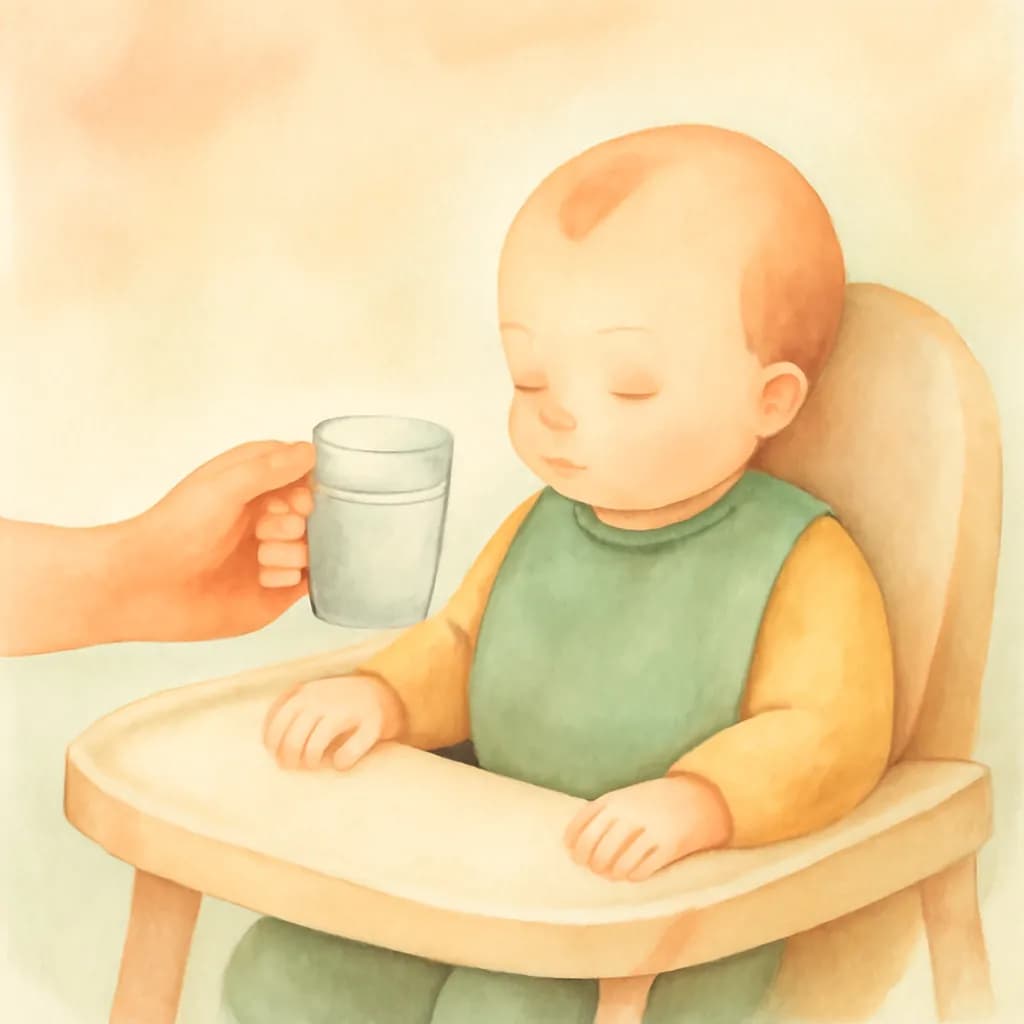
Is this normal?
Many babies show little interest in water when they first start solids. Their main source of hydration remains breast milk or formula, which meets their needs well.
Refusing water is a typical phase and usually improves with gentle encouragement and repeated exposure over time.
Why it happens
- Babies are used to the taste and temperature of milk, so water can seem unfamiliar or unappealing.
- They may prefer sucking from a bottle or breast rather than drinking from a cup.
- Some babies don’t feel thirsty because milk provides enough fluids.
- The sensation of water in the mouth can feel strange or uncomfortable at first.
- Babies are still learning how to coordinate sipping and swallowing from cups.
- Cold water might be off-putting; room-temperature water is often better accepted.
When to call your doctor
- Signs of dehydration such as sunken eyes or dry mouth
- Significantly fewer wet diapers than usual
- Baby refuses both water and milk, showing little interest in fluids
- Lethargy or unusual irritability alongside feeding difficulties
What to try
Offer water in a cup
Try giving small sips of water using an open or straw cup during mealtimes. This helps your baby get used to the new drinking method.
Model drinking
Drink water yourself in front of your baby to show them how it’s done. Babies often imitate adults and siblings.
Keep water at room temperature
Serve water that’s not too cold, as room-temperature water is usually more acceptable to babies.
Be patient and keep trying
It’s normal for babies to refuse water at first. Continue offering it regularly without pressure to build familiarity.
Include water-rich foods
Offer foods with high water content like cucumber, watermelon, and mild soups to help with hydration.
Frequently asked questions
When can I start giving my baby water?
You can start offering small sips of water from around 6 months, when your baby begins eating solid foods. Milk remains their main source of hydration.
How much water should my baby drink?
Babies between 6 and 12 months only need small amounts of water alongside breast milk or formula. There’s no need to force large quantities.
What if my baby refuses water completely?
It’s common for babies to refuse water at first. Keep offering it gently without pressure and focus on milk and water-rich foods for hydration.
Is it okay to give cold water to my baby?
Room-temperature water is usually better accepted by babies. Cold water might feel uncomfortable or unfamiliar to them.
Can water replace milk for hydration?
At this age, milk is still the main source of hydration and nutrition. Water supplements but does not replace milk.
How can I tell if my baby is dehydrated?
Look for signs like sunken eyes, dry mouth, fewer wet diapers, or unusual fussiness. If you notice these, contact your pediatrician.
Should I use a bottle or cup for water?
Offering water in an open or straw cup helps your baby learn new drinking skills. Bottles are best reserved for milk.
Get unstuck + a plan for your baby
Personalized, age-aware troubleshooting plus a feeding schedule and recipes built around your baby, so mealtimes get easier from here.
verifiedSources & References
This guide is informed by current guidelines from leading health organizations: