When can babies eat cheese?
Cheese can be introduced from around 6 months. Even though plain cow's milk as a drink isn't recommended until 12 months, cheese is fine earlier because the proteins are altered during cheesemaking and cheese is eaten as a food, not a fluid replacement.
Cow's milk protein is a top-9 allergen - introduce a small amount of cheese on its own and watch for reactions over 2-3 days before introducing other new allergens.
How to serve cheese safely
For 6-9 month babies, soft, low-sodium cheeses work best: ricotta stirred into vegetables; fresh mozzarella torn into thin strips; mild cheddar grated finely. Avoid hard cubes - shred or melt for safer texture.
For older babies, slim slices of mild cheese, melted cheese on toast strips, or cheese stirred into pasta work well. Continue avoiding salty/aged cheeses (parmesan, feta, blue, halloumi) as the main source.
Nutritional benefits for babies
- 💚Calcium and phosphorus support strong bones and teeth.
- 💚High-quality protein supports muscle development and growth.
- 💚Vitamin B12 supports brain and nerve development.
- 💚Healthy fats provide energy density for small appetites.
Safety considerations
- ✓Cow's milk protein is a top-9 allergen - introduce on its own and watch for reactions.
- ✓Choose pasteurized cheese only - avoid soft unpasteurized cheeses (some bries, camemberts, fresh feta) due to listeria risk.
- ✓Avoid blue cheese and other mould-ripened cheeses for babies due to listeria risk.
- ✓Skip processed cheese slices, cheese spreads, and string cheese for young babies - high in sodium and additives.
- ✓Avoid cubes; grate, melt, or tear into thin strips to reduce choking risk.
Cheese recipes for babies
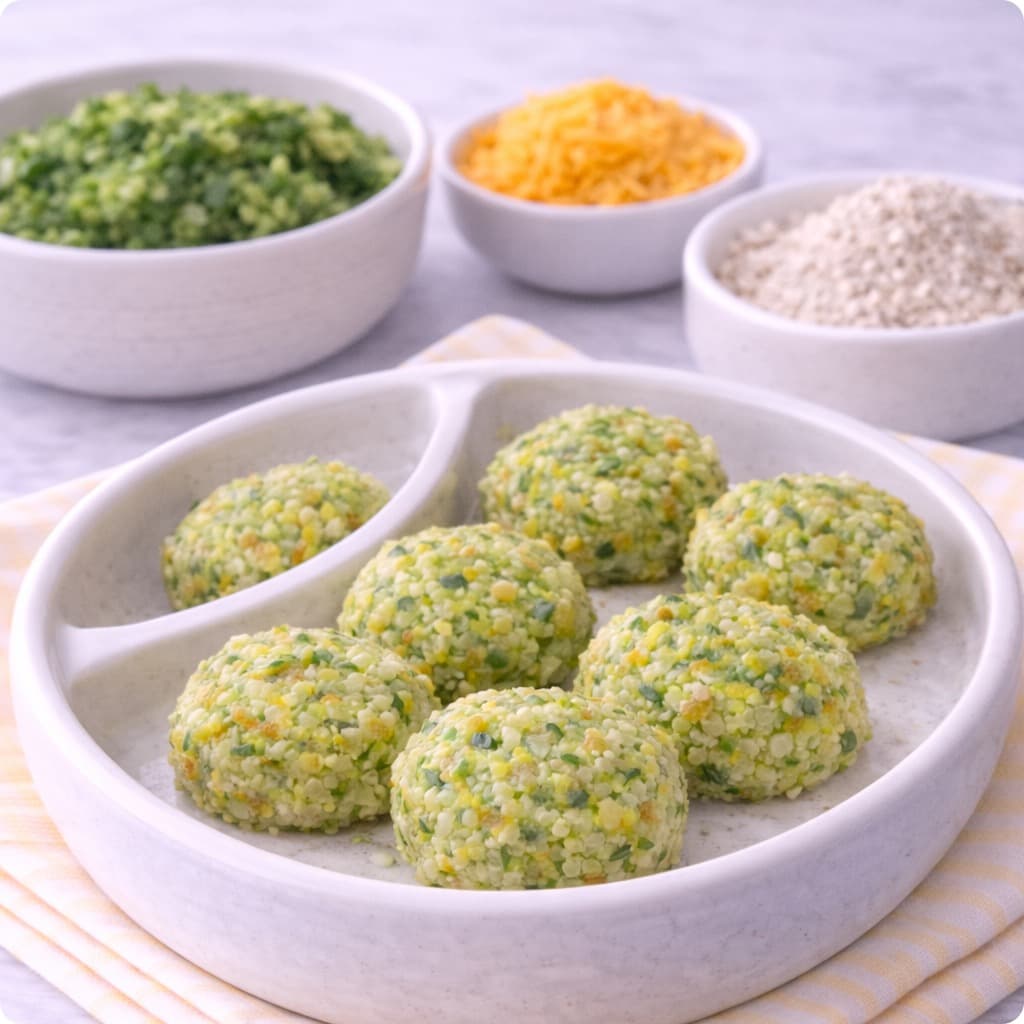
Broccoli Cheese Patties
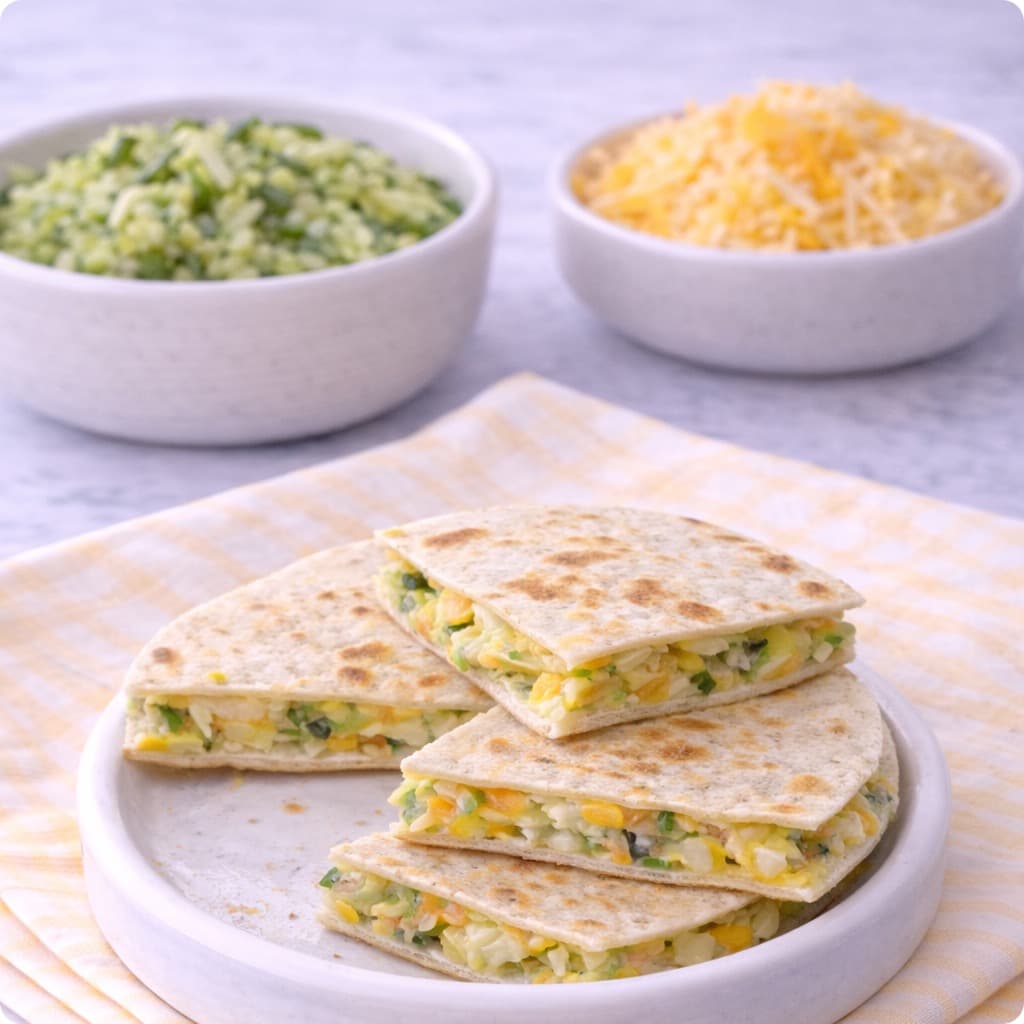
Mini Veggie Quesadilla
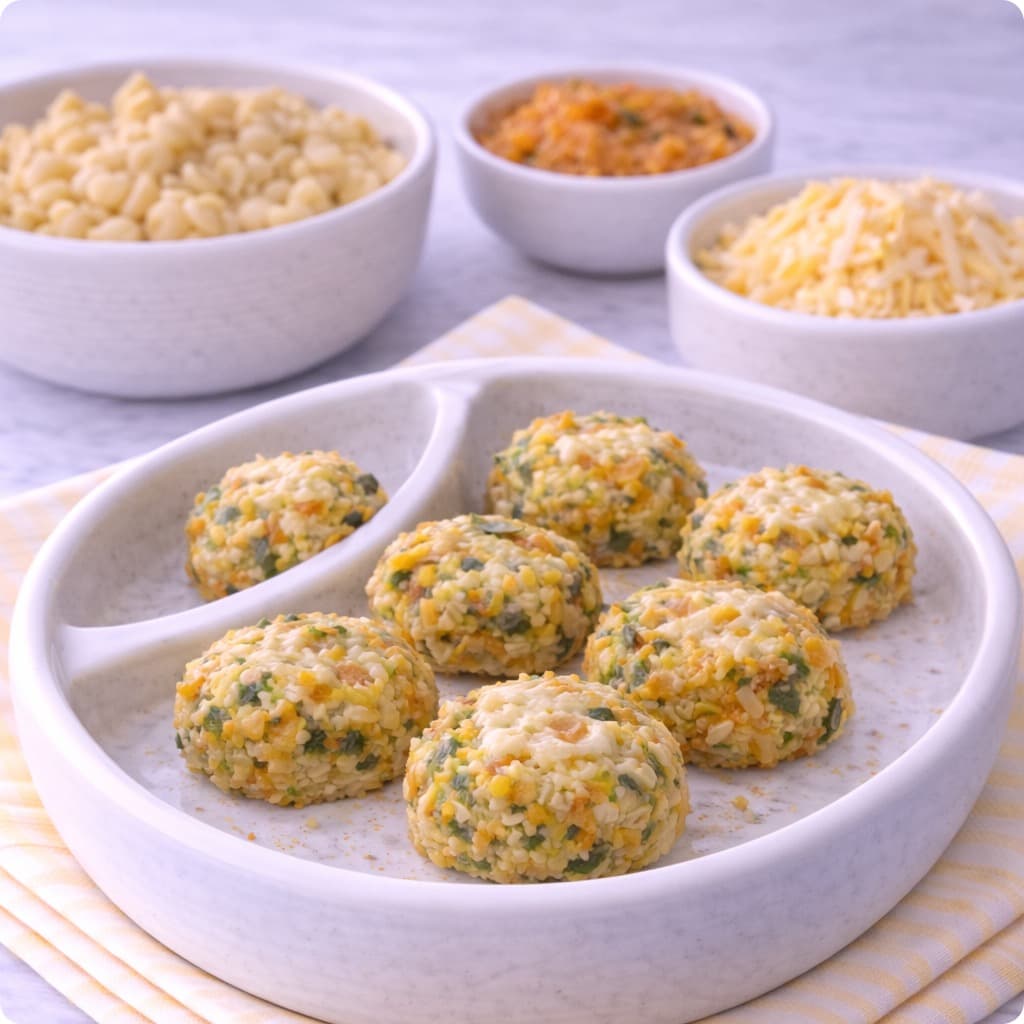
Mini Veggie Pasta Bake Bites
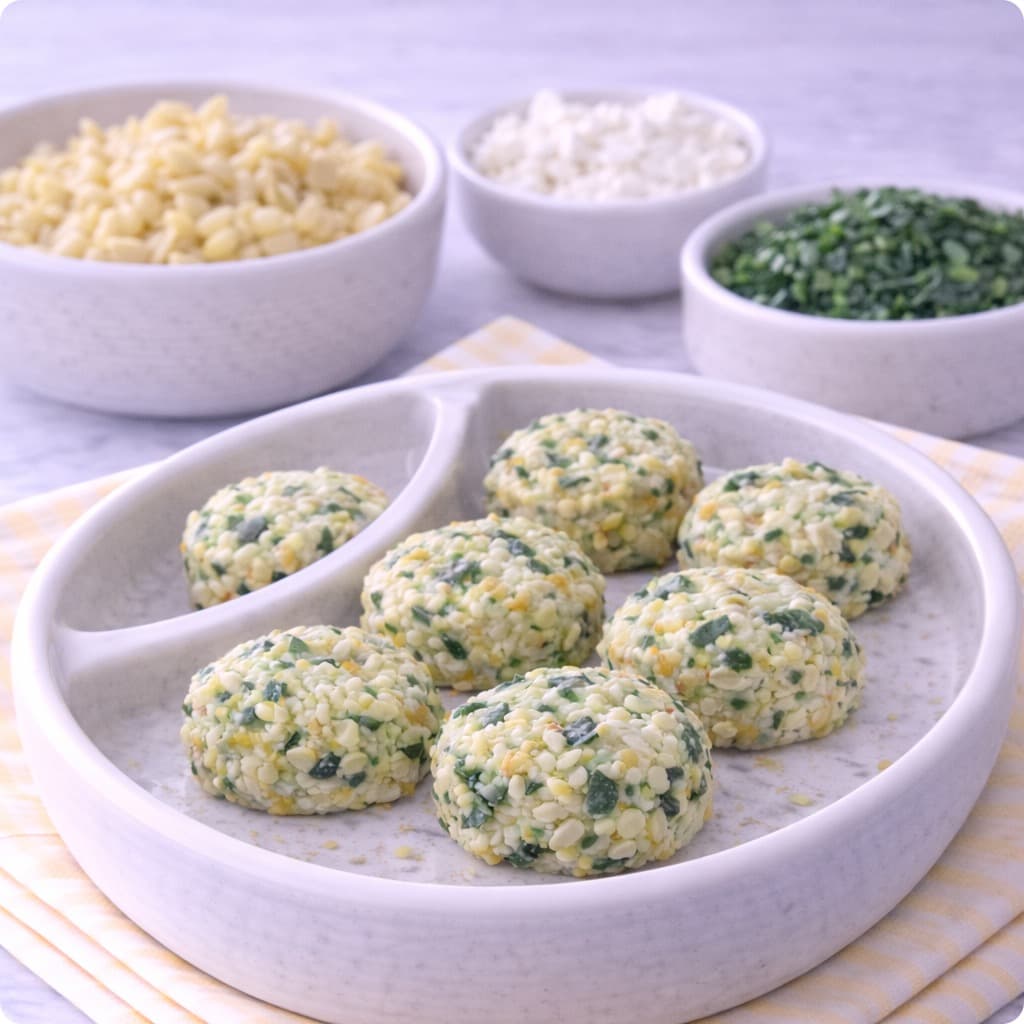
Spinach Ricotta Pasta Bites
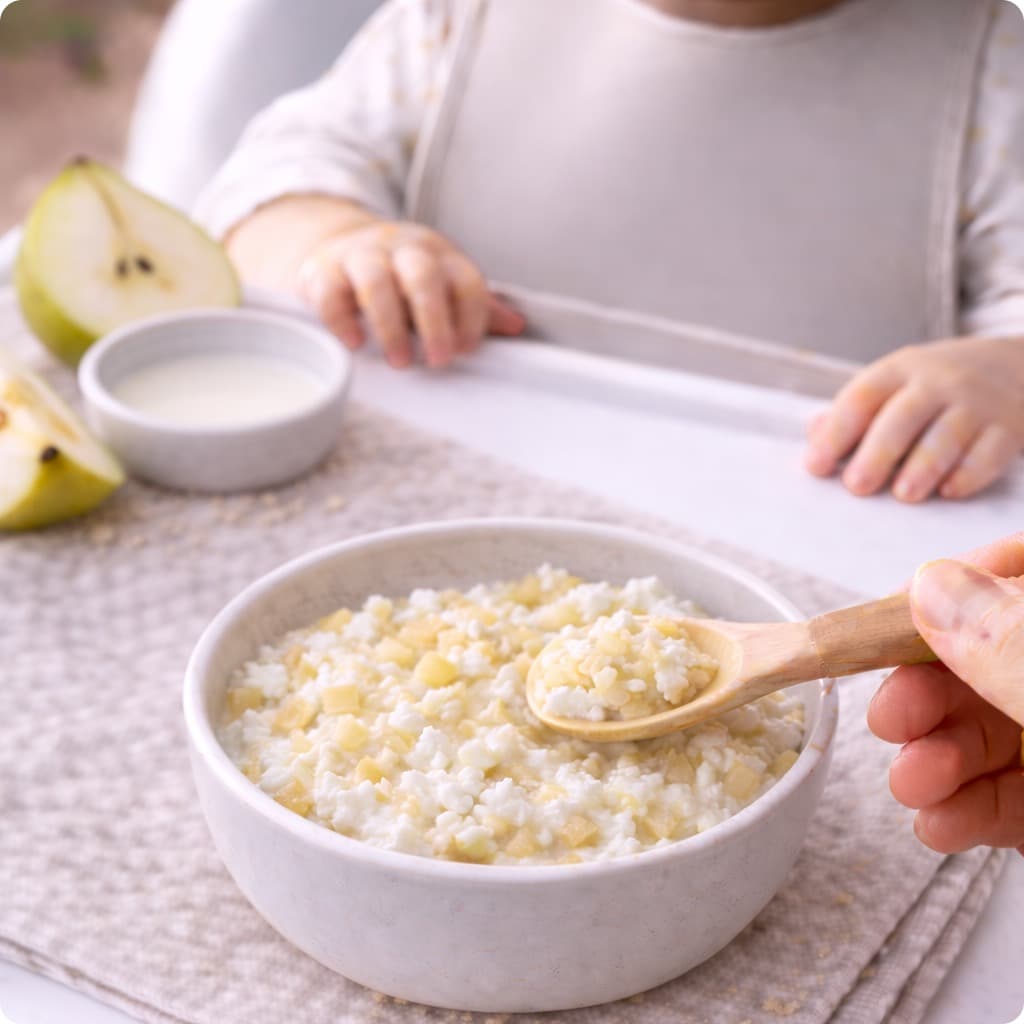
Cottage Cheese & Pear Mash

Cottage Cheese & Peach
Frequently asked questions
Which cheeses are safe for babies?
Choose pasteurized, lower-sodium cheeses like fresh mozzarella, ricotta, mild cheddar, cottage cheese, paneer, and pasteurized cream cheese. Avoid blue/mould-ripened cheeses (Roquefort, gorgonzola), unpasteurized soft cheeses (some brie, camembert, fresh feta), and very salty cheeses as a main offering.
Why is cheese OK before 12 months but cow's milk isn't?
Whole cow's milk as a drink isn't recommended before 12 months because it can crowd out iron-rich foods and the high mineral load is hard on a baby's kidneys. Cheese is fine earlier because cheesemaking alters the proteins, concentrates calcium, and cheese is eaten in small amounts as food rather than as a fluid replacement.
Is cheese a choking hazard?
Cheese can be a moderate choking risk in cube form because it's firm and slippery. Reduce risk by grating cheese finely, tearing fresh mozzarella into thin strips, or melting cheese over food. Avoid hard cheese cubes and string cheese for babies and young toddlers.
Can babies have processed cheese slices?
It's better to skip processed cheese slices, spreads, and 'cheese product' for young babies. They tend to be high in sodium, contain additives, and lack the calcium of real cheese. Choose real, low-sodium cheese instead.
How much cheese can a baby eat?
There's no fixed limit, but cheese is calorie- and sodium-dense, so a small amount is plenty - about a tablespoon of grated cheese, a thumb-sized piece of mozzarella, or a tablespoon of ricotta per serving. Balance with iron-rich foods so cheese doesn't dominate the plate.
Is unpasteurized cheese safe for babies?
No - unpasteurized (raw milk) cheeses can carry listeria, E. coli, and salmonella, which can cause serious illness in babies. Always check labels for 'pasteurized' before serving to under-2s. This applies to soft cheeses and some artisanal hard cheeses.
Can my baby be allergic to cheese?
Yes - cow's milk protein allergy is one of the top-9 allergens. Reactions can be immediate (hives, vomiting, swelling) or delayed (eczema flare, reflux, blood in stool). If you suspect a reaction, stop and see your pediatrician before reintroducing.
Get recipes + a feeding plan for your baby
Save this food to your baby's list, get age-appropriate recipes and follow a personalized feeding schedule - 350+ baby-safe meals in the app.
verifiedSources & References
This guide is informed by current guidelines from leading health organizations: