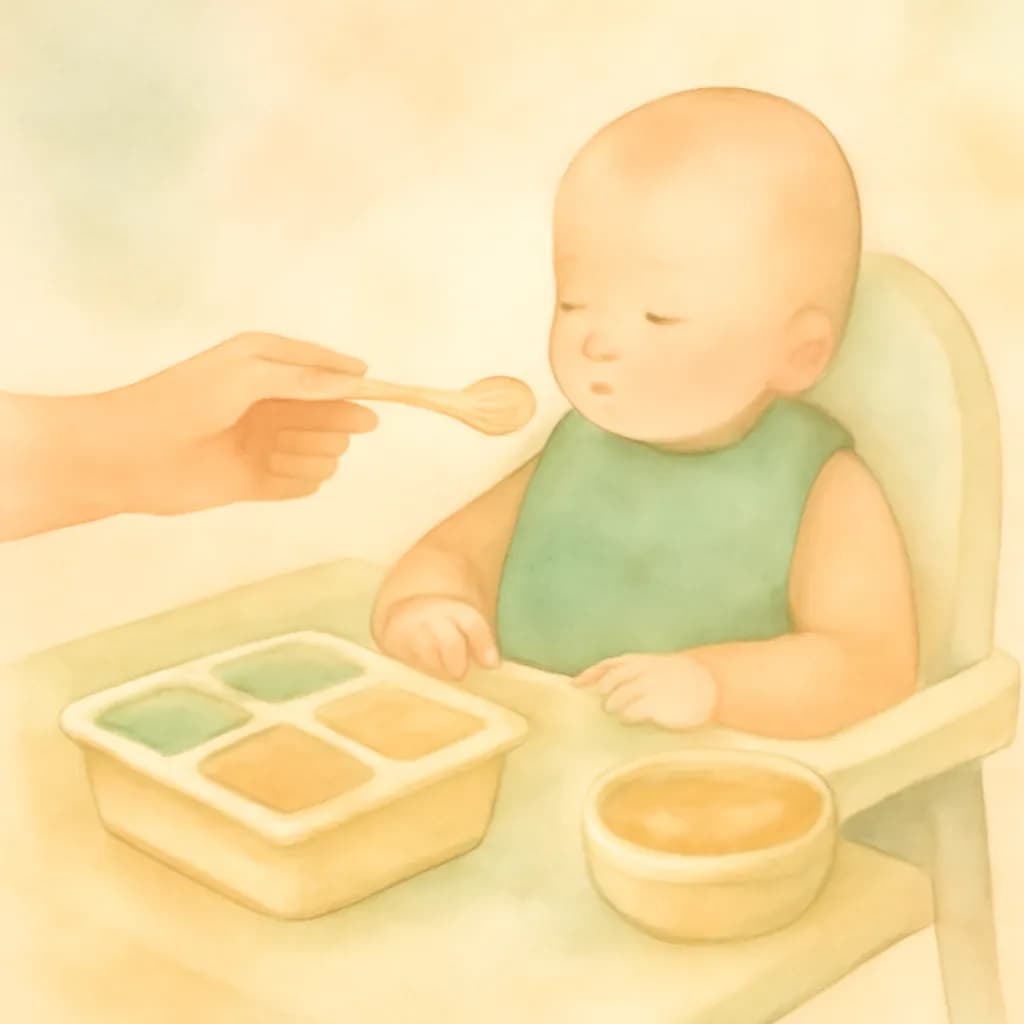
Why planning freezer meals matters
Freezing baby meals helps busy parents save time while ensuring their little ones get wholesome food. It supports consistent feeding routines and introduces a variety of tastes and textures.
Knowing which foods freeze well and how to store them safely prevents waste and keeps your baby’s meals fresh and nutritious.
What makes freezer-friendly baby meals work
- Purees made from vegetables and fruits freeze well because their texture and flavor remain stable after thawing.
- Protein-based meals like meatballs and patties retain nutrients and taste when properly cooked and frozen.
- Mini pancakes and cooked grains are great for baby-led weaning (BLW) as they can be portioned into bite-sized pieces before freezing.
- Soups freeze effectively when cooled quickly and stored in airtight containers to preserve freshness.
- Using ice cube trays for portion control helps you thaw just the right amount without waste.
- Labelled freezer bags and containers keep meals organized and help track storage times for safety.
When to ask for help
- Baby shows signs of allergic reaction after eating a frozen meal, such as rash or swelling.
- Persistent vomiting or diarrhea following feeding.
- Refusal to eat or difficulty swallowing new textures.
- Signs of foodborne illness like fever or lethargy after eating thawed food.
Steps to prepare and store freezer-friendly baby meals
Choose suitable foods
Select cooked purees, meatballs, patties, mini pancakes, soups, cooked grains, and BLW finger food bites that freeze well and maintain texture.
Avoid unsuitable items
Skip freezing raw fruits or vegetables, eggs in shell, lettuce, and dairy-heavy sauces as they don’t freeze or thaw well.
Use portion control trays
Freeze purees and small meals in silicone ice cube trays (about 30 ml per cube) for easy defrosting and serving.
Label and store properly
Place frozen cubes or portions into labelled freezer bags or glass jars that allow expansion, keeping track of dates and contents.
Defrost safely
Thaw meals overnight in the fridge - never on the countertop - to reduce bacteria risk.
Reheat thoroughly
Warm food to at least 75°C before serving, stirring well to avoid hot spots, and use within 1 month for vegetables and 2-3 months for protein meals.
Frequently asked questions
Can I freeze homemade baby purees?
Yes, homemade vegetable and fruit purees freeze well. Use ice cube trays for portioning and transfer cubes to labelled bags once frozen.
How long can I keep baby meals in the freezer?
Vegetable-based purees are best used within 1 month, while protein-based meals like meatballs can last 2 to 3 months for optimal freshness.
Is it safe to refreeze thawed baby food?
No, once baby food has been thawed, it should not be refrozen to avoid bacterial growth and food safety risks.
What’s the best way to defrost frozen baby meals?
Defrost meals in the fridge overnight to keep them at a safe temperature. Avoid thawing on the countertop.
Can I freeze BLW finger foods?
Absolutely! Cooked grains, mini pancakes, and small finger food bites are perfect for freezing and easy to thaw for baby-led weaning.
Which foods should I avoid freezing for my baby?
Avoid freezing raw fruits or vegetables, eggs in their shells, lettuce, and dairy-heavy sauces as these don’t freeze or thaw well.
What containers are best for freezing baby food?
Silicone trays, glass jars that allow for expansion, and reusable pouches are ideal for freezing baby meals safely and efficiently.
Get your baby's personalized feeding plan
A daily feeding schedule, 350+ age-matched recipes, allergen tracking and cutting guides - all tailored to your baby's age in the Nibli app.
verifiedSources & References
This guide is informed by current guidelines from leading health organizations: