Pineapple for Baby
Last updated October 2026
Ripe pineapple can be offered after a baby is ready for solids, generally around six months, but not every pineapple piece has a soft texture. Remove the tough outer skin and fibrous core, then check whether the remaining flesh mashes easily.
Quick answer
From around six months after feeding readiness, a baby can try a small amount of ripe, tender pineapple. The crucial checks are softness, fibrousness and removal of the hard central core.
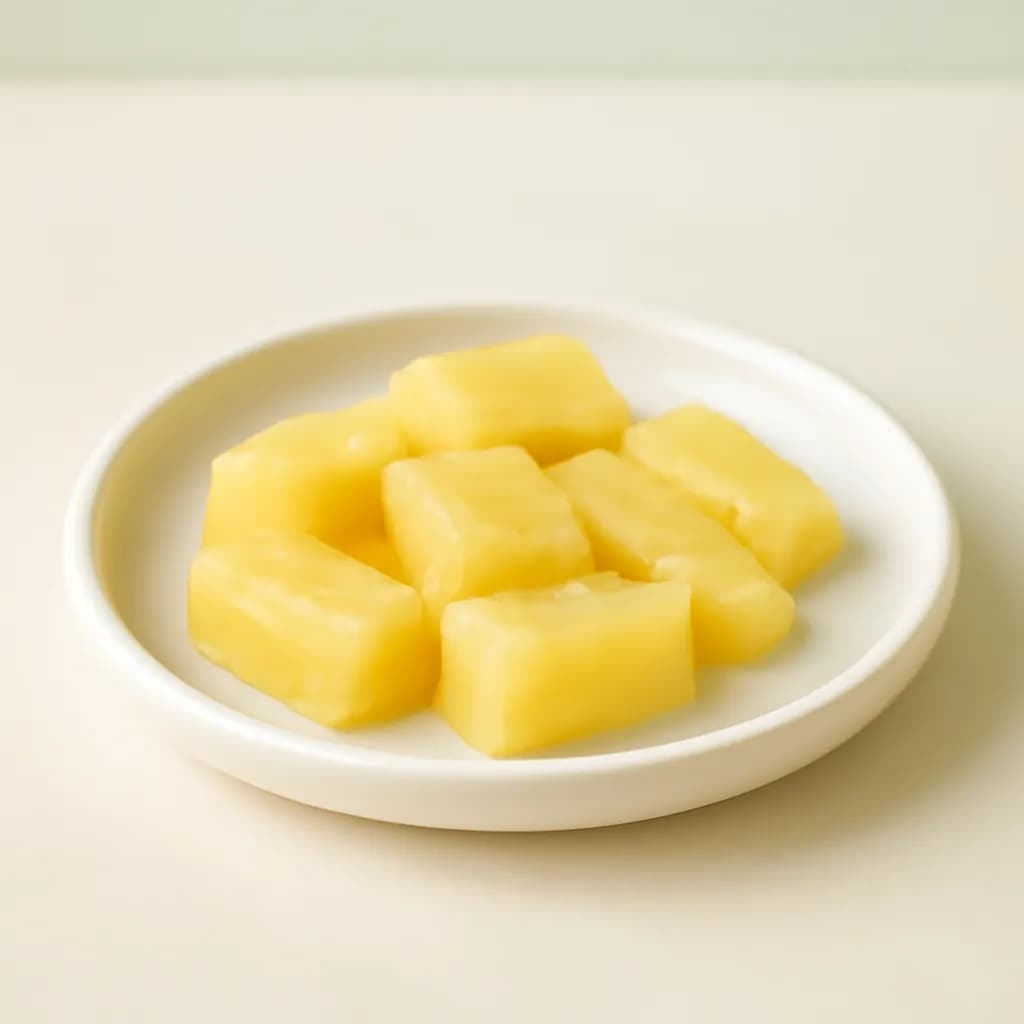
How to prepare pineapple for a baby
Wash the pineapple before cutting, remove the tough outer peel and eyes, discard the central core, then test several parts of the flesh for tenderness.
For a first taste, mash tender flesh or finely chop it into a familiar purée. If the pineapple is stringy or firm, do not offer whole fibres for the baby to pull apart.
For self-feeding, provide a genuinely soft portion the baby can manage rather than assuming an exact spear length is safe. Recheck the fruit as it varies between batches.
For later meals, offer small soft pineapple pieces, or use unsweetened tinned pineapple in juice if the pieces are tender and appropriately cut; avoid syrup-packed fruit and firm dried pineapple.
The right shape and size depend on your baby's eating skills, not on age alone. Step-by-step preparation: How to Cut Pineapple for Baby
Also check how to cut food for baby-led weaning for general BLW cutting tips.
When can babies eat pineapple?
Cut away the spiky rind and any 'eyes', then remove the core. If the flesh stays firm or stringy, mash or finely chop it into a familiar soft food, or choose a softer fruit.
Pineapple may cause contact irritation, but individual food allergy is possible. Repeated rash, hives, swelling, vomiting or breathing symptoms require appropriate medical advice.
An under-ripe or very fibrous pineapple can be difficult to handle even when cut into attractive spears. For early eaters, finely chopped or mashed tender pineapple may be easier to manage than a rigid wedge.
Pineapple is acidic and may irritate skin on contact, but a rash after eating is not automatically harmless irritation. If symptoms suggest a food reaction, assess them rather than relying on the fruit's acidity as an explanation.
See our first foods for baby guide for more ideas.
Pineapple safety and reaction checks
Remove the tough skin, spiky eyes and hard fibrous central core fully.
Use soft ripe flesh; reject any hard or stringy portion that resists mashing.
No fixed cutting shape or age makes a firm pineapple spear choking-proof.
Mouth redness may be irritation or allergy: do not automatically diagnose it from its location.
Check canned pineapple ingredients for syrup or added sweeteners and alter texture as needed.
Keep your baby upright and supervised throughout the meal.
Pineapple recipes for babies
We're adding more pineapple recipes. Check back soon.
Browse all baby recipes →See all pineapple recipes for babies. Explore baby breakfast recipes, baby-led weaning recipes and first foods for baby for more ideas.
Related Guides
Frequently Asked Questions
Is Pineapple a common allergen?
Pineapple is not typically a common allergen for babies. Many babies can try it from around 6 months as part of a varied diet.
What nutrients does Pineapple provide for babies?
Pineapple provides nutrients like fibre, vitamin C, iron that support babies' growth and development.
Sources & References
This guide is informed by current guidelines from leading health organizations:
- ●NHS - Your Baby's First Solid Foods NHS
- ●NHS - Preparing Food Safely for Babies NHS
- ●CDC — Choking Hazards (reviewed March 2026) CDC
- ●NHS Best Start in Life - Introducing foods that could trigger an allergic reaction NHS