Can babies eat pineapple?
Last updated October 2026
Yes.
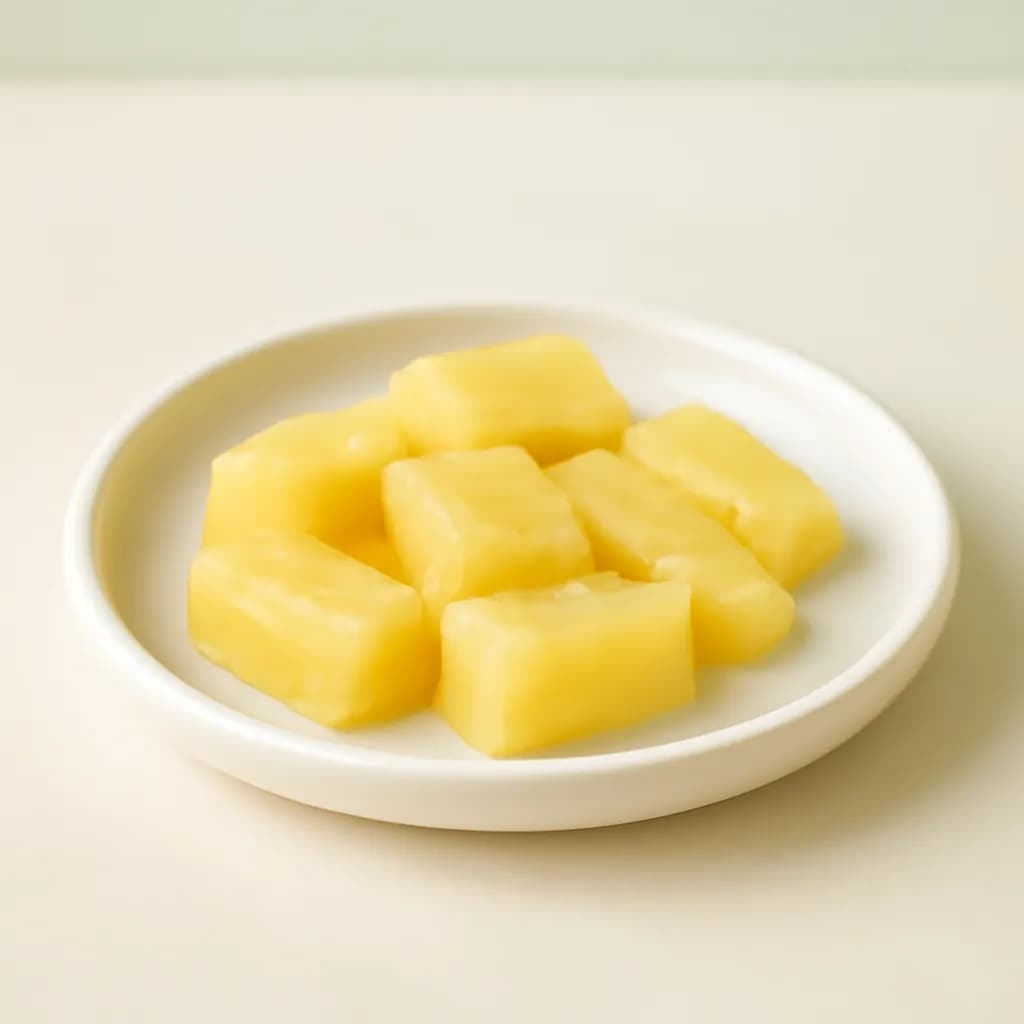
From around six months when ready for solids, babies may try soft pineapple with the prickly skin, eyes and hard core removed. Mash tender flesh into moist food or soften firm fruit first. A long strip is not automatically safe when the pineapple remains stringy or tough. Avoid hard frozen chunks and chewy dried fruit.
When can babies have pineapple?
Pineapple has no separate starting age. The NHS includes it in its list of fruits for babies from around six months, once the readiness signs appear together: your baby can sit and hold their head steady, pick food up and bring it to their mouth, and swallow it rather than spit it out.
Pineapple isn't on the NHS list of foods most likely to trigger allergic reactions. Like any new food, start with a small amount and see how your baby gets on.
How to prepare pineapple
Wash the whole pineapple under running water before cutting. Peel away the prickly skin, remove the brown eyes and cut out the entire woody core; check for stringy or firm portions. FDA recommends washing even produce that will be peeled to reduce transfer of surface contamination during cutting.
For early eaters, mash tender flesh or finely chop into soft porridge or already-tolerated yoghurt. Steam or simmer firm fruit until soft if needed. For a baby able to handle finger foods, use thin, tender slices; a long spear helps gripping but does not guarantee that fibres can be chewed. Avoid hard or slippery chunks.
Choose canned pineapple in juice without added sugar where possible, drain it and test softness. Mash or finely prepare canned rings and chunks rather than serving them whole. CDC lists whole pieces of canned fruit among choking hazards.
Pineapple safety checks
Rinse the uncut fruit, then remove all hard skin, brown eyes, central core and tough fibres. Mash or cook firm fruit until soft.
Do not offer chewy dried pineapple pieces, even if chopped. Under-one babies should not eat whole dried fruit; use fresh soft or thoroughly rehydrated, cooked and blended fruit instead.
Watch for signs of an allergic reaction. The NHS lists "swollen lips or face", "a red, itchy rash" and "feeling or being sick". If your baby has trouble breathing or swelling of the throat or tongue, call your local emergency number.
Seat your baby upright and stay with them while they eat. Call your local emergency number if your baby is choking and can't cough, cry or breathe effectively, and start baby choking first aid straight away.
Pineapple in a varied diet
Pineapple is one of the fruits the NHS suggests for babies from around six months. It adds a new taste and texture.
Give fruit as food, not juice. Babies under 12 months don't need fruit juice, according to the NHS, and the American Academy of Pediatrics says babies younger than 12 months should not be given juice.
Fresh fruit needs no added sugar. The NHS says eating fruit is fine, while sugary drinks and snacks are best avoided.
Related guides
Pineapple for babies: FAQs
My baby has a red rash around the mouth after pineapple. Is it an allergy?
Mild redness only where fruit touched the skin may be irritation rather than allergy. The North West Allergy Network describes contact rashes with fruit. If it keeps happening, ask a clinician. Spreading hives, facial swelling or vomiting after eating need medical advice; breathing difficulty, throat or tongue swelling or unusual floppiness require immediate emergency help.
Do I need to cook pineapple?
Not if it's ripe and soft enough to squash between your fingers. The NHS says harder fruits will need to be cooked to soften them, so simmer or steam firm pieces before serving.
Can I give frozen pineapple?
Never offer hard frozen pineapple pieces. Thaw fully, inspect for fibrous or firm flesh and serve a soft mash or manageable tender slice. If it remains tough, cook until soft or choose another fruit.
Sources & References
This guide is informed by current guidelines from leading health organizations:
- ●FDA - Selecting and Serving Produce Safely FDA
- ●NHS - Feeding your baby from around 6 months NHS
- ●NHS - Preparing Food Safely for Babies NHS
- ●CDC — Choking Hazards (reviewed March 2026) CDC
- ●NHS - Foods to Avoid Giving Babies NHS
- ●NHS - Drinks and Cups for Babies NHS
- ●AAP - Starting Solid Foods AAP
- ●NHS - Food Allergies in Babies NHS
- ●North West Allergy Network (NHS) - Weaning advice NHS
- ●Just One Norfolk (East of England Community Health and Care NHS Trust) - Baby-led weaning NHS
- ●NHS Best Start in Life - Cinnamon toast and banana sticks (10 to 12 months) NHS
- ●NHS - Anaphylaxis NHS
