Vitamin B12 for Babies: Brain Development and Diet
Last updated May 2026
Everything you need to know about vitamin B12 for your baby, from daily needs to food sources and supplements.
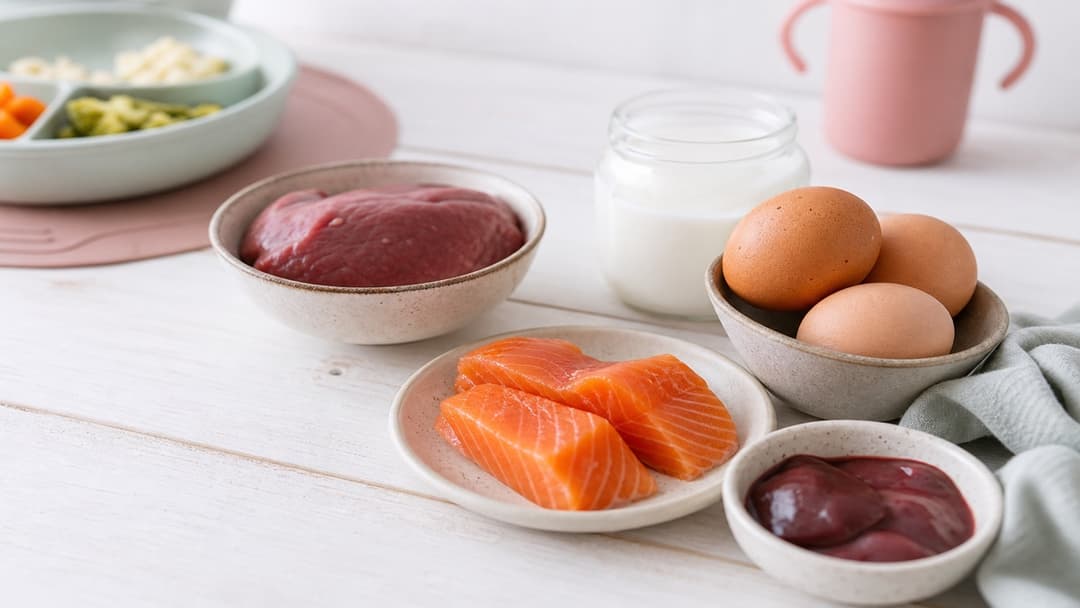
Vitamin B12 is a small but powerful nutrient that plays a big role in your baby’s growth. It supports brain development, helps form healthy red blood cells, and keeps the nervous system working properly. Because babies grow so quickly in the first year, getting enough B12 is especially important during this window.
Unlike many other vitamins, B12 is found naturally almost exclusively in animal foods. This means parents raising vegetarian or vegan babies need to plan carefully to ensure their child gets enough. The good news is that with the right knowledge, it’s very manageable.
In this guide, you’ll learn how much B12 your baby needs, the best food sources, how to support plant-based diets, and when supplements or medical advice may be needed. We’ll keep it practical, evidence-based, and easy to apply to everyday feeding.
Key takeaways
- Vitamin B12 supports brain development and healthy red blood cells.
- Babies 7–12 months need about 0.5 mcg of B12 daily.
- Animal foods are the most reliable natural sources of B12.
- Vegetarian babies can get B12 from dairy and eggs.
- Vegan babies need fortified foods or supplements for adequate intake.
- Early deficiency signs include fatigue, pale skin, and delayed development.
- Speak to a pediatrician if your baby may be at risk of low B12.
Why Vitamin B12 Matters
Vitamin B12 is essential for your baby’s neurological development. It helps build the protective covering around nerves (myelin), which allows messages to travel efficiently between the brain and body. This supports milestones like movement, coordination, and early learning.
B12 also plays a key role in making red blood cells and DNA. Without enough B12, babies can develop megaloblastic anemia, which reduces oxygen delivery around the body and can affect energy levels, growth, and development.
Health authorities like the NHS and American Academy of Pediatrics (AAP) emphasize that B12 is particularly important in infancy because deficiencies can develop quickly and may have lasting effects if not corrected early.
Because babies rely on breastmilk or formula initially, their B12 status depends on maternal intake (for breastfed babies) or fortified formula. Once solids begin, diet becomes an increasingly important source.
Daily Requirements for Babies
Vitamin B12 needs are small in quantity but critical in impact. According to the US National Institutes of Health (NIH) and EFSA guidance, babies aged 0–6 months need about 0.4 micrograms per day, while those aged 7–12 months need about 0.5 micrograms daily.
These amounts are usually met through breastmilk or infant formula in the early months. Standard infant formulas are fortified with B12, while breastmilk levels depend on the mother’s intake and stores.
After 6 months, when solids are introduced, babies should begin receiving B12 from complementary foods alongside milk feeds. Even small servings of B12-rich foods can meet daily needs because the requirement is low.
As a guide, just 1–2 tablespoons (15–30 g) of foods like yogurt, egg, or fish can provide enough B12 for the day. Regular inclusion is more important than large portions.
Top Food Sources of B12
Vitamin B12 is naturally found in animal-based foods, making these the most reliable sources for babies. Including a variety of these foods across the week helps ensure consistent intake as your baby explores new textures and tastes.
Good B12-rich foods for babies include soft-cooked eggs, full-fat yogurt, cheese, fish, chicken, and beef. These can be introduced from around 6 months in age-appropriate textures, either mashed, shredded, or served as soft finger foods.
Fortified foods can also contribute to intake, especially for plant-based families. Some breakfast cereals, plant milks (unsweetened and fortified), and nutritional yeast contain added B12, but labels should always be checked.
Aim to include a B12 source daily once solids are established. Pairing these foods with iron-rich options can further support healthy growth and development.
- Egg (1 scrambled egg): ~0.5–0.6 mcg
- Yogurt (30 g / 2 tbsp): ~0.2–0.4 mcg
- Salmon (20 g cooked): ~1 mcg
- Chicken (30 g cooked): ~0.3 mcg
- Cheese (15 g): ~0.2–0.4 mcg
B12 for Vegetarian and Vegan Babies
Vegetarian babies who consume dairy and eggs can usually meet their B12 needs through foods like yogurt, cheese, and eggs. Including these regularly makes it easier to reach daily requirements without supplementation.
For vegan babies, B12 requires more careful planning because plant foods do not naturally contain it. Fortified foods and supplements become essential rather than optional to prevent deficiency.
Reliable vegan sources include fortified plant milks (used in cooking after 6 months), fortified cereals, and nutritional yeast. However, intake can vary, so consistency is key.
Both the NHS and AAP recommend that vegan infants receive a reliable B12 source, often via supplementation. If you are following a vegan diet, it’s important to discuss a plan with your pediatrician or dietitian.
- Use fortified plant milks (unsweetened, calcium + B12 added)
- Offer fortified cereals suitable for infants
- Sprinkle nutritional yeast on savory foods
- Consider routine B12 supplementation if fully plant-based
Signs of Deficiency
Vitamin B12 deficiency in babies can develop gradually and may be hard to spot early. Symptoms often relate to the nervous system and blood health, which is why early detection is important.
Common signs include unusual tiredness, pale skin, poor feeding, developmental delays, and reduced activity. In more severe cases, babies may show hypotonia (low muscle tone), irritability, or regression in skills.
Deficiency is more likely in exclusively breastfed babies whose mothers have low B12 intake (especially vegan diets without supplementation) or in babies with restricted diets after starting solids.
Because symptoms can overlap with other conditions, any concerns should be discussed with a healthcare professional who can assess and, if needed, arrange blood tests.
Supplementation Guidance
Most babies who consume formula or a varied diet including animal products do not need B12 supplements. However, supplementation becomes important in specific situations, particularly for vegan families or when deficiency risk is high.
Breastfed babies rely on their mother’s B12 status. If a breastfeeding parent follows a vegan diet or has low B12 intake, both parent and baby may require supplementation to maintain adequate levels.
B12 supplements for infants are typically given as drops, with doses tailored to age and dietary intake. These should always be used under the guidance of a pediatrician or registered dietitian.
Avoid self-prescribing high doses. While B12 is generally considered safe, appropriate dosing ensures your baby gets what they need without unnecessary excess.
B12 and Brain Development
Vitamin B12 plays a direct role in brain development during infancy, a period of rapid growth and neural connection formation. Adequate intake supports memory, attention, and early cognitive skills.
It works alongside nutrients like iron, DHA, and folate to support the developing brain. A balanced diet that includes these nutrients helps create a strong foundation for learning and development.
Research shows that prolonged B12 deficiency in infancy can affect cognitive and motor development. This is why early nutrition is closely linked to long-term outcomes.
Ensuring regular intake of B12-rich foods or appropriate supplementation is one of the simplest ways to support your baby’s brain health during this critical stage.
When to Seek Medical Advice
You should speak to your pediatrician if your baby follows a vegan diet, shows signs of possible deficiency, or has limited intake of B12-rich foods. Early guidance can prevent problems before they develop.
Medical advice is also important if your baby was born prematurely, has growth concerns, or has conditions affecting nutrient absorption. These factors can increase the risk of deficiency.
If there are concerns, a doctor may recommend blood tests to assess B12 levels and overall nutritional status. Treatment, if needed, is usually straightforward and effective when started early.
When in doubt, it’s always safer to check. Vitamin B12 deficiency is preventable, and with the right support, your baby can thrive on a wide range of diets.
Frequently Asked Questions
Do babies need vitamin B12 supplements?
Most don’t if they eat animal foods or formula. Vegan babies or those at risk may need supplements under medical guidance.
What are the best B12 foods for infants?
Eggs, yogurt, cheese, fish, and chicken are excellent sources. Small daily portions can meet your baby’s needs.
Can a vegan baby get enough vitamin B12?
Yes, but only with reliable fortified foods or supplements. Speak to a pediatrician to ensure adequate intake.
What happens if a baby is low in B12?
Low B12 can affect brain development and cause anemia. Early treatment is important to prevent long-term effects.
How much vitamin B12 does a 6-month-old need?
Around 0.4 micrograms per day, usually met through breastmilk or formula.
Is breastmilk enough for B12?
Yes, if the breastfeeding parent has adequate B12 intake. Otherwise, supplementation may be needed.
Are fortified cereals a good B12 source for babies?
Yes, if they are age-appropriate and fortified. Always check labels for B12 content.
Can too much B12 harm a baby?
B12 is generally safe, but supplements should only be given in recommended doses under professional guidance.
When should I worry about B12 deficiency?
If your baby is vegan, has limited intake, or shows symptoms like fatigue or delays, consult your pediatrician.
Do vegetarian babies need B12 supplements?
Usually not if they eat dairy and eggs regularly, but intake should still be monitored.
verifiedSources & References
This guide is informed by current guidelines from leading health organizations:
Track your baby’s nutrients easily with the Nibli feeding app
Get personalised meal ideas, track key nutrients like B12, and feel confident your baby is getting what they need every day.