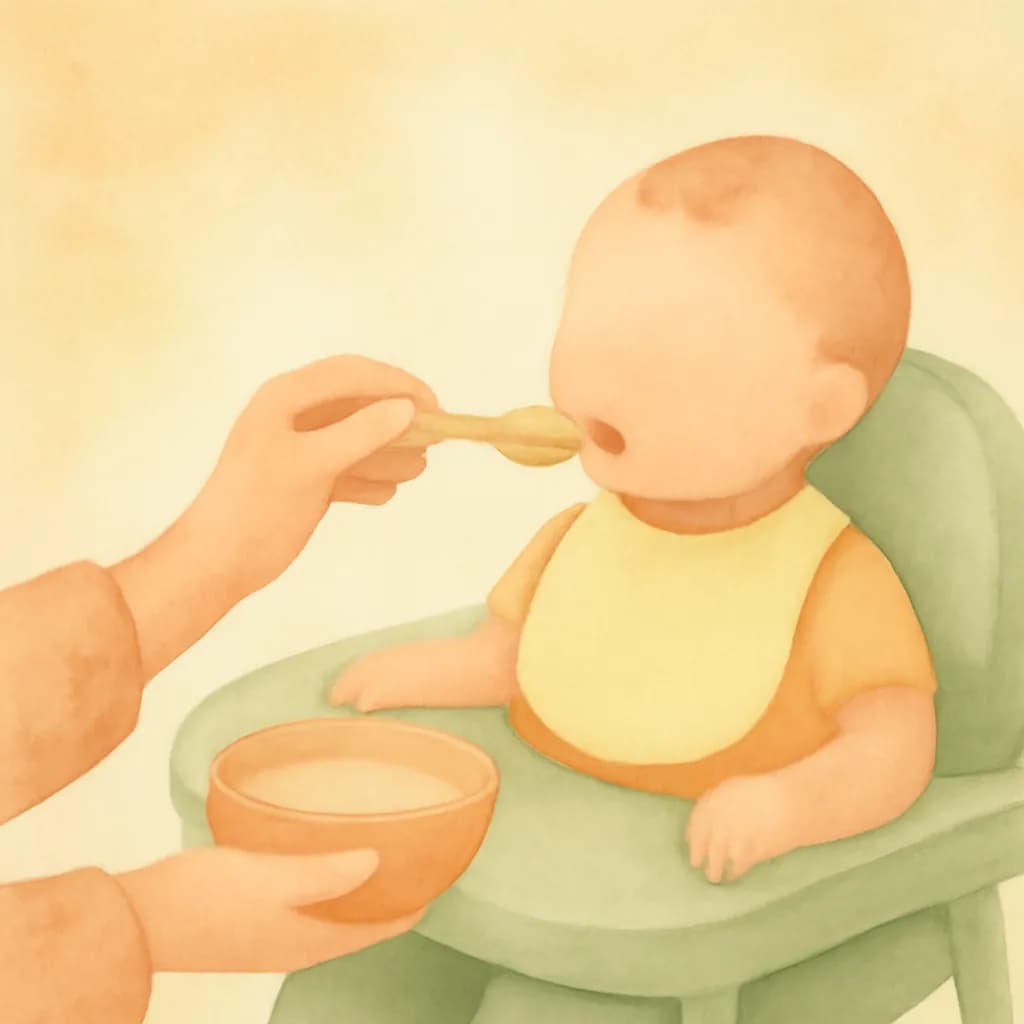
Should I worry about timing?
The AAP, WHO, and most pediatric guidelines recommend starting solids around 6 months for healthy, term babies. Some babies show readiness a few weeks earlier; some need a few weeks more. Both are normal.
Starting before 4 months is not recommended - the digestive system, swallowing coordination, and head control aren't ready. Waiting past 6 months by more than a few weeks can mean missed iron-rich first foods and may delay the texture-acceptance window. The right time is when your specific baby shows the readiness signs.
Why timing matters
- Iron stores: babies are born with iron stores that begin running low around 6 months, making iron-rich first foods important.
- Developmental readiness: head and neck control, sitting with support, and oral coordination develop around 6 months.
- Allergen window: introducing common allergens between 4-6 months (and continuing exposure) may reduce allergy risk.
- Digestive maturity: the gut lining and digestive enzymes mature around 4-6 months, making solid food easier to handle.
- Texture acceptance: there's a window between 6-9 months when babies most readily accept new textures; delays can lead to feeding aversions.
- Tongue-thrust reflex: this reflex (which pushes food out) typically fades around 4-6 months, signaling readiness.
When to talk to your pediatrician
- Baby is past 7 months with no readiness signs (poor head control, can't sit, no interest in food).
- Significant weight loss or stalled growth at any age.
- Premature baby - timing should be calculated from due date, not birth date; consult your pediatrician.
- Medical conditions (reflux, prematurity, syndromes) that may shift timing.
- Strong family history of allergies - your pediatrician may recommend specific allergen-introduction guidance.
- Your baby was started before 4 months for non-medical reasons - call to discuss.
How to know when to start
Wait until at least 4 months
Never start solids before 4 months (17 weeks). The digestive system, swallowing skills, and head control aren't ready. If your pediatrician suggests an earlier start for medical reasons (rare), follow their specific guidance.
Watch for the 5 readiness signs
Around 6 months, look for: (1) sitting with minimal support, (2) good head and neck control, (3) interest in your food, (4) reaching for food and bringing it to mouth, (5) loss of tongue-thrust reflex. Most babies show 4-5 signs by 6 months.
Talk to your pediatrician at the 4 or 6 month visit
Bring up timing at routine visits. Your pediatrician can assess growth, weight, and readiness. They may recommend starting earlier or later for specific reasons (premature birth, reflux, growth concerns).
Wait if your baby isn't ready
If your baby is exactly 6 months but can't sit upright, has poor head control, or pushes everything out with their tongue, wait another week or two. Forcing the start can lead to refusals and aversions.
Start small and slow at 6 months
Begin with one meal a day - just a few teaspoons or a couple of soft finger food pieces. The first weeks are about practice, not nutrition. Milk still covers all caloric and nutritional needs.
Choose a calm, alert moment
Offer the first solids when baby is happy, awake, and not too hungry or too full. About 30-60 minutes after a milk feed often works. Avoid trying when baby is tired or overstimulated.
Plan to introduce iron and allergens early
From the first weeks, include iron-rich foods (meat puree, soft meat strips, iron-fortified cereal, lentils). Also start introducing common allergens (peanut, egg, dairy) one at a time, in age-appropriate forms.
Frequently asked questions
Can I start solids at 4 months?
It's not recommended unless your pediatrician advises it for a specific medical reason. Most babies don't have the digestive maturity, head control, or oral skills before 6 months. The AAP, WHO, and most pediatric guidelines recommend around 6 months for healthy, term babies.
Is 6 months too late?
No, 6 months is the recommended starting age. Starting at 6 months gives the digestive system and oral motor skills time to mature. As long as you don't delay much past 6 months without readiness, the timing is right.
What if my baby is 6 months but not showing readiness signs?
Wait a week or two and reassess. Most babies show readiness around 6 months but some need a few extra weeks. If signs don't appear by 7 months, talk to your pediatrician. In the meantime, continue milk feeds; nothing is missed by waiting briefly.
Should I start with cereal, purees, or finger foods?
Any of these is fine. Iron-fortified infant cereal, single-ingredient vegetable or fruit purees, or soft finger foods (avocado, banana, steamed sweet potato) all work as first foods. Choose what fits your method (BLW, purees, or both) and your baby's preferences.
How do I start solids with a premature baby?
Use the corrected age (chronological age minus weeks early). A baby born at 32 weeks would be ready for solids around 8 months chronological age (6 months corrected). Always discuss with your pediatrician - prematurity timing varies by individual.
What if my baby grabs food off my plate at 5 months?
Interest is one readiness sign, but not enough alone. Check the others: sitting with support, head control, lost tongue-thrust reflex. If only interest is present, hold off until other signs appear. Until then, you can share interest by letting baby watch and explore safe items (cold spoon to chew on).
Plan your baby's first foods, with recipes
From the first spoonful onward, get a personalized starting-solids plan with age-matched recipes and the next step always one tap away.
verifiedSources & References
This guide is informed by current guidelines from leading health organizations: