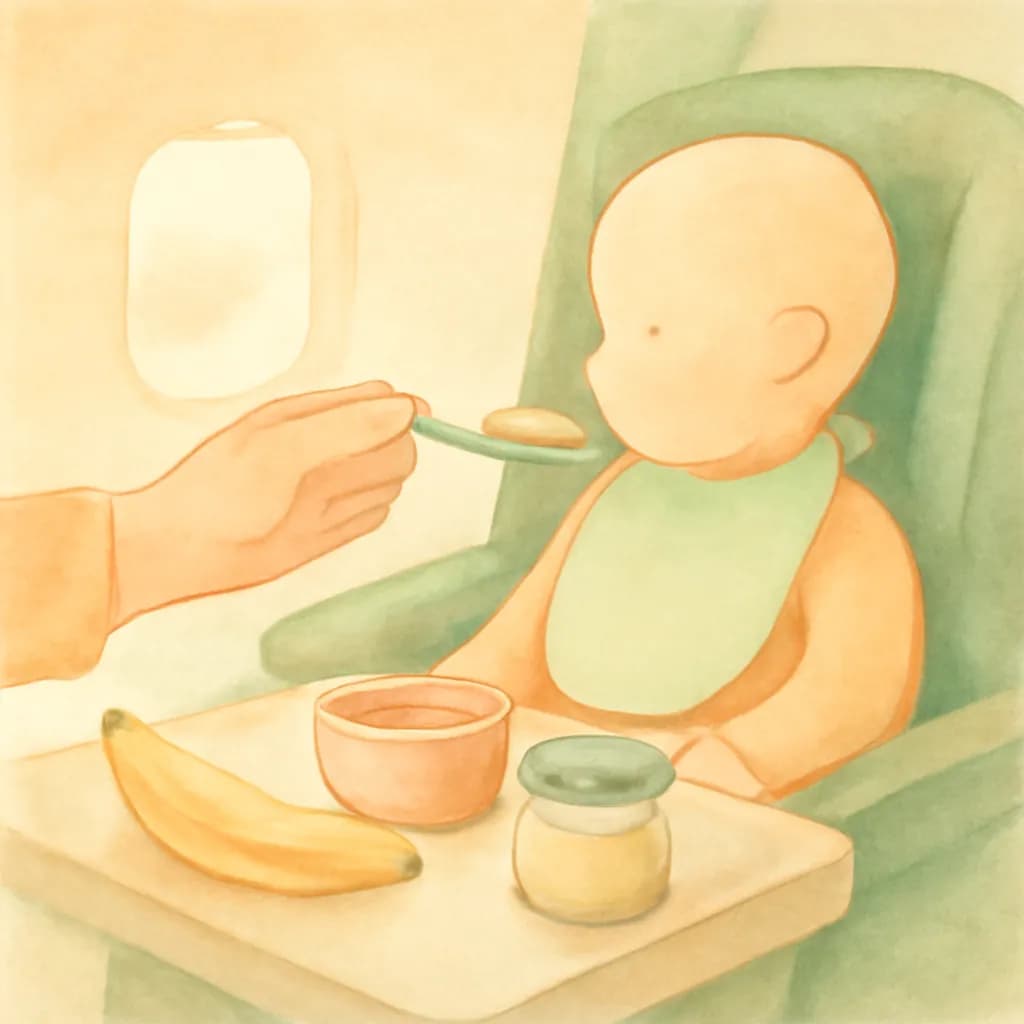
Is it normal for babies to have feeding challenges on flights?
Yes, many babies experience changes in appetite or fussiness during flights due to unfamiliar surroundings and ear pressure changes.
These reactions are common and usually temporary, resolving once your baby adjusts to the environment.
Why do feeding challenges occur during flights?
- Changes in cabin pressure can cause ear discomfort, making feeding more difficult.
- Unfamiliar environment and routine disruptions can affect baby's appetite and mood.
- Limited space and distractions on the plane may reduce feeding focus.
- Temperature changes can affect food texture and baby's willingness to eat.
- Stress or anxiety from travel can impact both parent and baby during feeding times.
- Timing of meals may not align with baby's usual feeding schedule.
When to seek medical advice
- Persistent refusal to eat or drink leading to dehydration
- Signs of ear pain or infection after flying
- Severe fussiness or inconsolable crying during or after the flight
- Any allergic reaction or unusual symptoms related to feeding
Tips for packing and feeding baby food on flights
Pack TSA-approved baby food
Bring breast milk, formula, water, and baby food in pre-portioned containers or pouches, which are exempt from the 100ml liquid rule but must be declared at security.
Use insulated bags and ice packs
Keep perishable foods fresh with an insulated bag and ice packs, ensuring food safety throughout your journey.
Bring baby spoons and bibs
Pack easy-to-clean baby spoons and bibs to manage mess and keep your baby comfortable during feeding.
Time meals with takeoff and landing
Offer food during takeoff and landing to help with ear pressure; chewing and swallowing can ease discomfort.
Choose less messy foods
Avoid foods that are overly messy or spill easily to reduce stress and clean-up on the plane.
Request hot water from flight attendants
For oatmeal or other warm foods, politely ask flight attendants for hot water to prepare meals onboard.
Frequently asked questions
Can I bring breast milk and baby food through airport security?
Yes, breast milk, formula, water, and baby food are exempt from the 100ml liquid restriction but must be declared at security for inspection.
How can I prevent my baby’s ears from hurting during takeoff and landing?
Feeding your baby during takeoff and landing encourages swallowing, which helps equalize ear pressure and reduce discomfort.
What are the best types of baby food to pack for a flight?
Choose pre-portioned containers or pouches with less messy foods that are easy to serve and clean up, such as purees or soft finger foods.
Is it okay to ask flight attendants for hot water to prepare baby food?
Yes, flight attendants are usually happy to provide hot water for preparing oatmeal or formula; just ask politely.
How can I keep baby food fresh during a long international flight?
Use an insulated bag with ice packs to keep food cool and safe, and bring a variety of foods to keep your baby interested during longer trips.
What should I do if my baby refuses to eat on the plane?
Stay calm and flexible, offer food at different times, and try soothing techniques; sometimes babies need time to adjust to the new environment.
Are there any foods I should avoid giving my baby during flights?
Avoid foods that are very messy, sticky, or prone to spilling, as well as any new foods that might cause allergies or digestive upset during travel.
Get your baby's personalized feeding plan
A daily feeding schedule, 350+ age-matched recipes, allergen tracking and cutting guides - all tailored to your baby's age in the Nibli app.
verifiedSources & References
This guide is informed by current guidelines from leading health organizations: