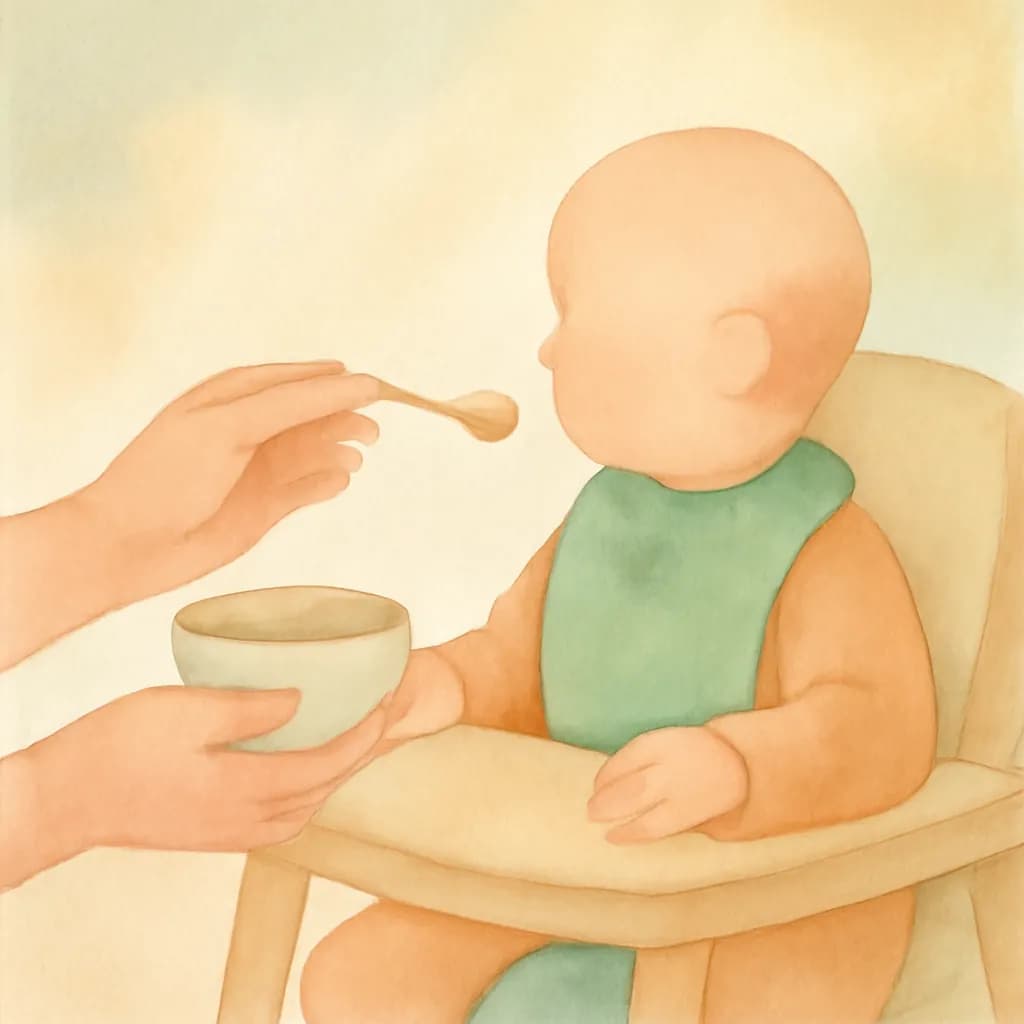
Is this normal?
Yes - many babies prefer the familiar texture of purees and need a gradual introduction to lumps and finger foods. The transition is a skill that takes practice. Babies who started exclusively with smooth purees may need extra time to build chewing and tongue-coordination skills.
What matters is that you start adding texture by 8-9 months at the latest. Delaying texture much beyond 10 months can lead to long-lasting texture aversion. The good news: small daily exposures build the skill quickly once you start.
Why babies get stuck on purees
- Novelty fear - new textures are unfamiliar and feel weird in the mouth.
- Learning new oral skills - moving lumps around the mouth, chewing, and swallowing solids takes practice.
- Sensitive gag reflex - the gag reflex is normal but stronger in some babies, especially with sudden texture jumps.
- Parental over-reliance on purees - if every meal is smooth, baby never gets practice with anything else.
- Skipped texture progression - going straight from smooth to chunks without lumpy in between can overwhelm.
- Pressure or stress - anxious mealtimes make babies cling to what's familiar.
- Sensory sensitivities - some babies are extra sensitive to texture, smell, or temperature changes.
When to call your pediatrician or feeding therapist
- Still rejecting all texture (any non-smooth food) by 12 months despite gradual exposure.
- Strong, persistent gag reflex that doesn't soften with practice over weeks.
- Choking events that are silent and require intervention.
- Weight loss or no weight gain across 2-3 weeks.
- Sensory sensitivities affecting many areas (touch, sound, taste) - may benefit from feeding therapy.
- Severe distress at any non-puree texture - including foods touching mouth or hands.
- No progress at all after 4-6 weeks of patient gradual exposure.
What to try
Progress textures gradually
Move from smooth → slightly lumpy → mashed → soft chunks → finger foods over weeks. Don't jump from blended puree straight to whole pieces. Small steps make the difference.
Start by adding tiny lumps to favorite purees
Mash instead of blending. Stir small soft cooked vegetable pieces into a familiar puree. Add a few flakes of well-cooked rice or oats. The familiar base reassures baby while they meet new texture.
Introduce soft finger foods alongside purees
Put 1-2 melt-in-mouth finger food pieces on the tray during a puree meal: a strip of ripe banana, soft-cooked sweet potato, well-steamed broccoli floret. No pressure to eat them - just available.
Model eating textured food
Eat the textured foods in front of baby. Make them look enjoyable. Babies learn what's normal by watching - your interest in lumpy or finger foods makes baby curious.
Use slow, repeated exposure
Many babies need 10-15 exposures to a new texture before accepting it. Keep offering the same items every few days. Refusal today doesn't mean refusal forever; it means more practice needed.
Never force or push past gagging
If baby gags or refuses, stay calm and don't force. Forcing creates aversion. Take a step back, return to a slightly smoother texture, and try the next step again in a few days.
Be patient over weeks and months
Some babies make the transition in 2-3 weeks; others need 2-3 months. Both are fine. Focus on small daily wins (a tongue movement on a lump, a touch of a finger food) rather than big leaps.
Frequently asked questions
Is it bad if my baby only eats purees?
Not bad in the short term, but you should start adding texture by 8-9 months. Delaying texture beyond 10 months can lead to long-term texture aversion that's harder to undo. Start gradual exposure now to keep the path open.
How do I move from smooth purees to texture?
Go in small steps: smooth → slightly lumpy → mashed → soft chunks → finger foods. Stir tiny soft cooked pieces into familiar purees, add melted finger food pieces alongside meals, and progress over weeks. Never jump straight from smooth to whole pieces.
My baby gags on every lump - is this normal?
Some gagging is normal and protective when learning new textures. If gagging is mild and improves with practice, keep going gently. If it's severe, persistent, or doesn't soften over weeks, talk to your pediatrician or a feeding therapist.
Should I stop offering purees and force finger foods?
No - never force. Continue offering familiar purees while gradually introducing texture alongside. Going cold-turkey on purees usually backfires and creates more food anxiety. Patience and gradual exposure work better.
How long until my baby eats normal food?
Most babies make the transition within 2-12 weeks of gradual exposure. Some take longer. By 12 months, almost all healthy babies are eating finger foods alongside the family. If you don't see progress over 4-6 weeks, ask for help.
Can a feeding therapist help?
Yes - if your baby has been on purees-only past 12 months despite gradual exposure, or if there are signs of strong sensory sensitivities, a pediatric feeding therapist can give personalized strategies. Ask your pediatrician for a referral.
Get unstuck + a plan for your baby
Personalized, age-aware troubleshooting plus a feeding schedule and recipes built around your baby, so mealtimes get easier from here.
verifiedSources & References
This guide is informed by current guidelines from leading health organizations: