When can babies eat apricot?
Apricot can be introduced from around 6 months, as soon as your baby shows readiness signs: sitting up with little support, good head and neck control, and reaching for or mouthing food. There is no need to wait or delay apricot for allergy reasons, since it is not one of the common food allergens. As with any new food, it is helpful to offer it on its own for the first try so you can watch how your baby responds.
The bigger consideration with apricot is texture, not age. Fresh apricot becomes very soft and easy to mash when ripe or lightly cooked, which makes it a friendly early food. Firm, underripe fruit and dried apricot are tougher and stickier, so save those for later or change how you prepare them. Always remove the pit first, since the hard stone is both a choking hazard and a hazard if swallowed.
How to serve apricot safely
From 6 to 9 months, peel ripe apricot, remove the pit, and either puree it or cook it briefly until very soft and then mash with a fork. If you are doing baby-led weaning, offer a soft, peeled half or a thick wedge large enough for your baby to hold with a bit sticking out of the fist. Skip raw, firm apricot at this stage, since unripe fruit stays too hard to gum safely.
From 9 to 12 months and up, as pincer grasp develops, you can offer small soft pieces of peeled ripe apricot for self-feeding. Dried apricot should be finely chopped or simmered until plump and soft, never given whole, because it is firm, sticky, and easy to choke on. Continue to peel the skin or cut it very thin until your baby chews well, and always cut round or coin shapes so they are not the size or shape that can block the airway.
Nutritional benefits for babies
- 💚Beta-carotene, which the body converts to vitamin A to support healthy eyes, skin, and immune function
- 💚Vitamin C, which helps the body absorb iron from other first foods
- 💚Dietary fiber to support digestion and regular bowel movements
- 💚Potassium, an important mineral for fluid balance and muscle function
- 💚Natural sweetness that pairs well with iron-rich foods and plain yogurt without added sugar
- 💚Antioxidants and small amounts of vitamin E that support overall growth
Safety considerations
- ✓Apricot is not a common allergen, and there is no need to delay it; still, introduce it on its own and watch for any reaction the first few times.
- ✓Always remove the pit, and peel the skin or slice it very thin, since both can be choking hazards for young babies.
- ✓Serve fresh apricot soft and ripe; cook firm fruit until tender so it mashes easily between your fingers.
- ✓Never offer whole dried apricot. Finely chop it or simmer until soft, because dried fruit is firm, sticky, and a serious choking risk.
- ✓Always supervise your baby during meals, keep them seated upright, and offer one new food at a time so you can spot any reaction.
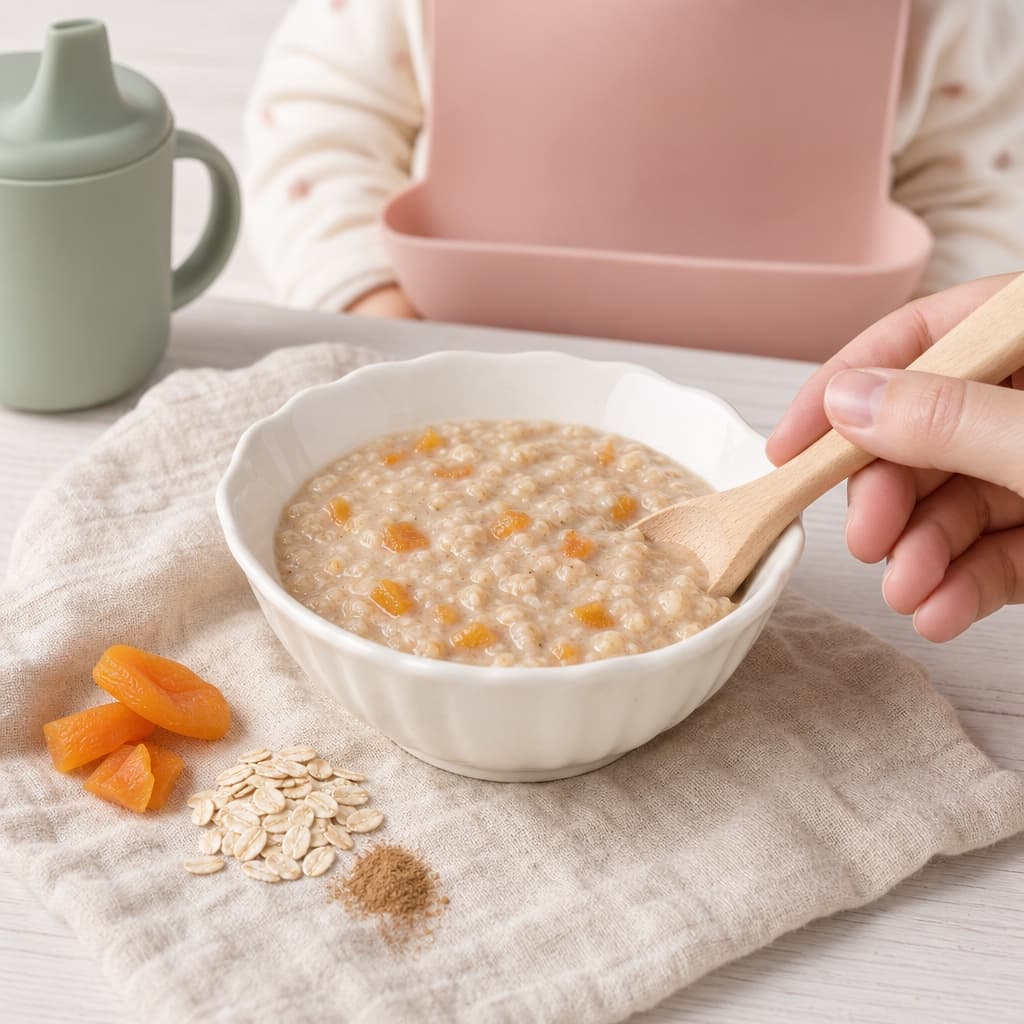
Recipes with apricot for babies
Frequently asked questions
Can babies eat dried apricots?
Dried apricots are too firm and sticky to give whole and are a choking hazard for babies. Finely chop them or simmer until soft and plump before serving, and offer only small amounts. They are also more concentrated in natural sugars, so use them sparingly.
Do I need to peel apricot for my baby?
For young babies, it is safest to peel apricot or cook it until the skin is very soft, since the skin can be tough to gum. Once your baby chews well, you can leave thin skin on. Peeling is most important in the early months of solids.
Can apricot cause an allergic reaction in babies?
Apricot is not a common allergen, so reactions are uncommon. As with any new food, offer it on its own for the first try and watch for signs like rash, swelling, vomiting, or trouble breathing. If you notice a reaction, stop and contact your pediatrician.
Is canned apricot okay for babies?
Choose canned apricot packed in water or its own juice rather than heavy syrup, which adds sugar babies do not need. Drain and rinse it, then mash or chop to a safe texture. Fresh or frozen apricot is usually the simplest choice.
Can apricot help with baby constipation?
Apricot contains fiber and natural sorbitol, which can help soften stools and support digestion. Pureed apricot is a gentle option to try if your baby seems constipated. If constipation is ongoing or your baby seems uncomfortable, check with your pediatrician.
How much apricot can a baby eat?
There is no fixed amount; let your baby's appetite guide the portion alongside breast milk or formula. Start with a couple of spoonfuls or one or two soft pieces and offer more if they want it. Keep dried apricot portions small because the sugars are concentrated.
Can I mix apricot with other baby foods?
Yes, apricot blends nicely with iron-rich foods, plain yogurt, oatmeal, or other fruits. Its natural sweetness can make new flavors more appealing without any added sugar. Pairing it with iron-rich foods also helps your baby absorb that iron thanks to the vitamin C in apricot.
Get recipes + a feeding plan for your baby
Save this food to your baby's list, get age-appropriate recipes and follow a personalized feeding schedule - 350+ baby-safe meals in the app.
verifiedSources & References
This guide is informed by current guidelines from leading health organizations: