Can babies eat avocado?
Last updated October 2026
Yes.
When your baby is developmentally ready for solid food, generally around six months, ripe avocado can be offered mashed or as a tender self-feeding portion. Wash before cutting, remove the hard pit and peel, and check that the flesh mashes readily. A fixed 4–5 cm spear or leaving skin attached does not guarantee safe swallowing. Avocado is not a major routinely listed food allergen, but an individual reaction is possible; diagnosed latex or fruit allergies warrant personal medical guidance.

When can babies try avocado?
Once your baby shows feeding readiness at about six months, avocado may join other fruits and vegetables. Choose flesh that yields to a fork rather than assuming all avocado is soft.
Wash the whole avocado before slicing. Remove the central stone completely, separate flesh from peel and discard tough or stringy areas.
Avocado supplies fat and energy, but it is not an iron-rich first food. Serve it alongside varied iron-containing complementary foods.
How to prepare avocado for a beginning eater
Wash and halve the avocado safely, discard the entire stone, remove the peel and inspect the flesh for firm spots.
For spoon feeding, mash the ripe flesh to a manageable consistency without salt. Thin only if needed with a previously tolerated ingredient.
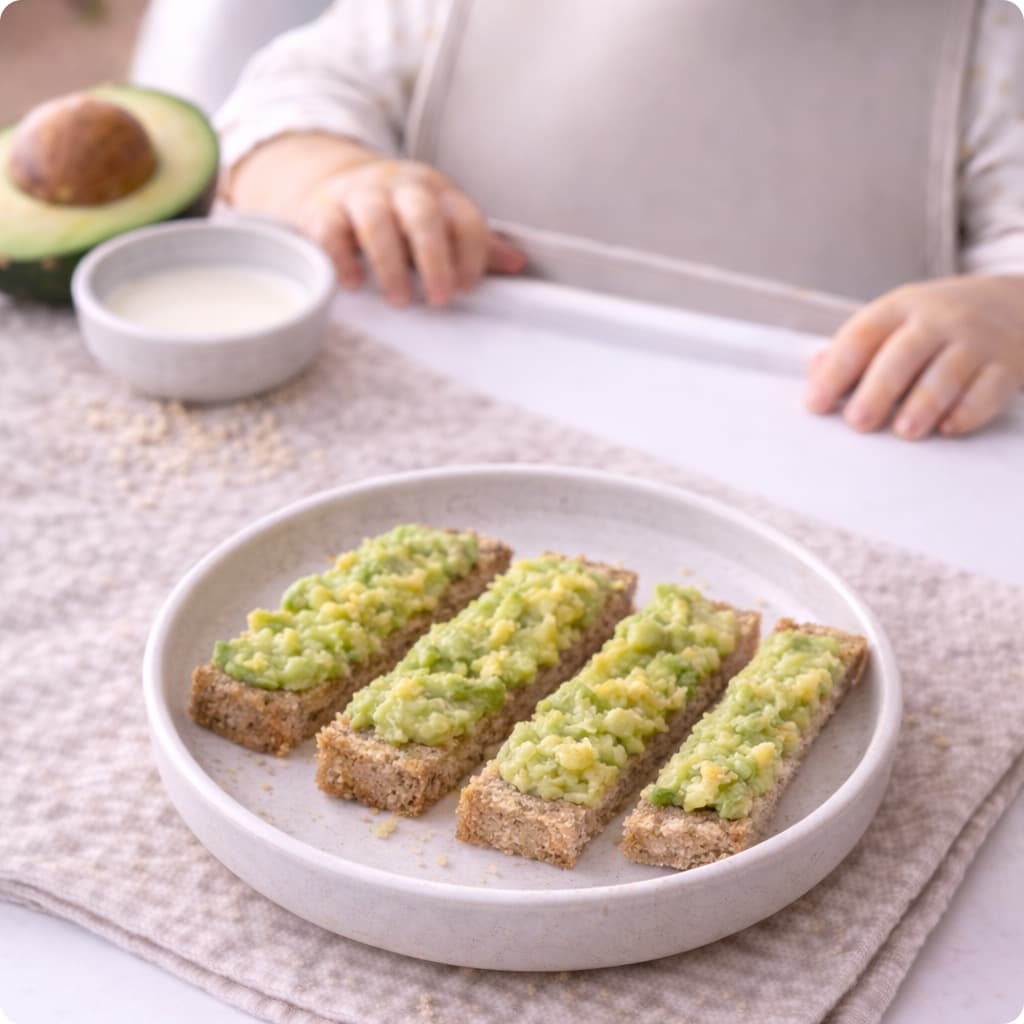
For self-feeding, offer a genuinely soft, graspable portion that your baby can control. Do not treat a fixed spear measurement, a piece of retained peel or a crumb coating as an assurance of safety.
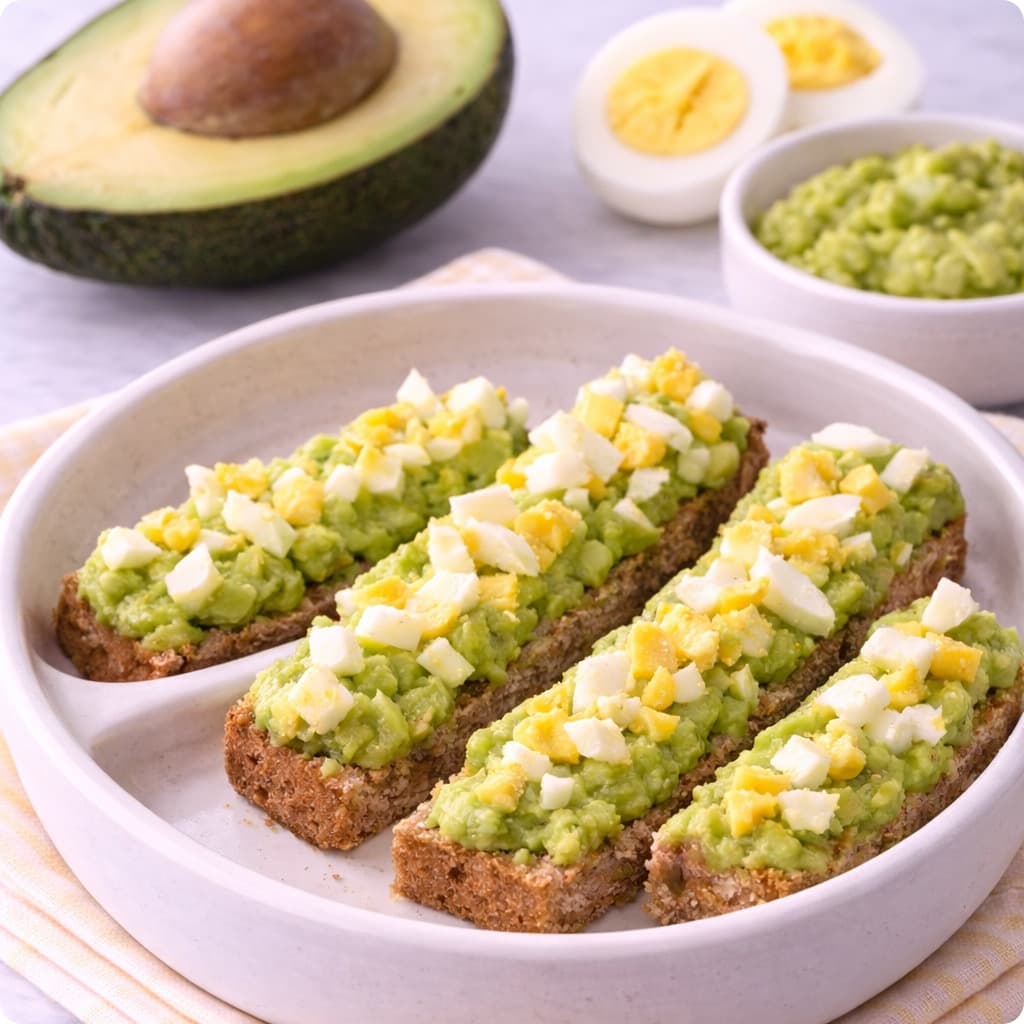
As chewing and pincer grasp develop, offer smaller soft pieces or avocado mixed into familiar meals. Any oat, wheat or nut coating has separate allergen considerations.
Softness, choking and allergy checks
Discard the entire hard pit and skin; inspect for firm or stringy flesh.
An underripe rubbery piece is not suitable merely because it is cut into a long spear.
Do not leave peel attached as a presumed safe gripping handle.
Check allergens in toppings or coatings, especially wheat and nuts.
An individual avocado allergy is possible; a history of latex sensitivity requires personal assessment, not a blanket avocado ban.
Offer food seated upright under close supervision.
What avocado adds
Unsaturated fat and energy are useful parts of a varied complementary diet.
Avocado contributes some fibre, folate and potassium.
Soft ripe fruit can be mashed without added salt or sugar.
Avocado is not an adequate stand-alone source of iron for an infant.
Claims that one avocado meal improves brain development or cures constipation are not established.
Baby-friendly avocado recipes
View all recipes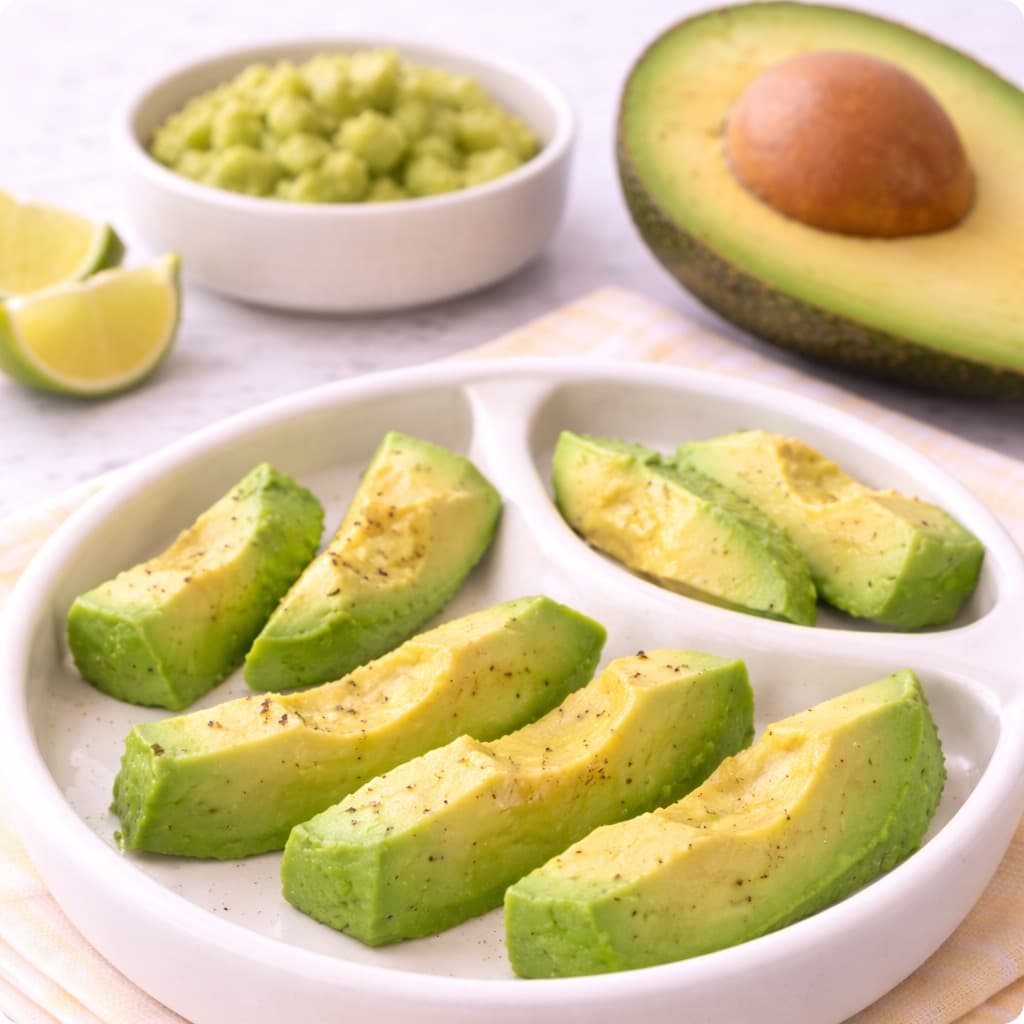

You might also like
Avocado for babies: common questions
Can a six-month-old eat avocado?
Yes, after readiness for solids, provided the avocado is ripe and soft. Peel it, remove the pit and offer a manageable mash or soft portion.
Should I leave avocado skin on for grip?
For an early eater, remove the peel. A leathery skin handle may tear or separate and is not a reliable way to prevent choking. Choose a soft portion the child can control.
Are 4–5 cm avocado spears the safest cut?
No single dimension makes a piece choking-proof. Assess ripeness, softness, shape and your baby's grasp and chewing skills.
Can avocado cause an allergic reaction?
Yes, although it is not among the most frequently listed allergens. Watch for hives, swelling, vomiting or breathing symptoms; seek appropriate care for suspected reactions.
Does latex allergy mean avocado must be avoided?
Not automatically. Latex-fruit cross-reactivity exists for some people, but individual evaluation is needed when there is a diagnosed allergy.
Can I use guacamole for a baby?
A simple low-salt mash may be suitable. Check for firm onion pieces, salt and other ingredients, and avoid introducing several unfamiliar allergens together.
How much avocado should my baby have?
There is no prescribed universal first-serving quantity. Offer a little and respond to appetite while maintaining normal milk feeds and iron-rich complementary foods.
Sources & References
This guide is informed by current guidelines from leading health organizations:
- ●NHS - Your Baby's First Solid Foods NHS
- ●NHS - Preparing Food Safely for Babies NHS
- ●CDC — Choking Hazards (reviewed March 2026) CDC
- ●NHS - Food Allergies in Babies NHS
