When can babies eat butternut squash?
Most babies are ready to start solids at around 6 months, when they can sit up with support, hold their head steady, show interest in food, and have lost the reflex that pushes food back out of the mouth. Butternut squash is a wonderful early option because it cooks down to a smooth, mild puree and has a gentle natural sweetness that many babies accept readily. There is no need to wait beyond the usual age to offer it, and you can include it among your baby's very first tastes.
Whether you are spoon-feeding purees or following a baby-led weaning approach, butternut squash adapts well to your baby's stage. As always, check in with your pediatrician if your baby was born prematurely or has any health concerns, since they may suggest a slightly different timeline for starting solids. Once you get the green light, butternut squash is a flexible, baby-friendly food you can return to again and again.
How to serve butternut squash safely
For babies 6 to 9 months, serve butternut squash cooked until completely soft and easily mashable. You can offer it as a smooth puree on a preloaded spoon, or for baby-led weaning, cut it into thick finger-length spears or wedges that your baby can grip and gnaw. The piece should be large enough to stick out of a closed fist and soft enough to squish between your fingers, which lowers the choking risk while letting your baby practice self-feeding.
From 9 to 12 months and beyond, as your baby develops a pincer grasp, you can offer smaller bite-sized pieces of soft-cooked butternut squash for them to pick up. Keep the cubes soft and no larger than your baby can comfortably manage, and avoid firm, undercooked, or round chunks that could lodge in the throat. Always remove the skin and seeds, roast or steam until fork-tender, and let it cool before serving.
Nutritional benefits for babies
- 💚Rich in beta-carotene, which the body converts to vitamin A to support healthy vision, skin, and immune function
- 💚Provides vitamin C to help the body absorb iron and support the immune system
- 💚Contains potassium, an important mineral for healthy heart and muscle function
- 💚Offers dietary fiber that supports healthy digestion and regular bowel movements
- 💚Naturally low in sodium with a mild, sweet flavor babies tend to enjoy
- 💚Supplies a small amount of energy along with vitamin E and B vitamins to fuel growth
Safety considerations
- ✓Butternut squash is not a common allergen, but as with any new food, watch for signs of a reaction the first time you serve it
- ✓Always cook until very soft and remove the tough skin and all seeds before serving to reduce choking risk
- ✓Cut into age-appropriate shapes: soft spears for younger babies and small soft cubes once a pincer grasp develops; avoid hard or round chunks
- ✓Stay close and supervise your baby for the entire meal, and make sure they are seated upright in a high chair, never reclined or moving around
- ✓Introduce one new single-ingredient food at a time and wait a few days before adding another, so you can spot any reaction
Recipes with butternut squash for babies
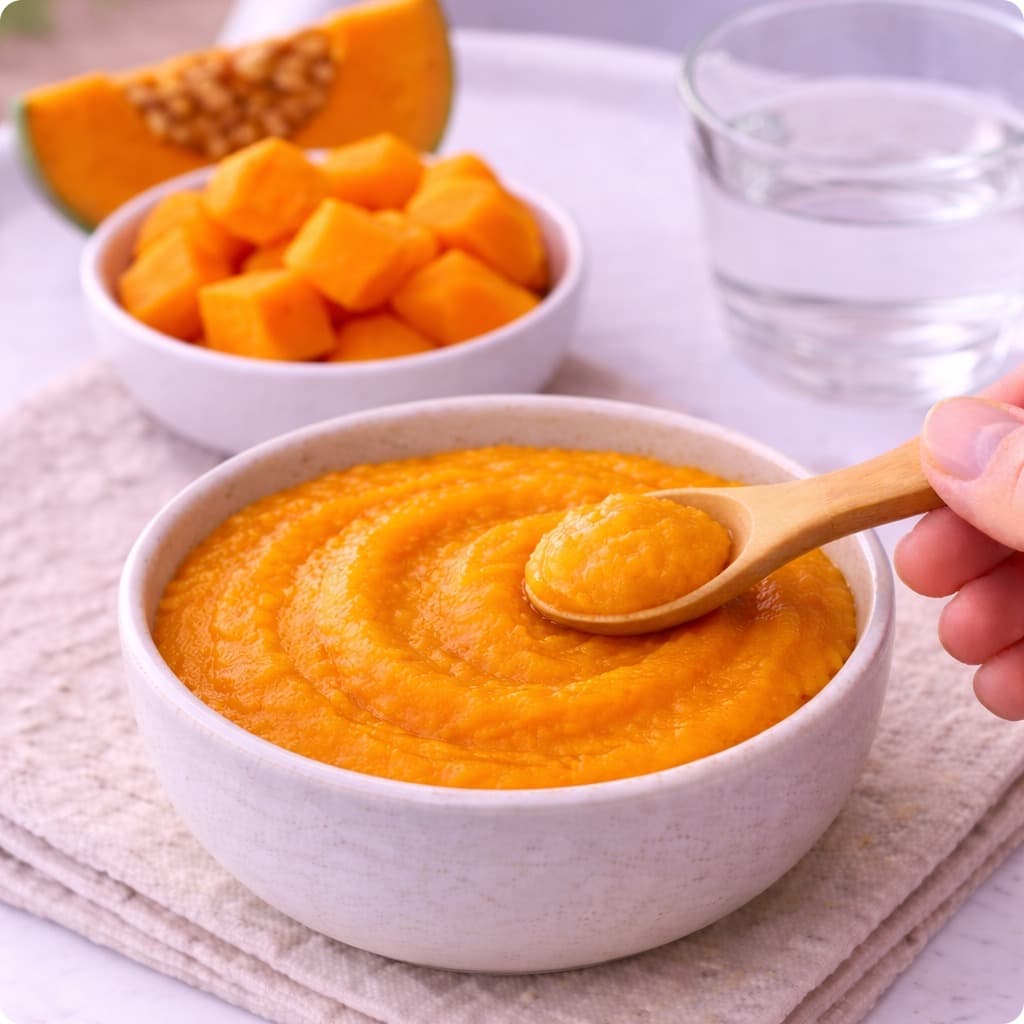
Butternut Squash Purée
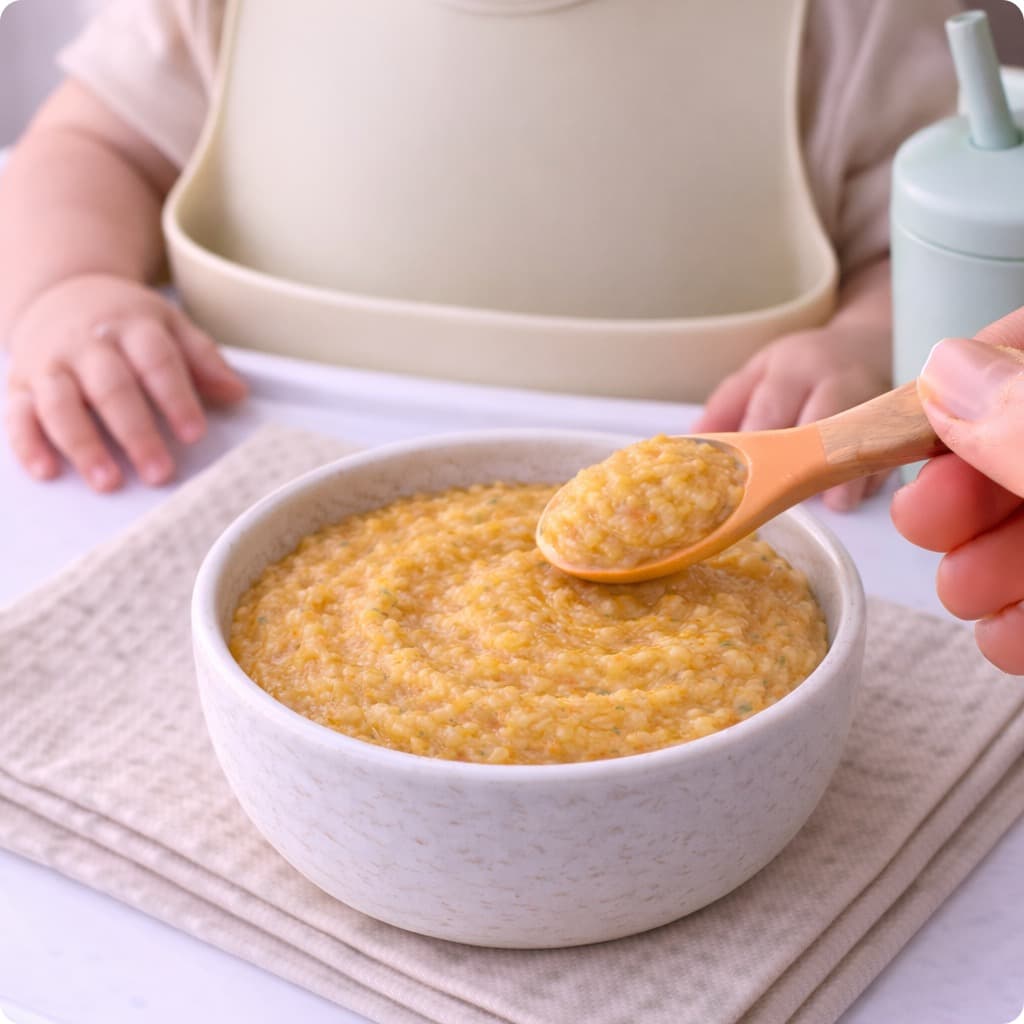
Chicken, Squash & Quinoa Bowl
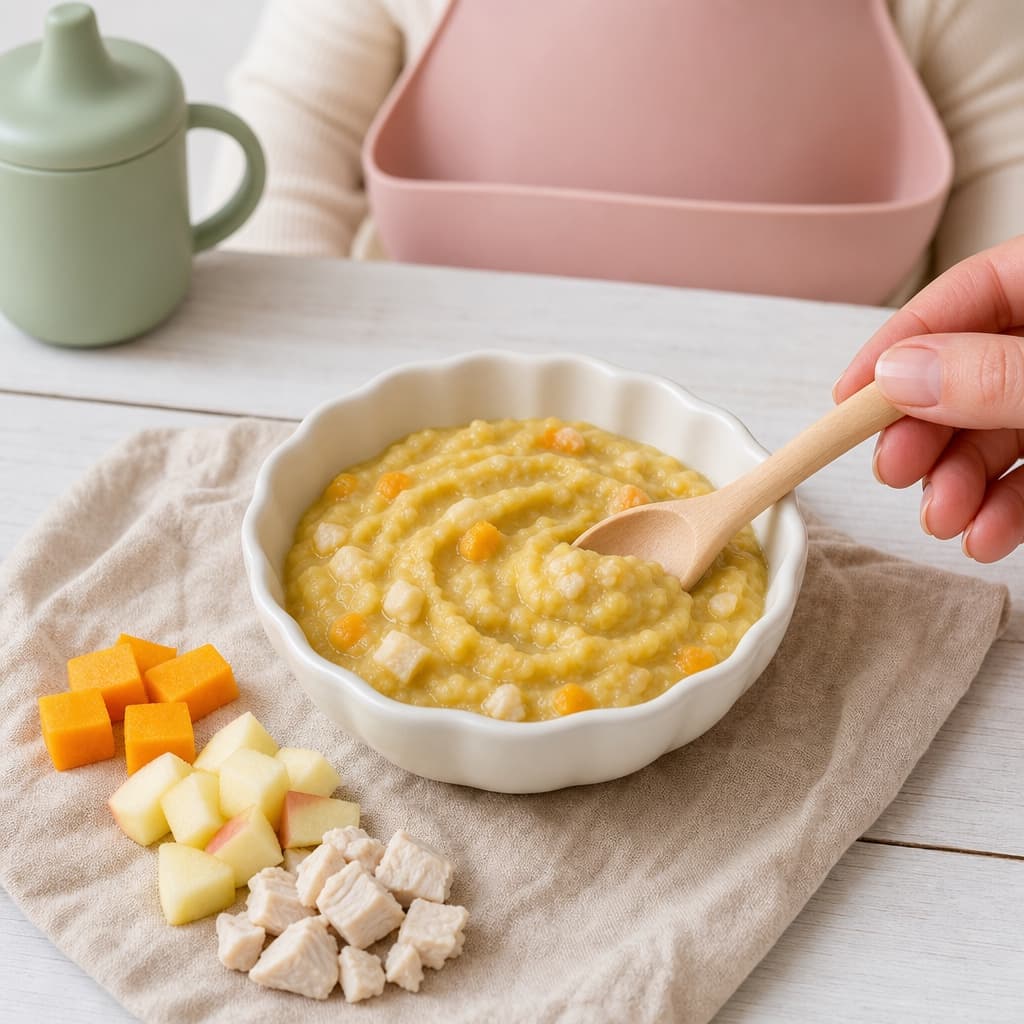
Chicken Apple Squash Bowl
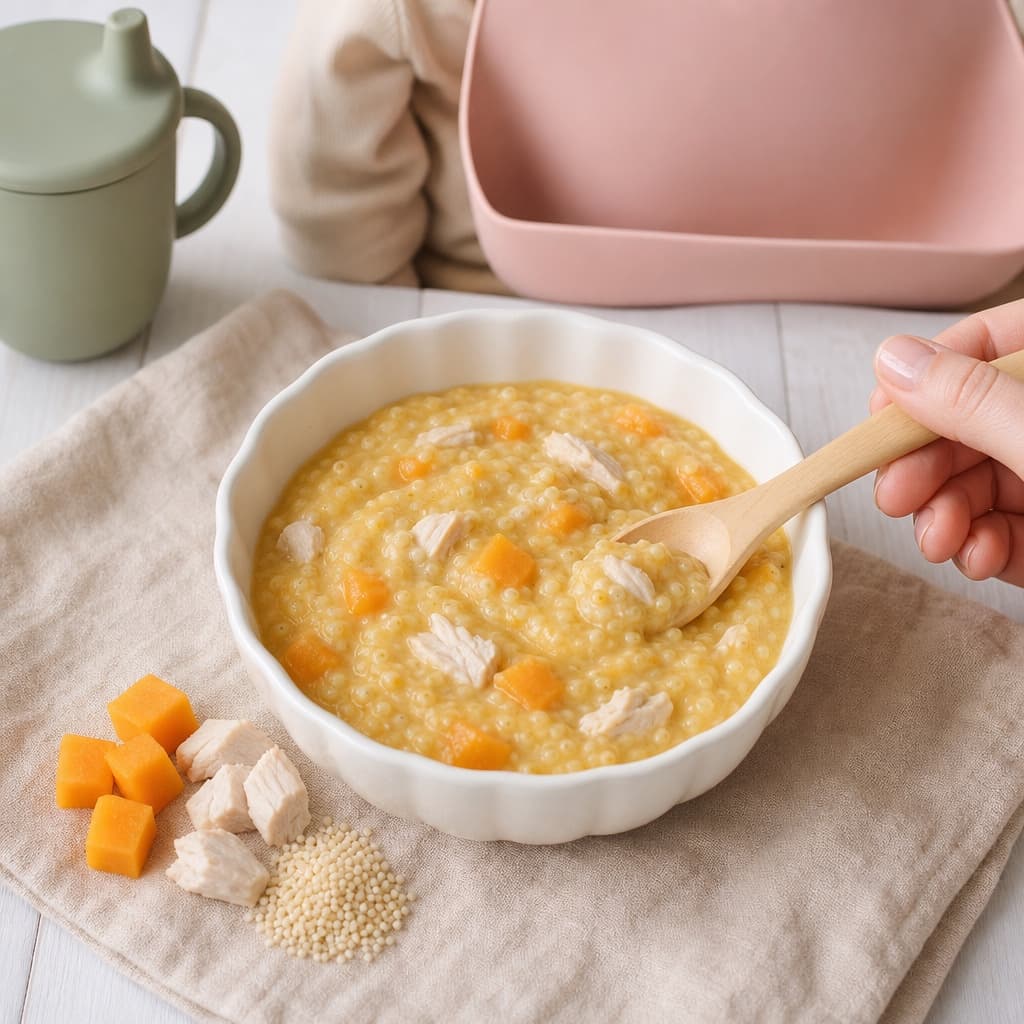
Chicken Butternut Couscous Soup Bowl
Frequently asked questions
Is butternut squash a good first food for babies?
Yes, butternut squash is an excellent first food because it cooks to a smooth, soft texture and has a naturally mild, sweet taste that babies often accept easily. It is also packed with vitamin A and other nutrients. Just be sure to cook it thoroughly and serve it in an age-appropriate texture.
Can butternut squash cause an allergy in babies?
Butternut squash is not considered a common allergen, and allergic reactions to it are rare. As with any new food, introduce it on its own and watch for signs such as hives, swelling, or vomiting. If you notice any concerning symptoms, stop serving it and contact your pediatrician.
How do I cook butternut squash for my baby?
Roast, steam, or boil peeled and deseeded butternut squash until it is fork-tender and very soft. Steaming and roasting help retain more nutrients and bring out the natural sweetness. Let it cool fully, then mash, puree, or cut it into appropriate shapes for your baby's age.
Can butternut squash help with baby constipation?
Butternut squash contains fiber and water, which can support healthy digestion and may help keep stools soft. It can be a gentle option to include in a varied diet for a baby prone to constipation. If your baby has ongoing constipation, talk with your pediatrician for guidance.
Will butternut squash turn my baby's skin orange?
Eating a lot of orange and yellow foods rich in beta-carotene can sometimes give a baby's skin a harmless orange tint, especially on the nose, palms, and soles. This is called carotenemia and it fades on its own as you vary the diet. It is not dangerous, but mention it to your pediatrician if you are unsure.
Can I mix butternut squash with other baby foods?
Yes, once your baby has tried butternut squash on its own, it blends beautifully with foods like apple, pear, sweet potato, lentils, or a little breast milk or formula. Mixing it with iron-rich foods such as lentils or meat can make a balanced meal. Always introduce each new ingredient separately first.
How much butternut squash can my baby eat?
There is no strict amount; let your baby's appetite guide you and offer butternut squash as part of a varied diet alongside other vegetables, fruits, proteins, and grains. Start with small servings and follow your baby's hunger and fullness cues. Variety over the week matters more than the amount of any single food.
Get recipes + a feeding plan for your baby
Save this food to your baby's list, get age-appropriate recipes and follow a personalized feeding schedule - 350+ baby-safe meals in the app.
verifiedSources & References
This guide is informed by current guidelines from leading health organizations: