When can babies eat turkey?
Most babies are ready for solid foods, including turkey, around 6 months of age. Readiness is about development, not just the calendar, so look for signs that your baby can sit up with little support, has good head and neck control, and shows interest in food by reaching for it or opening their mouth. Turkey can be one of your baby's very first foods because iron-rich meats are encouraged early to support healthy growth.
There is no reason to delay turkey. Poultry is not among the common food allergens, and current guidance from groups like the AAP and NHS supports introducing a wide variety of foods early rather than holding them back. Start with smooth or very soft turkey and progress the texture as your baby gets more comfortable with eating. Always introduce turkey when your baby is alert, seated upright, and supervised.
How to serve turkey safely
From 6 to 9 months, cook turkey thoroughly until it is tender and no longer pink, then serve it in a way that is easy to manage. You can puree cooked turkey with a little breast milk, formula, or low-sodium broth to reach a smooth consistency, finely shred it so the strands fall apart easily, or mix it into mashed vegetables or grains. A large strip of soft, well-cooked turkey that your baby can hold and gnaw on also works well at this stage, since babies tend to gum off small amounts.
From 9 to 12 months and beyond, as your baby develops a pincer grasp, you can offer small, soft, pea-sized pieces of moist turkey that are easy to pick up. Keep pieces tender and avoid dry, tough, or rubbery textures that are harder to chew. Steer clear of round coin-shaped slices of deli meat or whole chunks that match the size of a baby's airway, and always cut turkey into pieces no larger than half an inch as your child grows.
Nutritional benefits for babies
- 💚A good source of high-quality protein to support growth and muscle development
- 💚Provides iron, an important nutrient for babies as iron stores from birth begin to run low around 6 months
- 💚Contains zinc, which supports the immune system and healthy development
- 💚Rich in B vitamins, including B12 and niacin, that help the body use energy from food
- 💚Supplies selenium and phosphorus, minerals that support overall growth
- 💚A lean meat that pairs easily with iron-boosting and vitamin C rich foods like vegetables
Safety considerations
- ✓Turkey is not a common allergen, but when introducing it, offer it on its own for a few days before adding other new foods so you can spot any reaction.
- ✓Cook turkey thoroughly until it is no longer pink and the juices run clear to make sure it is safe to eat.
- ✓To reduce choking risk, serve turkey pureed, finely shredded, or in soft pea-sized pieces, and avoid hard, dry, or round coin-shaped pieces.
- ✓Always supervise your baby while eating, keep them seated upright, and never leave them alone with food.
- ✓Choose low-sodium or unseasoned turkey and skip added salt, since babies need very little sodium.
Recipes with turkey for babies
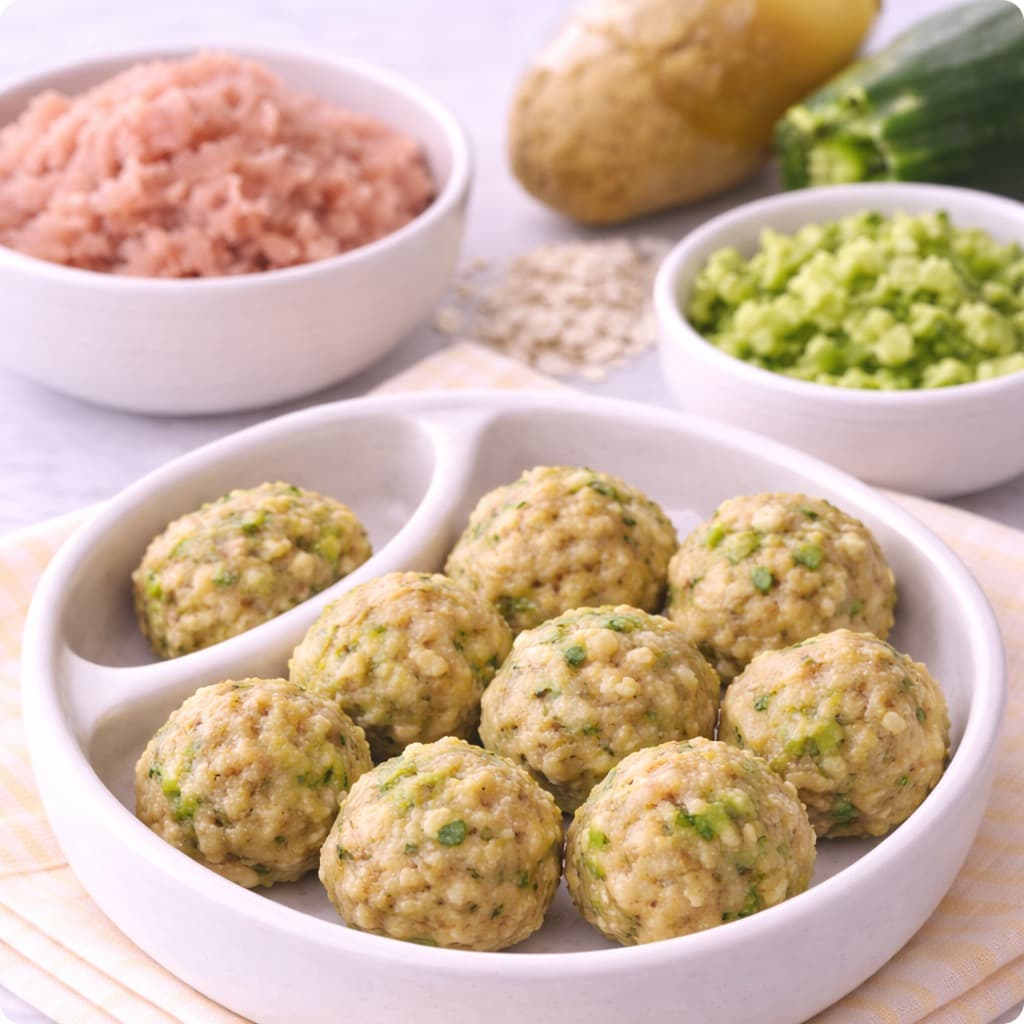
Turkey BLW Meatballs
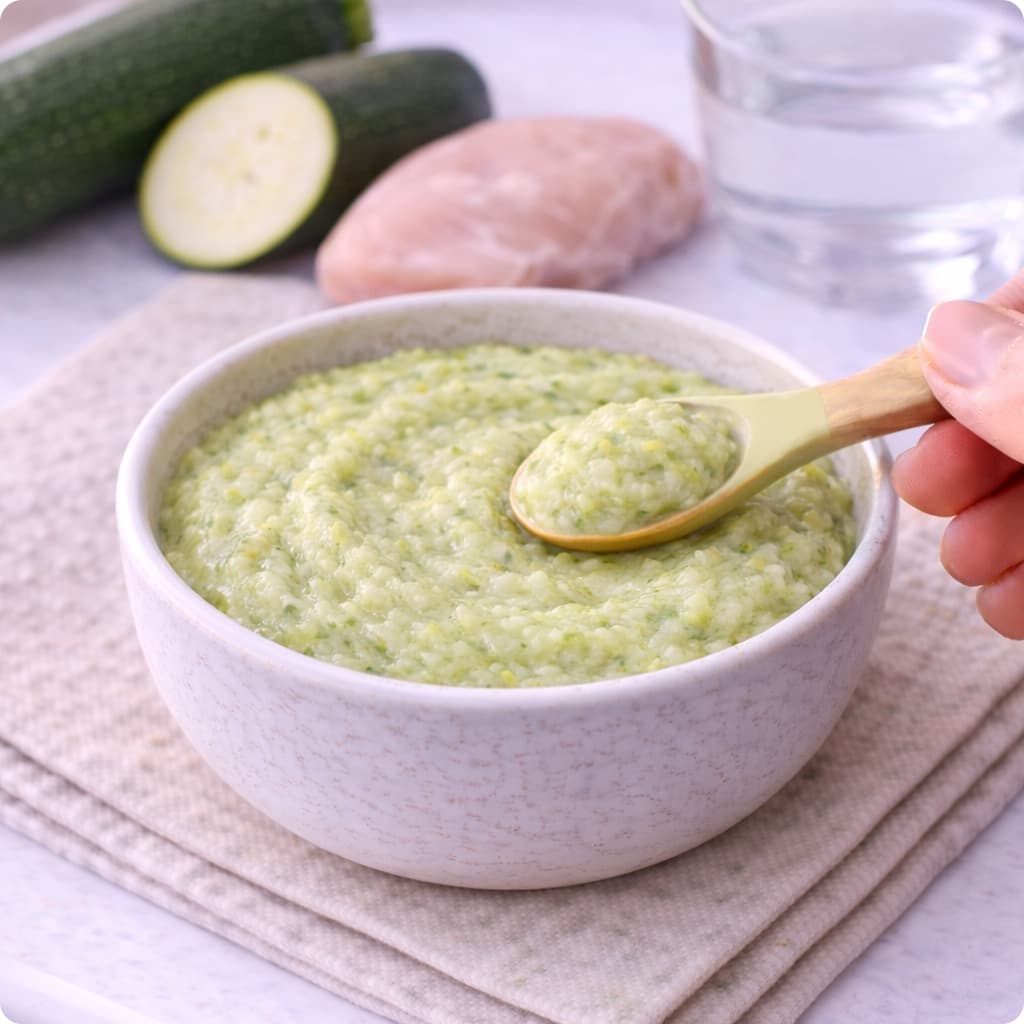
Turkey & Zucchini Purée
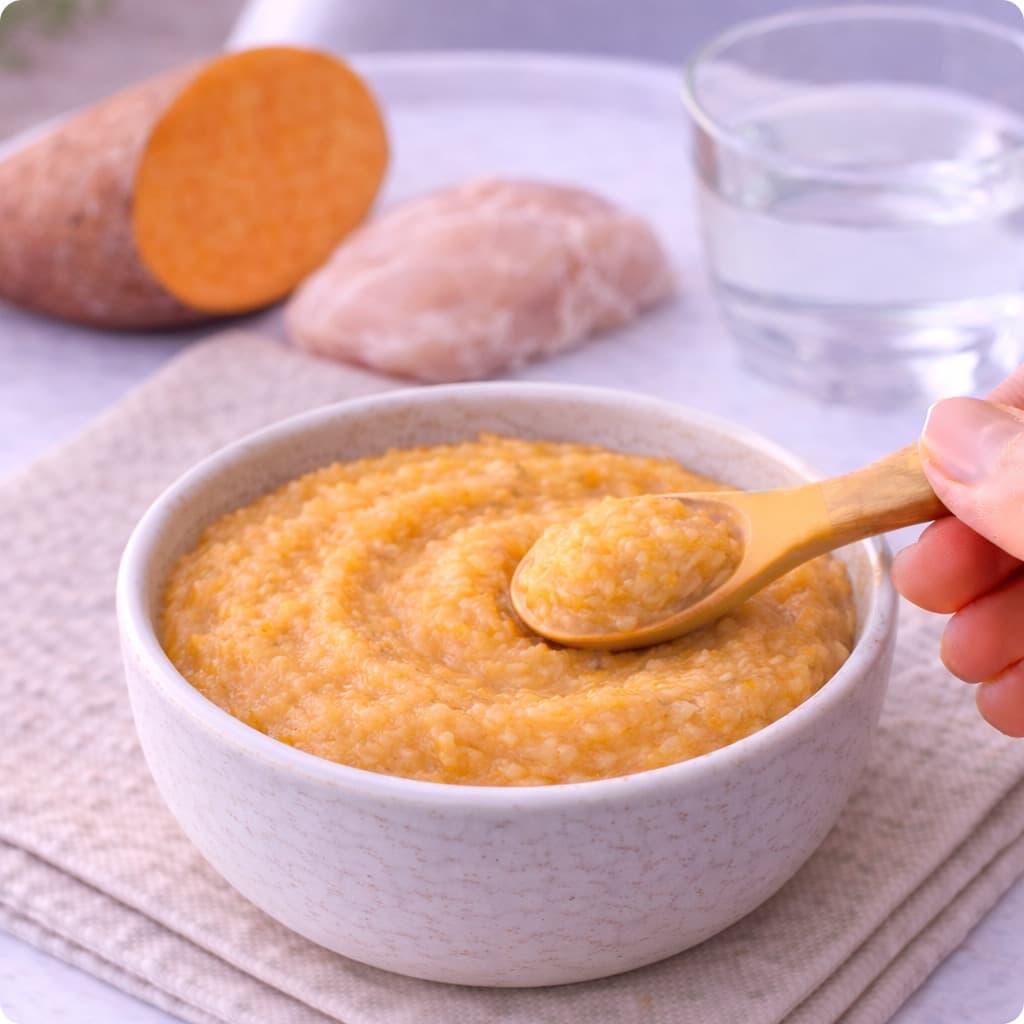
Turkey & Sweet Potato Mash
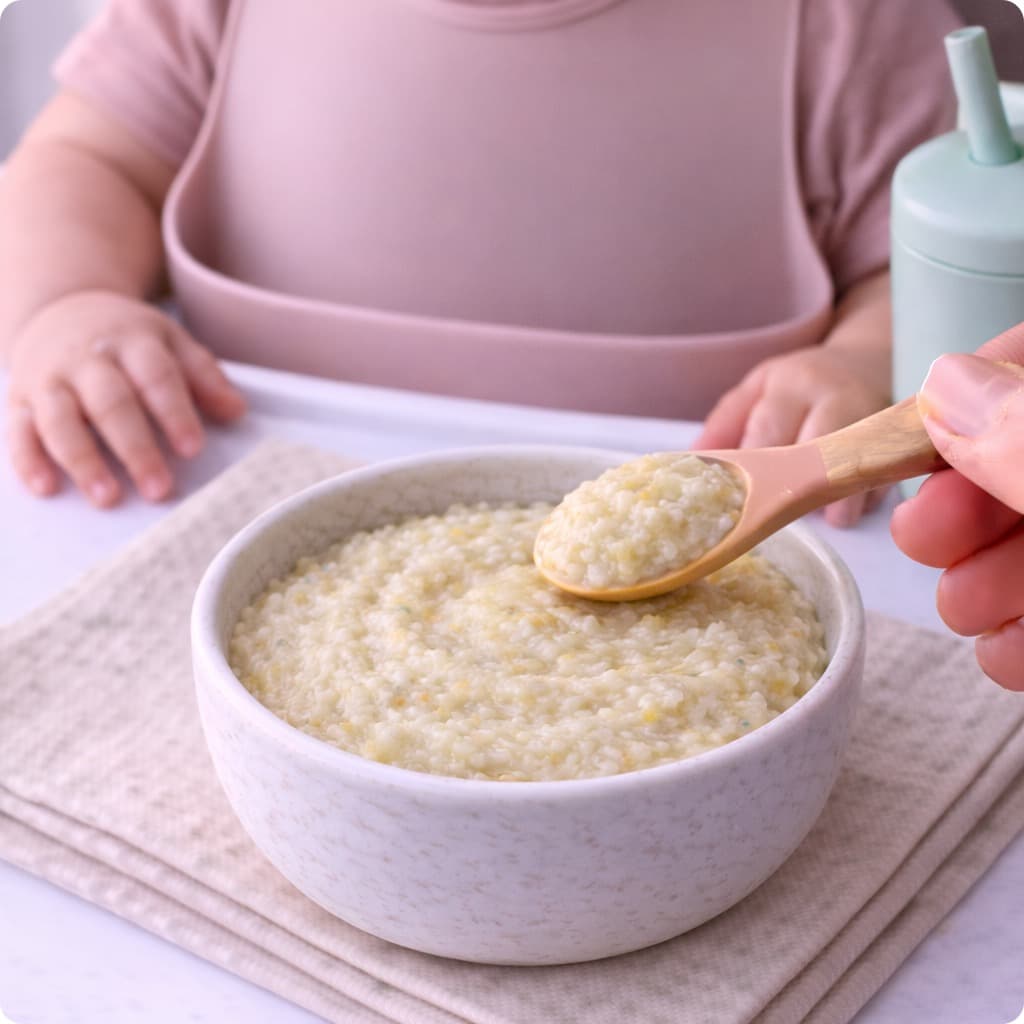
Turkey, Potato & Rice Mash
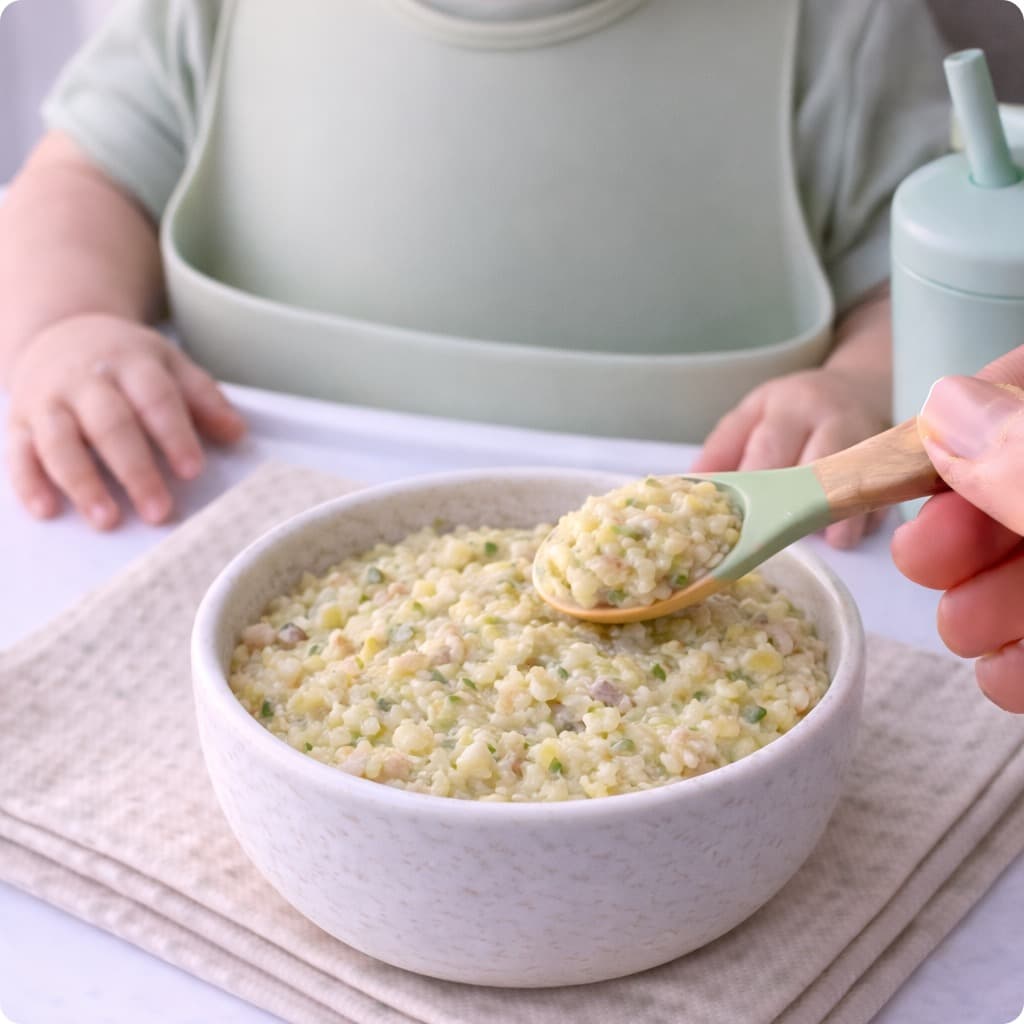
Turkey, Zucchini & Pasta Stars
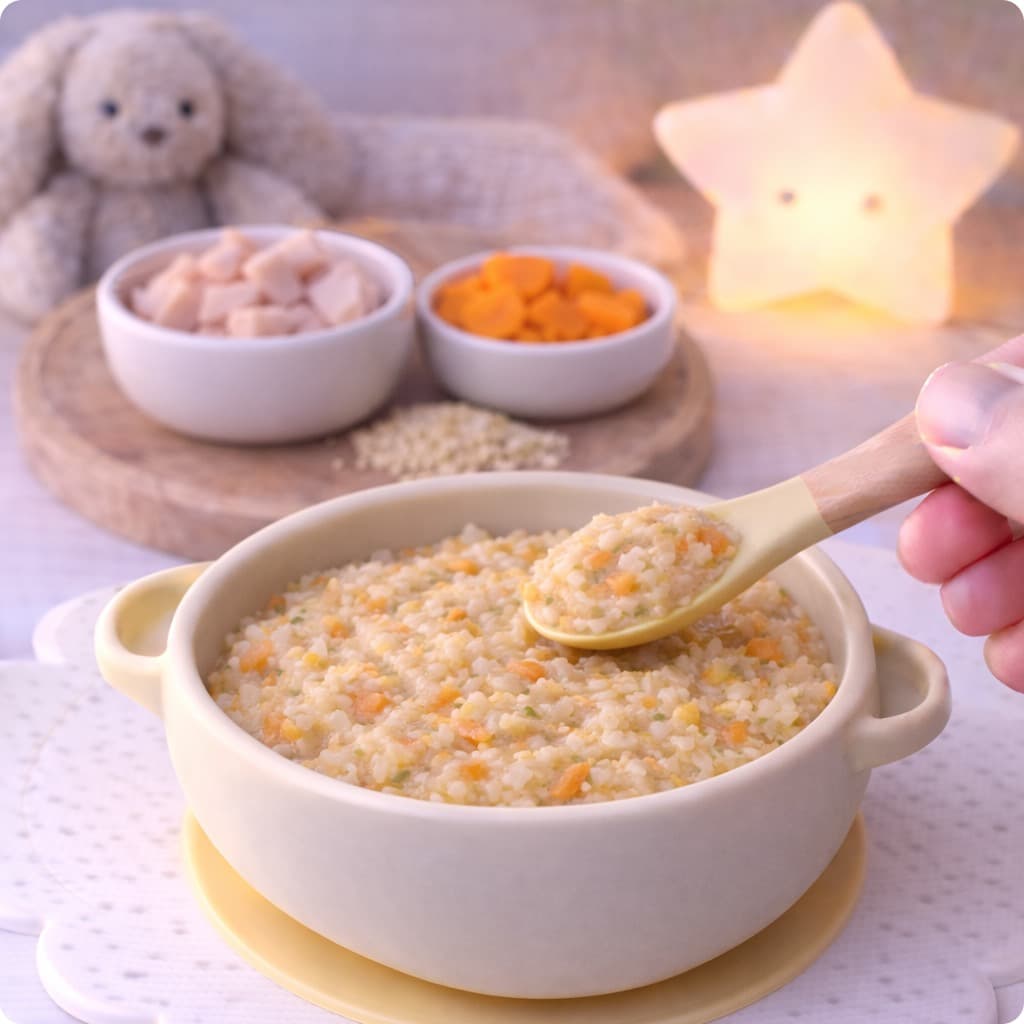
Turkey, Carrot & Couscous Bowl
Frequently asked questions
Can a 6 month old eat turkey?
Yes, a 6 month old can eat turkey once they show signs of readiness for solids. Serve it pureed until smooth, finely shredded, or as a soft strip they can hold. Iron-rich meats like turkey are actually encouraged as early foods.
Is turkey a choking hazard for babies?
Turkey can be a choking hazard if it is served in pieces that are too large, too dry, or round and coin-shaped. To make it safer, cook it until tender and serve it pureed, finely shredded, or in small soft pieces. Always supervise your baby while they eat.
Can babies eat ground turkey?
Yes, ground turkey is a great option for babies because it is soft and easy to manage. Cook it thoroughly until no longer pink, then mix it into vegetables, grains, or sauces, or roll it into soft, squishable meatballs for older babies. Choose plain ground turkey without added salt.
Can babies eat deli or lunch meat turkey?
It is best to avoid deli and lunch meat turkey for babies. These products are often high in sodium and can contain added preservatives, and thin round slices are also a choking risk. Cooked fresh turkey is a healthier and safer choice.
How do I introduce turkey to my baby for the first time?
Start by offering plain, fully cooked turkey that is pureed smooth or finely shredded, either on its own or mixed into a familiar food. Offer it for a few days in a row before adding other new foods so you can watch for any reaction. Make sure your baby is seated upright and supervised.
Can turkey cause an allergic reaction in babies?
Turkey is not one of the common food allergens, so allergic reactions to it are uncommon. As with any new food, watch for signs like hives, swelling, vomiting, or trouble breathing, and contact your pediatrician if you have concerns. Introducing it on its own first makes any reaction easier to identify.
How should I season turkey for my baby?
Keep turkey unseasoned or use only baby-safe herbs and spices, and skip added salt and sugar. Babies need very little sodium, and salty foods are not recommended in the first year. Mild flavors like a pinch of garlic powder, cinnamon, or fresh herbs can be introduced as your baby gets used to solids.
Get recipes + a feeding plan for your baby
Save this food to your baby's list, get age-appropriate recipes and follow a personalized feeding schedule - 350+ baby-safe meals in the app.
verifiedSources & References
This guide is informed by current guidelines from leading health organizations: