Choline for Babies: Memory, Brain, and Early Nutrition
Last updated May 2026
Understand why choline matters, how much your baby needs, and how to include it in everyday meals.
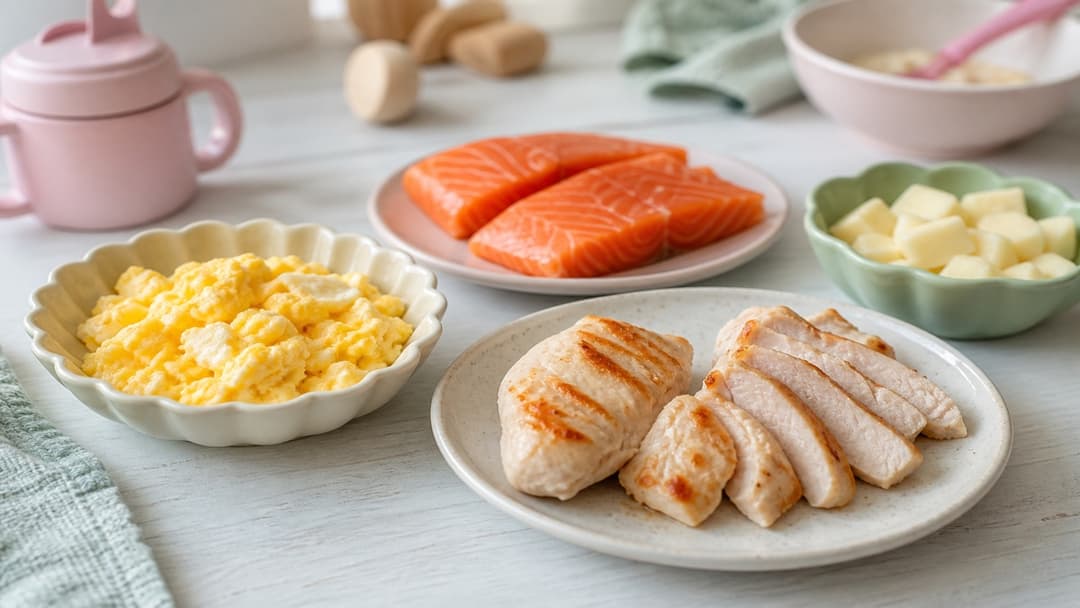
Choline is a lesser-known nutrient, but it plays a big role in your baby’s brain development, memory, and overall growth. During the first two years of life, the brain develops rapidly, and nutrients like choline help build the structures that support learning and memory. Despite its importance, many parents aren’t sure where to find it or how much their baby actually needs.
The good news is that choline is found in several common baby-friendly foods, including eggs, meat, fish, and some plant-based options. With a bit of planning, it’s easy to include enough choline in your baby’s diet alongside other key nutrients like iron and healthy fats.
This guide explains why choline matters, how much your baby needs at each stage, and practical ways to include it in everyday meals. You’ll also learn how it works with other nutrients to support healthy brain development.
Key takeaways
- Choline supports brain development, memory, and cell function in babies.
- Babies 7–12 months need about 150 mg of choline daily.
- Eggs are one of the richest and easiest choline sources.
- Choline works with DHA, iron, and B12 for brain health.
- Most babies get enough choline from food and milk feeds.
- A varied diet helps prevent choline deficiency.
- Supplements are rarely needed unless advised by a doctor.
Why Choline Is Important
Choline is essential for building cell membranes, producing neurotransmitters, and supporting overall brain function. One of its key roles is helping the body make acetylcholine, a chemical involved in memory, learning, and muscle control. During infancy, when brain connections are forming rapidly, this process is especially important.
Choline also supports liver function and fat metabolism. According to the National Institutes of Health (NIH) and EFSA, it is considered an essential nutrient because the body cannot produce enough on its own. Babies rely on breast milk, formula, and later solid foods to meet their needs. Breast milk naturally contains choline, highlighting its importance in early nutrition.
Because choline works behind the scenes, it’s easy to overlook. But ensuring your baby gets enough contributes to long-term cognitive development and overall health, especially during the critical first 1,000 days.
Choline Needs by Age
Choline requirements for babies are based on Adequate Intake (AI) levels set by expert bodies like the NIH. These estimates reflect typical intake from healthy populations rather than strict minimums, but they give a useful target for parents planning meals.
For infants aged 0–6 months, the recommended intake is about 125 mg per day, usually met through breast milk or formula. From 7–12 months, needs increase to around 150 mg per day as babies begin eating solids. Toddlers aged 1–3 years require about 200 mg daily.
It’s helpful to think of choline intake across the day rather than per meal. A combination of foods-like egg, yogurt, and small portions of meat or legumes-can easily meet these targets when offered regularly.
- 0–6 months: 125 mg/day (breast milk or formula)
- 7–12 months: 150 mg/day
- 1–3 years: 200 mg/day
- Egg yolk (1 large): ~125 mg choline
- Chicken (30 g cooked): ~20–25 mg choline
Top Choline-Rich Foods
Eggs are one of the richest and most practical sources of choline for babies. A single large egg provides around 125 mg, mostly in the yolk. This makes eggs an easy way to meet daily needs, especially once your baby is ready for allergen introduction. Serve them scrambled, mashed, or as soft finger foods depending on your baby’s stage.
Animal-based foods like chicken, turkey, beef, and fish also provide good amounts of choline. For example, 30 grams of cooked chicken offers roughly 20–25 mg. Dairy foods like yogurt and milk contribute smaller amounts but can still help build intake across the day.
Plant-based options include beans, lentils, broccoli, and whole grains. While these contain less choline per serving, they still play a valuable role-especially for vegetarian families. Combining different sources helps ensure your baby gets enough.
- Eggs (especially yolk)
- Chicken, turkey, and beef
- Fish like salmon
- Yogurt and dairy products
- Lentils, beans, and chickpeas
- Broccoli and whole grains
Choline and Brain Development
Choline is closely linked to brain development because it helps form cell membranes and supports communication between brain cells. It is particularly important for the hippocampus, a region involved in memory and learning. Research suggests that adequate choline intake during early life may support cognitive function later on.
During infancy, the brain is growing at an extraordinary rate, forming millions of neural connections. Nutrients like choline, DHA, iron, and zinc work together to support this process. A balanced diet that includes these nutrients gives your baby the building blocks needed for healthy brain development.
While no single nutrient determines intelligence or memory outcomes, consistent intake of key nutrients like choline helps support optimal development during this critical period.
Easy Ways to Include Choline
Adding choline-rich foods to your baby’s diet doesn’t have to be complicated. Start with familiar foods like eggs and yogurt, and gradually introduce a variety of textures and flavors. Offering these foods regularly-rather than occasionally-helps build consistent intake.
For babies just starting solids, mashed egg yolk mixed with breast milk or formula can be a simple option. As your baby grows, you can offer scrambled eggs, soft-cooked meats, or lentil-based dishes. Pairing choline-rich foods with vegetables or grains creates balanced meals.
Variety is key. Rotating between eggs, meat, dairy, and plant sources ensures your baby benefits from a range of nutrients while meeting choline needs.
Simple meal ideas
Try scrambled egg with avocado, lentil mash with soft vegetables, or shredded chicken with rice. These combinations are easy to prepare and suitable for different feeding approaches, including baby-led weaning.
As your baby becomes more confident with textures, you can introduce finger foods like omelette strips or soft meat pieces to encourage self-feeding.
- Scrambled egg with mashed avocado
- Lentil and vegetable mash
- Shredded chicken with soft rice
- Yogurt with whole grain cereal
Deficiency Risks
Choline deficiency is uncommon in babies who are breastfed, formula-fed, or eating a varied diet. However, low intake can occur if diets are very limited or exclude key food groups like eggs and animal products without adequate alternatives.
Signs of deficiency are not always obvious but may include issues with liver function or slowed growth over time. Because choline works alongside other nutrients, a lack of overall dietary variety is often a bigger concern than choline alone.
If your baby has dietary restrictions or you’re concerned about nutrient intake, it’s best to speak with a paediatrician or dietitian for personalised guidance.
Choline vs Other Nutrients
Choline doesn’t work in isolation. It interacts with other nutrients that support brain development, including DHA (an omega-3 fatty acid), iron, and vitamin B12. Together, these nutrients contribute to cognitive function, energy metabolism, and nervous system development.
For example, iron supports oxygen transport to the brain, while DHA helps build brain cell membranes. Choline complements these roles by supporting communication between cells. A diet that includes a mix of these nutrients is more beneficial than focusing on just one.
This is why balanced meals-rather than single ‘superfoods’-are the best approach for supporting your baby’s development.
Do Babies Need Supplements?
Most babies do not need choline supplements if they are consuming breast milk, formula, and a balanced diet with solids. Both breast milk and infant formula naturally provide choline in appropriate amounts during early infancy.
Supplements are generally not recommended unless advised by a healthcare professional. Giving unnecessary supplements can disrupt nutrient balance or lead to excessive intake.
If your baby has specific medical needs, feeding challenges, or dietary restrictions, your paediatrician may recommend tailored supplementation. Otherwise, focusing on whole foods is the safest and most effective way to meet choline needs.
Frequently Asked Questions
What does choline do for babies?
Choline supports brain development, memory, and cell function. It helps form neurotransmitters important for learning and muscle control.
How much choline does my baby need daily?
Babies 7–12 months need about 150 mg per day, while toddlers 1–3 years need around 200 mg, according to NIH guidelines.
Are eggs the best source of choline for babies?
Yes, eggs are one of the richest sources. One large egg provides about 125 mg of choline, making it a very efficient option.
Can my baby get enough choline without eggs?
Yes, but it requires planning. Foods like chicken, fish, beans, and broccoli can help meet needs when combined regularly.
Is choline in breast milk?
Yes, breast milk naturally contains choline and usually meets a baby’s needs during the first 6 months.
Do formula-fed babies get choline?
Yes, infant formula is fortified with choline to support healthy growth and development.
What are signs of low choline in babies?
Deficiency is rare but may affect growth or liver function. A varied diet usually prevents this.
Can babies have too much choline?
It’s unlikely from food alone. Excess intake typically only occurs with unnecessary supplementation.
When can I introduce eggs for choline?
Eggs can be introduced from around 6 months as part of allergen introduction, following safe preparation guidelines.
Do toddlers still need choline?
Yes, toddlers need about 200 mg daily to support ongoing brain development and overall health.
verifiedSources & References
This guide is informed by current guidelines from leading health organizations:
Plan brain-boosting meals with Nibli’s baby feeding app
Discover personalised meal plans, track nutrients like choline, and get simple recipes designed to support your baby’s brain and development every day.