Cucumber for Baby
Last updated October 2026
Cucumber can be one of the vegetables your baby tries once they've started solids, usually around 6 months. It's mild and refreshing, but raw cucumber stays crisp, so for a new eater either grate it into something soft or offer a long, narrow, peeled baton to hold and gnaw. Skip round coins and small cubes.
Quick answer
There's no separate starting age for cucumber. It can join your baby's other first foods once they're ready for solids, which the NHS puts at around 6 months, when your baby can stay sitting and hold their head steady, pick food up and put it in their mouth by themselves, and swallow food rather than spit it back out. If your baby was born prematurely, ask your health visitor or GP when to start.
How to prepare cucumber
Wash and peel it. The NHS suggests removing the skin from fruit and vegetables because it makes them easier to swallow, especially for very young children. If a large cucumber has big, firm seeds, scoop them out with a teaspoon.
Grated: grate peeled cucumber and stir it into plain full-fat yoghurt, mashed avocado or another soft food your baby already manages. This is the gentlest way to start, and the one to go back to if your baby bites off firm pieces.
Batons: cut a long, narrow baton, long enough for your baby to hold in their fist with a bit sticking out, so they can gnaw and suck on it. Raw cucumber won't squash between your finger and thumb the way ripe banana does, so watch what happens when your baby bites; if they snap off pieces they can't move around their mouth, switch back to grated.
Softer batons: if you'd like a finger food that gives under pressure, steam peeled batons until tender. The NHS suggests steaming or simmering firm vegetables for very young children.
Skin on, later: once your child chews well and copes with crisp food, you can try washed, unpeeled narrow sticks. There's no set age; the NHS includes cucumber sticks among snack ideas for children from 12 months.
The right shape and size depend on your baby's eating skills, not on age alone. Step-by-step preparation: How to prepare cucumber for your baby
Also check how to cut food for baby-led weaning for general BLW cutting tips.
When can babies eat cucumber?
What changes over time is how you prepare it, and that depends on how your baby handles crisp food rather than on their age. The NHS suggests cutting vegetables like cucumber into narrow batons, and grating, mashing, steaming or simmering firm vegetables for very young children.
Cucumber isn't on the NHS list of foods that most often trigger allergic reactions, so it doesn't need a special introduction routine.
Cucumber adds flavour and texture more than nutrition, so serve it alongside more filling, iron-containing foods. This page covers what it offers and how to prepare it; for the shapes in more detail, see our cucumber preparation guide.
See our first foods for baby guide for more ideas.
Before you serve cucumber
No coins or cubes at any stage. The NHS advises avoiding round shapes and firm foods, and cutting vegetables like cucumber into narrow batons.
Peel it for a new eater, and grate it if your baby is biting off firm pieces.
Skip pickles, gherkins and salted cucumber salads. The NHS lists pickles among salty foods, and babies under 1 should have less than 1g of salt a day.
Gagging is common while babies learn to eat: it's loud, their eyes may water and they may push food forward. The NHS describes choking as quiet.
Sit your baby upright in a highchair, and stay with them for the whole meal.
Call your local emergency number if your baby is choking and can't cough, cry or breathe effectively, and start baby choking first aid straight away.
Cucumber recipes for babies
View all recipes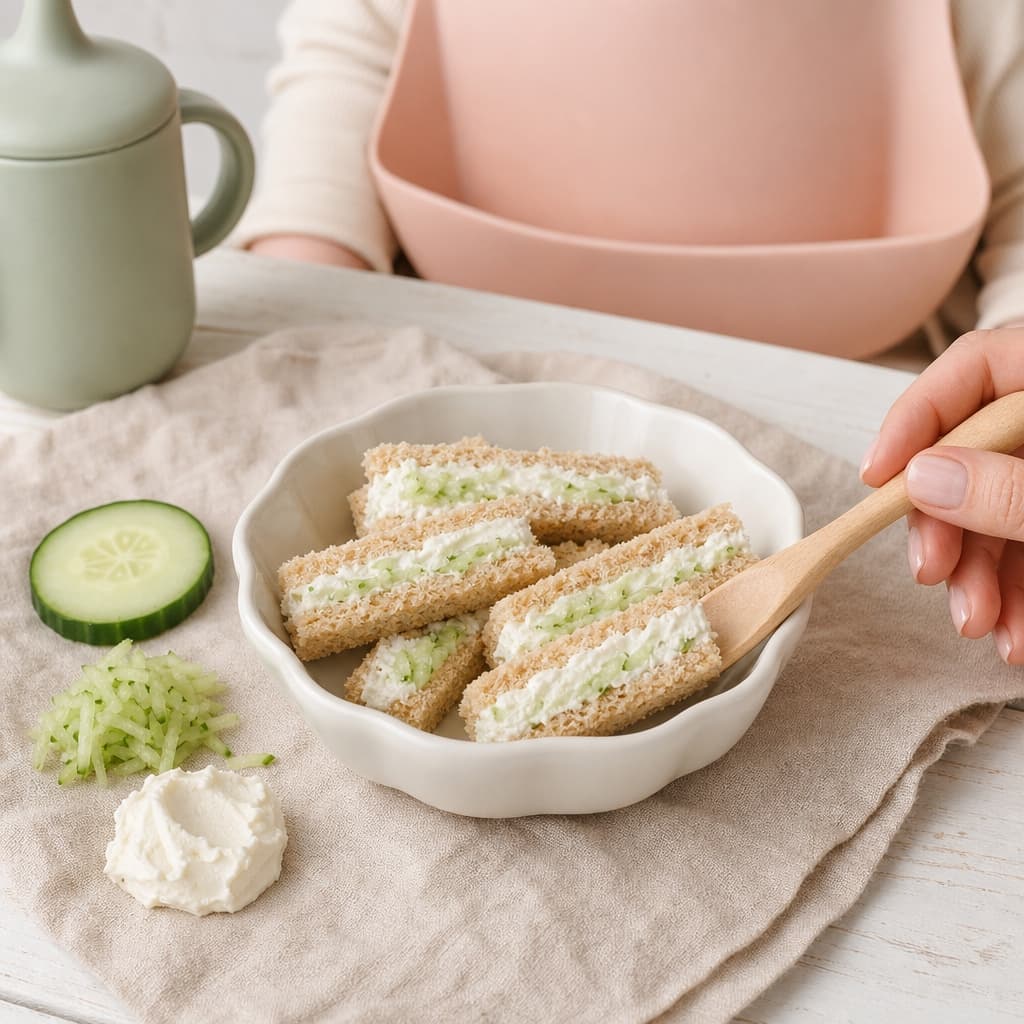
Cream Cheese Cucumber Toast Fingers

Cucumber Yogurt Dip Bowl
See all cucumber recipes for babies. Explore baby breakfast recipes, baby-led weaning recipes and first foods for baby for more ideas.
Related Guides
Frequently Asked Questions
Can cucumber help with teething?
It can give your baby something to chew. NHS teething advice says babies aged 6 months or older who are weaning can have healthy things to chew on, such as raw fruit and vegetables, and that you should always watch them while they eat. A peeled baton from the fridge is fine; don't freeze it, and switch to grated cucumber if sore gums lead to big bites.
Can babies have tzatziki or raita?
A homemade version, yes: grated cucumber stirred into plain full-fat yoghurt, with no added salt. Herbs or a little garlic add flavour instead, as the NHS suggests. Shop-bought dips often contain salt, so check the salt content on the label and keep them for later.
My baby keeps spitting cucumber out. Should I stop offering it?
Not necessarily. The NHS says it can take 10 tries or more before a baby accepts a new food or texture, and suggests you keep offering foods your baby has already rejected. Try it grated into a food they like, or as a baton at a relaxed meal.
Sources & References
This guide is informed by current guidelines from leading health organizations:
- ●NHS - Your Baby's First Solid Foods NHS
- ●NHS - Preparing Food Safely for Babies NHS
- ●FDA - Nutrition Information for Raw Vegetables FDA
- ●NHS - Food Allergies in Babies NHS
- ●NHS - Tips for helping your teething baby NHS
- ●NHS - Salt in your diet NHS
- ●NHS — Choking and Gagging on Food NHS
- ●NHS - How to stop a child from choking NHS
