Can babies eat cucumber?
Last updated October 2026
Yes, once your baby is ready for solids, usually around six months, but the way cucumber is prepared matters. Raw cucumber stays firm even when cut into a long stick. For an early eater, finely grate it into moist food or peel and cook it until soft. The NHS also describes narrow batons, but a baton is not automatically safe if a child bites off hard pieces. Avoid raw round coins and firm chunks; supervise every bite.
When can babies have cucumber?
There's no separate starting age for cucumber. It can go in alongside your baby's other first foods once they're ready for solids, which the NHS puts at around 6 months, when three signs appear together: your baby can stay sitting and hold their head steady, look at food, pick it up and put it in their mouth by themselves, and swallow food rather than spit it back out.
Readiness matters more than the date on the calendar. A baby who can't yet sit upright with support, or who is still pushing food back out, isn't ready for crisp finger foods like cucumber. If your baby was born prematurely, ask your health visitor or GP when to start.
How to prepare cucumber for your baby
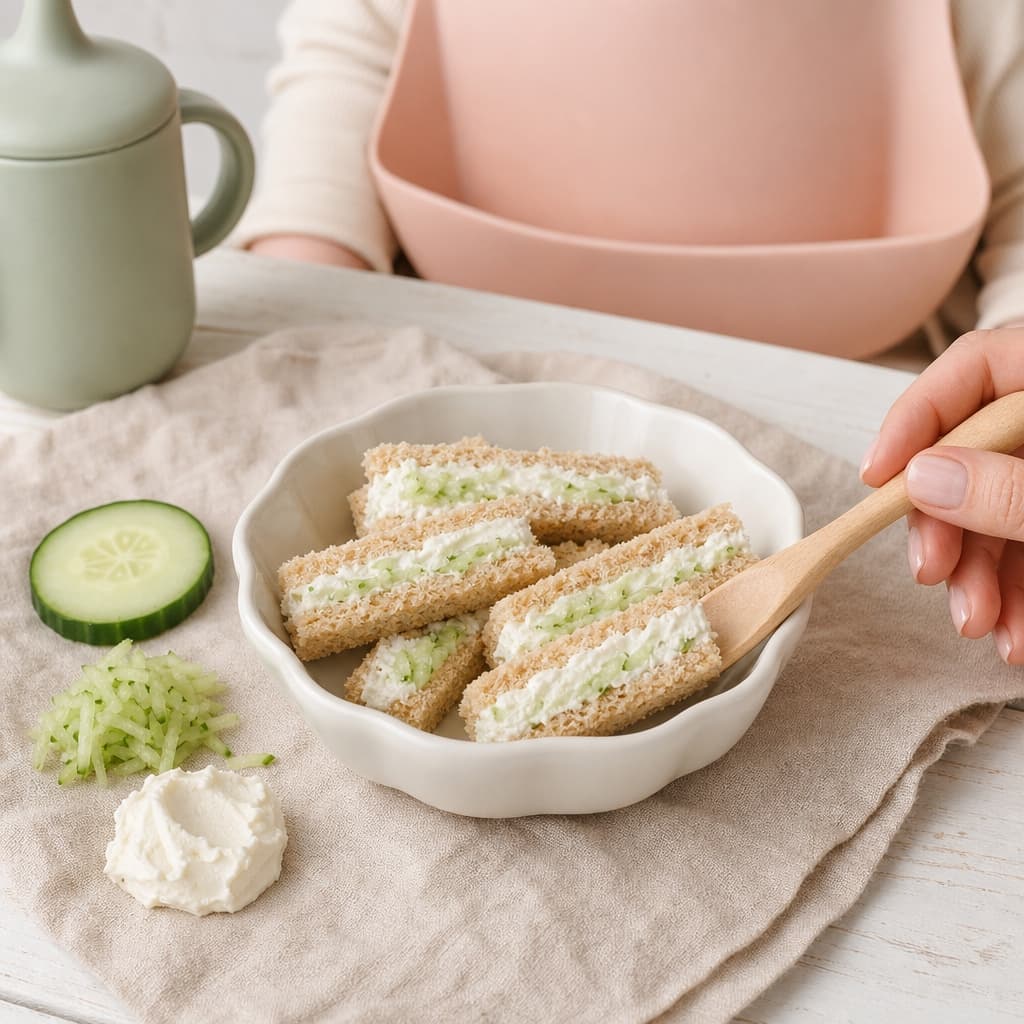
Wash and peel the cucumber. For a new eater, grate it finely into mashed avocado or already-tolerated plain yoghurt, or steam peeled cucumber until soft enough to mash. Once your baby manages more challenging textures, the NHS describes narrow cucumber batons, but shape and grip do not guarantee safety: watch closely for hard pieces bitten off.
Raw cucumber does not squash like a ripe banana. If your baby bites off firm pieces they cannot move and chew, stop offering that preparation and return to grated or cooked-soft cucumber. Avoid raw round coins and firm bite-sized cubes even after a pincer grasp develops.
Advice differs a little between countries. The NHS suggests cutting vegetables like cucumber into narrow batons and grating, mashing, steaming or simmering firm vegetables for very young children. The American Academy of Pediatrics lists raw vegetables, such as carrot sticks, among the foods to avoid or modify for young children. If you're unsure how your baby copes with crunch, grating is the more cautious choice.
Cucumber checks before you serve
Avoid raw round slices, firm cubes and hard pieces. A long baton alone cannot make crisp food choke-proof.
Peel it for a new eater, and grate it if your baby is biting off pieces they can't manage.
Seat your baby upright in a highchair, and stay with them for the whole meal.
Don't add salt or salty dips. Babies should have less than 1g of salt a day, according to the NHS.
Gagging is common while babies learn to eat: it's loud, their eyes may water and they may push food forward or retch. The NHS describes choking as quiet.
Call your local emergency number if your baby is choking and can't cough, cry or breathe effectively, and start baby choking first aid straight away.
What cucumber adds to your baby's plate
Mostly taste and texture. Cucumber is mild and crisp, which gives your baby something different to explore alongside softer foods.
Very little energy: the FDA's raw vegetable nutrition chart lists 10 calories in a third of a medium cucumber (99 g).
Small amounts of vitamin C and potassium. At baby-sized portions, cucumber isn't a significant source of either.
Because it adds little energy or iron, serve it with more filling foods. NHS advice is to include iron-containing foods such as meat, fish, fortified breakfast cereals, dark green vegetables, beans and lentils.
Recipes with cucumber for babies

Related guides
Cucumber for babies: FAQs
Can cucumber help a teething baby?
A cold cucumber piece is not a risk-free teething aid. Offer cucumber only as a food texture your baby already handles safely, such as grated or cooked-soft cucumber. A clean age-appropriate teething ring chilled in the fridge may soothe sore gums; follow its instructions and never freeze it solid. Stay with your baby during meals.
Is cucumber a common allergen?
No. Cucumber isn't on the NHS list of foods that most often trigger allergic reactions, so it doesn't need a special introduction routine. As with any new food, keep an eye on your baby the first few times.
Are pickled cucumbers or gherkins okay for babies?
They're best left for later. Pickles are usually salty, and the NHS lists them among salty foods to eat less often. Babies under 1 should have less than 1g of salt a day, so plain fresh cucumber is the better choice.
When can my child have cucumber with the skin on?
There's no set age. Once your child chews well and handles crisp foods without trouble, you can try washed, unpeeled cucumber in narrow sticks. The NHS includes cucumber sticks among snack ideas for children from 12 months. Go back to peeled or grated cucumber if the skin causes trouble.
Sources & References
This guide is informed by current guidelines from leading health organizations:
- ●NHS - Preparing Food Safely for Babies NHS
- ●NHS - Your Baby's First Solid Foods NHS
- ●CDC — Choking Hazards (reviewed March 2026) CDC
- ●AAP - Choking Prevention AAP
- ●NHS - How to stop a child from choking NHS
