What do you want to know?
Deep dive
Bell pepper →Bell pepper explained: when to introduce, roasting and peeling to reduce biting resistance, vitamin C benefits, chopping tips for safety and simple puree and finger-food recipes.
Nutrition highlights
- Vitamin C - very high; supports immune health and iron absorption.
- Beta-carotene (vitamin A) - especially in red peppers, supports vision and immunity.
- Antioxidants - help protect cells.
- Fibre - supports healthy digestion.
Safety quick tips
- Always cook bell peppers until soft to reduce choking hazards.
- Peel the skin if it's tough or hard to chew.
- Avoid serving raw bell pepper to babies under 12 months due to firmness.
Common questions
Can babies eat Bell pepper?
Yes. Babies can eat Bell pepper starting around 6 months when they begin solid foods. It should be served in a safe texture and size for babies.
When can babies eat Bell pepper?
Babies can eat Bell pepper from around 6 months when starting solids. Babies can start eating cooked bell pepper from around 6 months, once they begin solid foods. Introduce it in small amounts and observe for any reaction, though it's not a common allergen. Raw bell pepper is firm and a choking risk - keep it cooked-soft until your child is chewing well (around 12 months+).
Is Bell pepper a choking hazard for babies?
Bell pepper can be a choking hazard if served in unsafe shapes. Always cook bell peppers until soft to reduce choking hazards. Peel the skin if it's tough or hard to chew. Avoid serving raw bell pepper to babies under 12 months due to firmness. Cut into a size and shape appropriate for your baby's stage. Introduce new foods one at a time and watch for any allergic reaction. Supervise your baby closely while eating.
Is Bell pepper a common allergen?
Some babies may be allergic to Bell pepper. Introduce Bell pepper carefully when babies start solids and watch for reactions.
How should Bell pepper be served to babies?
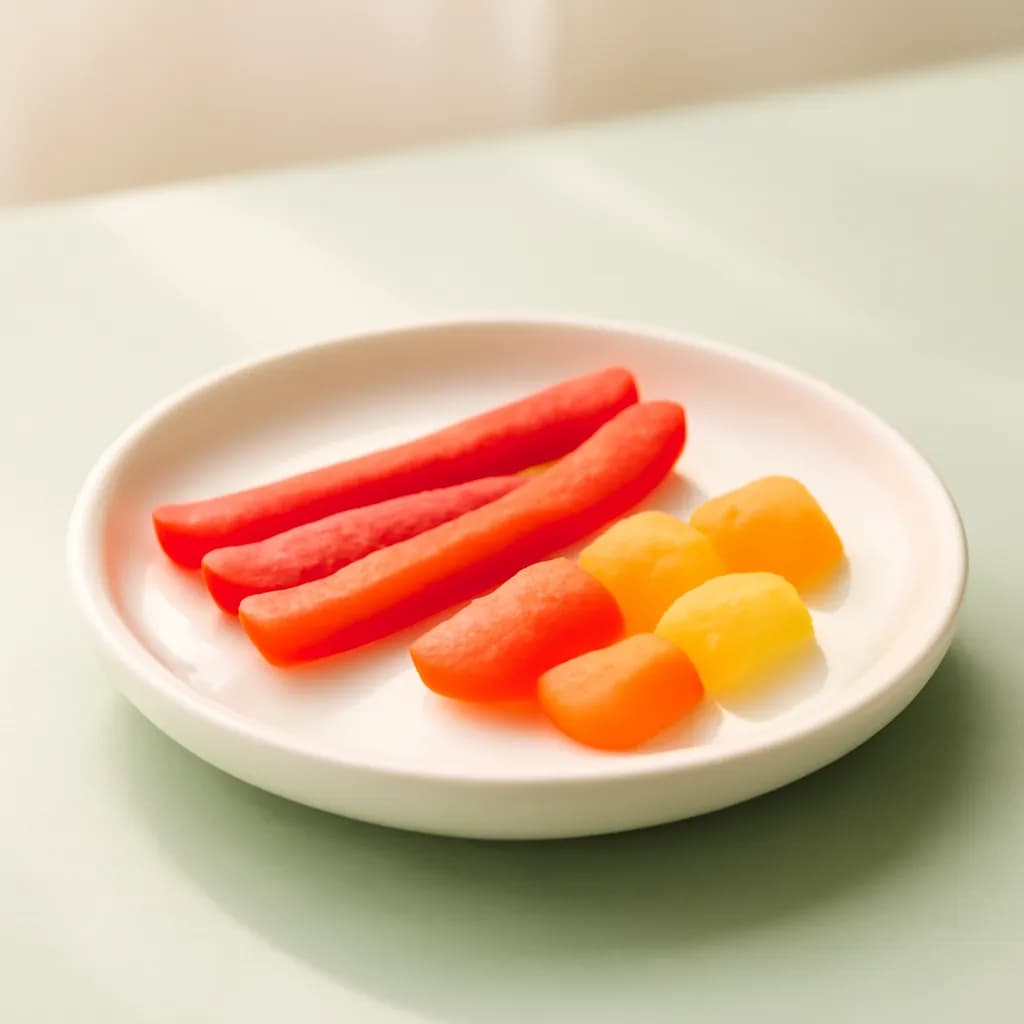
6–9 months: Roast or steam pepper strips until very soft, peel if the skin is tough, and offer as graspable strips. 6–9 months: Blend cooked pepper into smooth sauces and purées with other vegetables. 9–12 months: Soft pepper pieces cut small as the pincer grasp develops. 12+ months: Soft-cooked peppers in pasta sauces, omelettes, and stews; offer thin raw strips only once chewing is well established.
What nutrients does Bell pepper provide for babies?
Bell pepper provides nutrients like fibre, vitamin A, vitamin C, iron that support babies' growth and development.
How long can I store Bell pepper for babies?
Cook Bell pepper to a safe temperature and store it in the refrigerator for up to 2 days, or freeze in single-serving portions for up to 1 month to preserve nutrients.
Should I buy organic Bell pepper for my baby?
Organic Bell pepper isn't strictly necessary for babies, but some families prefer to reduce pesticide exposure. Wash conventional produce thoroughly. Variety and freshness matter most.