When can babies eat bell pepper?
Most babies are ready to begin solids around 6 months of age, when they can sit up with little or no support, hold their head steady, show interest in food, and bring objects to their mouth. Bell pepper can be one of the first vegetables you offer at this stage. Like other early foods, it should be prepared so it is soft enough to mash easily between your fingers, since raw bell pepper is too firm and crunchy for young babies.
Bell pepper is not one of the common food allergens, and there is no reason to delay offering it. Current pediatric guidance encourages introducing a wide variety of foods, including allergens, around 6 months rather than waiting. Sweet red, yellow, and orange bell peppers tend to be milder and more naturally sweet than green ones, which can make them a friendly first choice for new eaters.
How to serve bell pepper safely
For babies 6 to 9 months, cook bell pepper until it is very soft, then peel off the thin outer skin, which can be slippery and hard to manage. Offer it as a thick puree, mashed into other foods, or cut into long, wide strips about the size of an adult finger so your baby can grasp and gnaw on them. Roasting or steaming until tender works well and brings out the natural sweetness.
From 9 to 12 months and up, as your baby develops a pincer grasp, you can serve soft-cooked bell pepper in small bite-size pieces. Continue to make sure pieces are tender and not firm or crisp. Avoid serving raw bell pepper, large chunks, or pieces with tough skin still attached, since these are harder to chew and can pose a choking risk. Always cut food into shapes appropriate for your baby's stage.
Nutritional benefits for babies
- 💚Excellent source of vitamin C, which supports the immune system and helps the body absorb iron from other foods
- 💚Provides vitamin A (as beta-carotene), important for healthy vision and growth
- 💚Contains vitamin B6 and folate, which support development and energy use
- 💚Offers dietary fiber to help support healthy digestion
- 💚Naturally rich in antioxidants and plant compounds that give peppers their bright colors
- 💚Hydrating and low in calories, with a naturally sweet flavor babies often enjoy
Safety considerations
- ✓Bell pepper is not a common allergen, but as with any new food, watch for signs of a reaction the first few times you offer it
- ✓Always cook bell pepper until soft and remove the firm skin to reduce the choking risk from its crisp texture
- ✓Avoid raw bell pepper, large chunks, and tough skins for babies and young toddlers
- ✓Stay within arm's reach and keep your baby seated upright while eating, never propped or reclined
- ✓Introduce bell pepper on its own and wait a few days before adding another new food, so any reaction is easier to trace
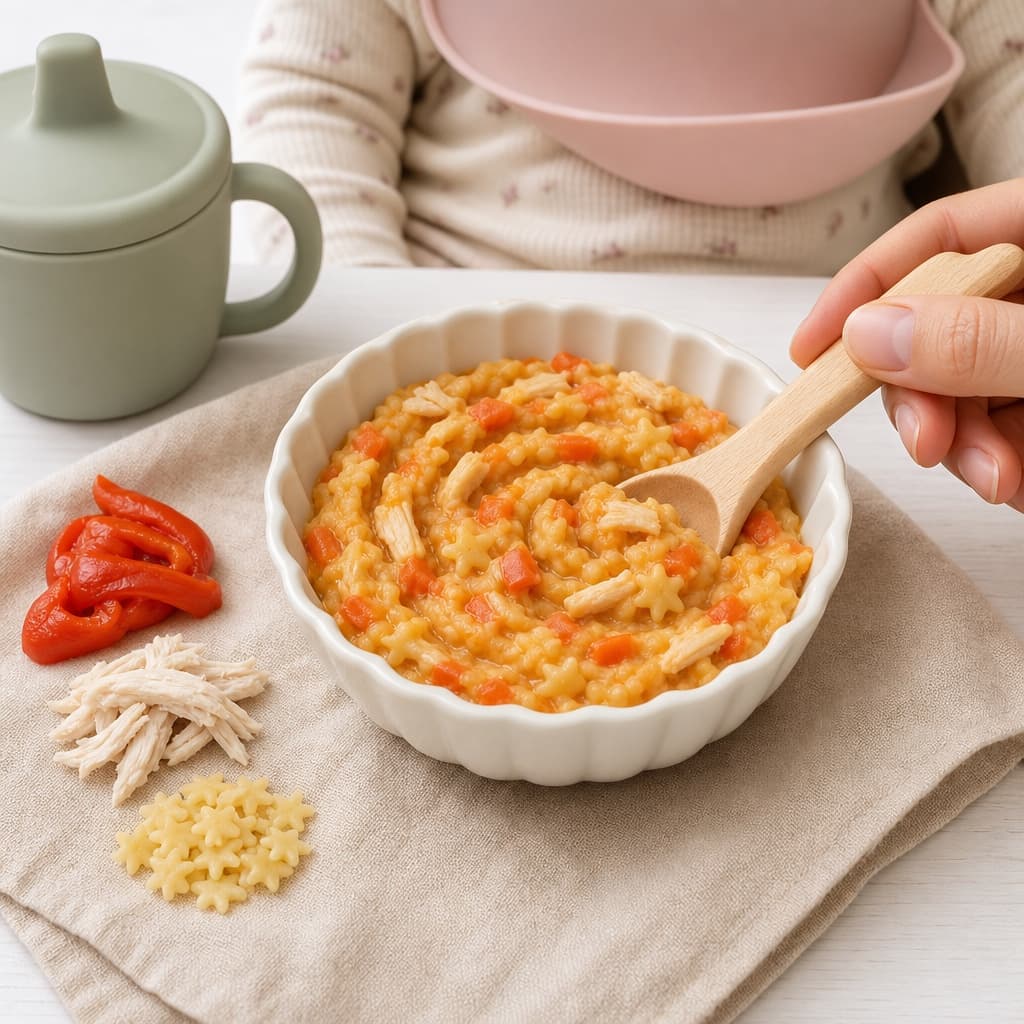
Recipes with bell pepper for babies
Frequently asked questions
Can babies eat raw bell pepper?
Raw bell pepper is generally too firm and crunchy for babies and young toddlers, and it is considered a choking hazard. Stick to bell pepper that has been cooked until soft until your child is comfortably chewing a wide range of textures, usually well into the toddler years. Even then, offer raw pepper in very thin slivers and with close supervision.
Is bell pepper a common allergen for babies?
Bell pepper is not one of the major food allergens, so allergic reactions to it are uncommon. As with any new food, watch your baby the first couple of times for signs such as a rash, swelling, or vomiting. If you notice any concerning symptoms, stop offering it and talk to your pediatrician.
Which color bell pepper is best for babies?
Red, orange, and yellow bell peppers are fully ripened and tend to be sweeter and milder, which many babies prefer. Green bell peppers are picked earlier and have a slightly more bitter, sharp taste. Any color is safe and nutritious, so you can offer whichever your baby enjoys most.
Should I peel bell pepper for my baby?
Yes, peeling is a good idea for younger babies. The thin outer skin can be slippery and difficult to chew, and it sometimes separates into a small piece that is harder to manage. Roasting or steaming the pepper until soft makes the skin easy to slip off.
How do I cook bell pepper for a 6 month old?
Steam or roast the bell pepper until it is very soft, then peel off the skin. You can puree it smooth, mash it into other foods, or cut it into long, soft strips for your baby to hold and gnaw. The pepper should mash easily between your fingers before you serve it.
Can bell pepper cause an upset stomach in babies?
Some babies have sensitive digestion when starting new foods, and bell pepper is mildly acidic, which can occasionally cause a diaper rash or loose stools. Offering small amounts at first and cooking it well can help. If discomfort continues, pause and check in with your pediatrician.
Can babies eat bell pepper for baby-led weaning?
Yes, soft-cooked bell pepper works well for baby-led weaning. For 6 to 9 month olds, offer wide, finger-length strips that are easy to grasp, and switch to small bite-size pieces once the pincer grasp develops. Keep the pepper soft and skinless, and always supervise meals closely.
Get recipes + a feeding plan for your baby
Save this food to your baby's list, get age-appropriate recipes and follow a personalized feeding schedule - 350+ baby-safe meals in the app.
verifiedSources & References
This guide is informed by current guidelines from leading health organizations: