What do you want to know?
Deep dive
Watermelon →Watermelon for babies: timing advice, safe cutting and seed removal, hydration and vitamin benefits, choking prevention tips and simple serving ideas and recipes for warm days.
Nutrition highlights
- High water content - very hydrating, especially in warm weather.
- Vitamin C - supports the immune system and iron absorption.
- Vitamin A (and lycopene) - support vision and overall health.
- Potassium - supports muscle and heart function.
Safety quick tips
- Remove all seeds (including small pale ones) before serving - they can be a choking risk.
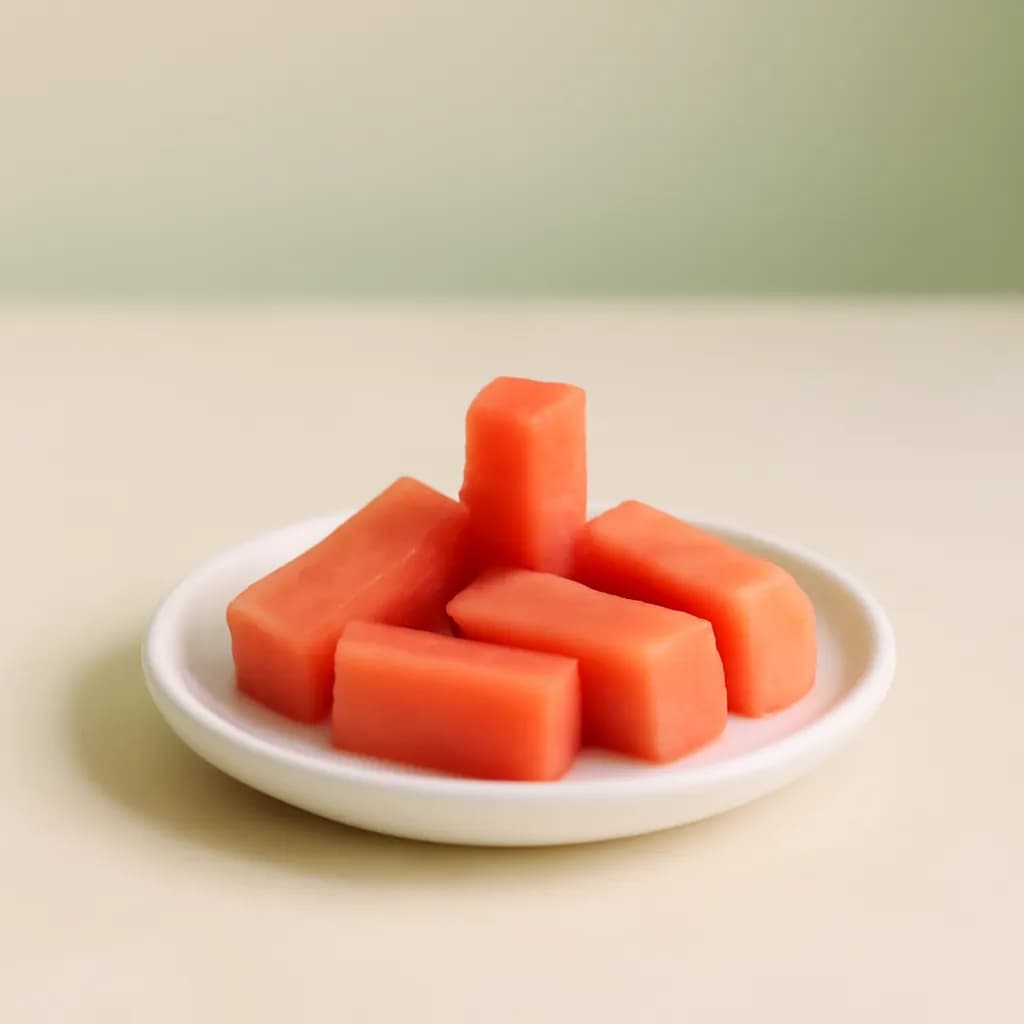
- Choose ripe, soft watermelon and cut into graspable spears, not large blocks.
- Watermelon is slippery - leave a rind-edge handle or roll in baby cereal for grip.
Common questions
Can babies eat Watermelon?
Yes. Babies can eat Watermelon starting around 6 months when they begin solid foods. It should be served in a safe texture and size for babies.
When can babies eat Watermelon?
Babies can eat Watermelon from around 6 months when starting solids. Babies can eat watermelon from around 6 months, once they're starting solids. Choose ripe, soft watermelon, and remove all seeds - including small pale ones - before serving. Cut into graspable spears your baby can hold; the flesh is very soft and easy to gum.
Is Watermelon a choking hazard for babies?
Watermelon can be a choking hazard if served in unsafe shapes. Remove all seeds (including small pale ones) before serving - they can be a choking risk. Choose ripe, soft watermelon and cut into graspable spears, not large blocks. Watermelon is slippery - leave a rind-edge handle or roll in baby cereal for grip. It's very juicy; expect a mess and watch for large bites breaking off. Wash the rind before cutting, as bacteria can transfer to the flesh. Always supervise eating with your baby sat upright.
Is Watermelon a common allergen?
Watermelon is not typically a common allergen for babies. Many babies can try it from around 6 months as part of a varied diet.
How should Watermelon be served to babies?
6–9 months: Offer deseeded watermelon in long, graspable spears or sticks; leave a thin rind edge as a handle or roll in baby cereal for grip. 6–9 months: Mash or purée very ripe watermelon (it's very watery), or freeze into soft teething sticks for older babies. 9–12 months: Small soft bite-sized pieces as the pincer grasp develops. 12+ months: Watermelon pieces, fruit salads, and smoothies.
What nutrients does Watermelon provide for babies?
Watermelon provides nutrients like potassium, vitamin A, vitamin C, iron that support babies' growth and development.
How long can I store Watermelon for babies?
Cook Watermelon to a safe temperature and store it in the refrigerator for up to 2 days, or freeze in single-serving portions for up to 1 month to preserve nutrients.
Should I buy organic Watermelon for my baby?
Organic Watermelon isn't strictly necessary for babies, but some families prefer to reduce pesticide exposure. Wash conventional produce thoroughly. Variety and freshness matter most.