Can babies eat watermelon?
Last updated October 2026
Yes.
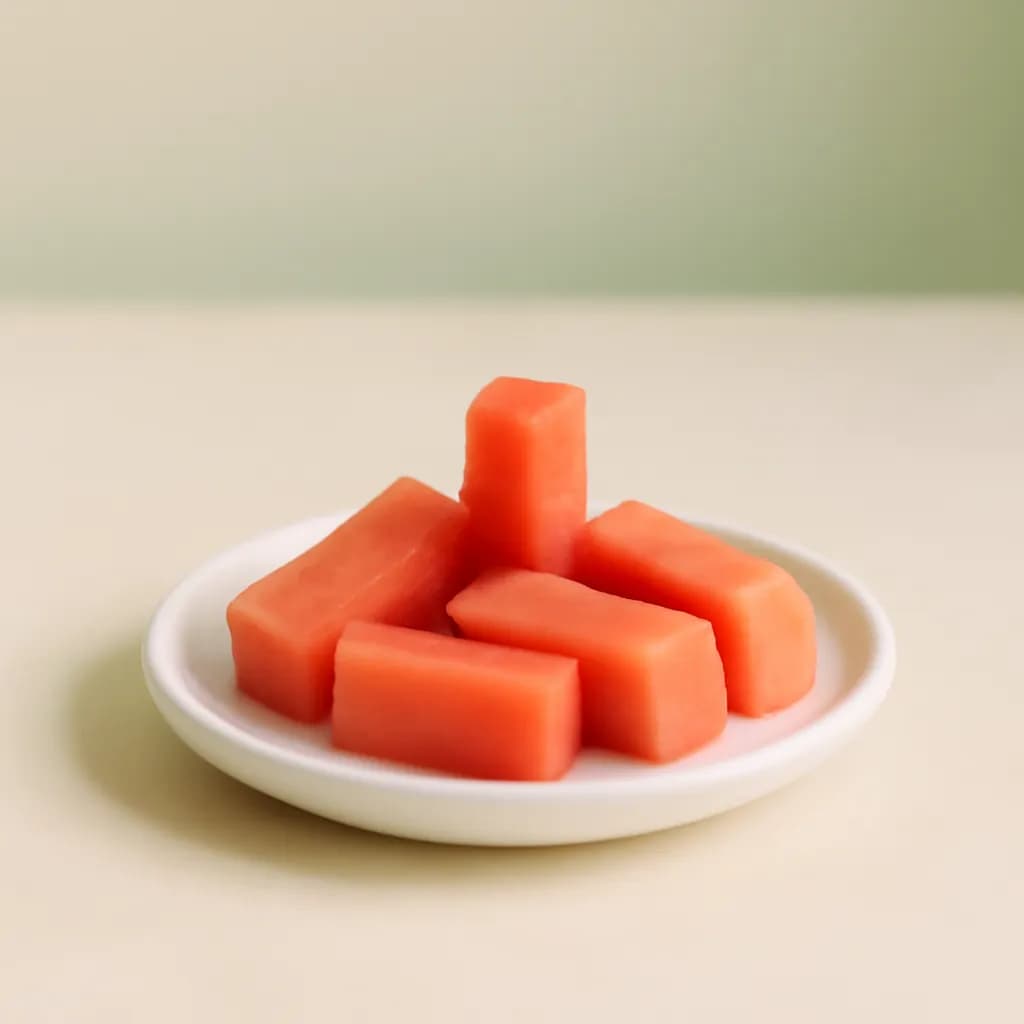
When ready for solids, usually around six months, a baby can try soft ripe watermelon. Scrub the whole intact rind before cutting, then remove the tough rind and visible hard seeds. Serve ripe soft slices only if the child can manage them, or mash the flesh. Avoid melon balls and firm round chunks; supervise while seated upright.
When can babies have watermelon?
Watermelon doesn't need a later start than other fruit. The NHS lists melon among the fruits to offer from around 6 months, and slices of soft fruit such as melon among its first finger-food examples. Start when your baby shows the signs of readiness for solids: sitting and holding their head steady, picking food up and bringing it to their mouth, and swallowing it rather than spitting it back out.
Offer watermelon as part of a meal rather than as a snack between meals. The NHS says babies under 12 months don't need snacks; if they seem hungry between meals, offer an extra milk feed instead.
How to cut and serve watermelon for your baby
Scrub the whole intact watermelon rind with a clean produce brush under running water before cutting, even though it will be discarded. FDA advice warns that cutting unwashed produce can carry germs from skin to flesh. Wash hands and use a clean board and knife; remove hard rind and visible hard black seeds. Washing reduces contamination but cannot sterilise produce.
Offer soft ripe slices or mash; watermelon is slippery and a long strip can break into an unexpected shape. If the child cannot control it, use mash rather than assuming a fist-sized piece is safe. NHS recommends slices instead of melon chunks, and CDC lists melon balls among choking hazards.
Refrigerate cut melon promptly in a clean covered container. CDC warns against cut melon left out more than two hours, or more than one hour above 90°F (32°C). Refrigerated cut melon for seven or fewer days is considered a lower-risk choice, not a guarantee; throw out any spoiled melon or pieces left unrefrigerated too long.
Watermelon checks before you serve
Scrub the intact melon rind under running water with a clean produce brush before slicing; clean hands, knife and board matter. Discard rind and visible hard seeds.
Use soft slices or mash, never hard rind handles or round melon balls. Slippery strips do not suit every beginning eater.
Check ripeness: the flesh should squash easily between your finger and thumb.
Promptly refrigerate cut melon. Discard after more than two hours outside the fridge, or more than one hour above 90°F (32°C).
Seat your baby upright in a highchair, and stay with them for the whole meal.
Call your local emergency number if your baby is choking and can't cough, cry or breathe effectively, and start baby choking first aid straight away.
What watermelon adds to your baby's plate
Vitamin C and vitamin A. The FDA's raw fruit nutrition chart lists 25% and 30% of an adult's daily value in a 280 g serving, far more than a baby will eat, so think of watermelon as a contribution rather than a main source.
Natural sweetness. The same 280 g serving contains 20 g of sugars. The NHS says eating fruit is fine; it's fruit juice and smoothies it asks parents to avoid for children aged 4 and under.
Not much iron (4% of an adult's daily value per serving in the FDA chart), so serve it alongside iron-containing foods such as meat, fish, beans, lentils or fortified cereal.
A new taste and a wet, soft texture to explore, which is useful practice for picking up and holding food.
Related guides
Watermelon for babies: FAQs
Can watermelon help a teething baby?
Chilled soft watermelon can be eaten as a food, but do not use a hard frozen chunk or rind as a teether. Supervise all food. A clean age-appropriate teething ring cooled according to its instructions is a non-food alternative.
Can my baby drink watermelon juice?
It's better to offer the fruit. The NHS asks parents to avoid food and drink with sugar for children aged 4 and under, including the natural sugar in fruit juice and smoothies, partly to protect their teeth. Water and milk are the drinks babies need.
Can I leave some rind on as a handle?
Remove the hard rind before serving. NHS advice is to remove hard skin from fruit. If the flesh is slippery, give a soft manageable slice or mash it rather than relying on a tough rind handle.
Is watermelon a common allergen?
No. Watermelon isn't on the NHS list of foods that most often trigger allergic reactions. If you do notice swollen lips or face, a red, itchy rash, or wheezing after any new food, stop and get advice; breathing problems or a swollen throat or tongue need emergency help.
Sources & References
This guide is informed by current guidelines from leading health organizations:
- ●FDA - Selecting and Serving Produce Safely FDA
- ●CDC - Safer Food Choices CDC
- ●NHS - Preparing Food Safely for Babies NHS
- ●NHS - Your Baby's First Solid Foods NHS
- ●NHS - Feeding your baby from around 6 months NHS
- ●CDC — Choking Hazards (reviewed March 2026) CDC
- ●NHS - Foods to Avoid Giving Babies NHS
- ●NHS - How to stop a child from choking NHS
