Grapes for Baby
Last updated October 2026
Grapes can be introduced after a baby starts solids, usually around six months, but whole grapes are a significant choking hazard because of their round, smooth shape. A beginner may find thoroughly mashed ripe grape flesh easier to manage.
Quick answer
Once a baby is developmentally ready for solids, grape flavor can be offered in a thoroughly mashed or otherwise suitably soft preparation; whole grapes remain inappropriate for babies.
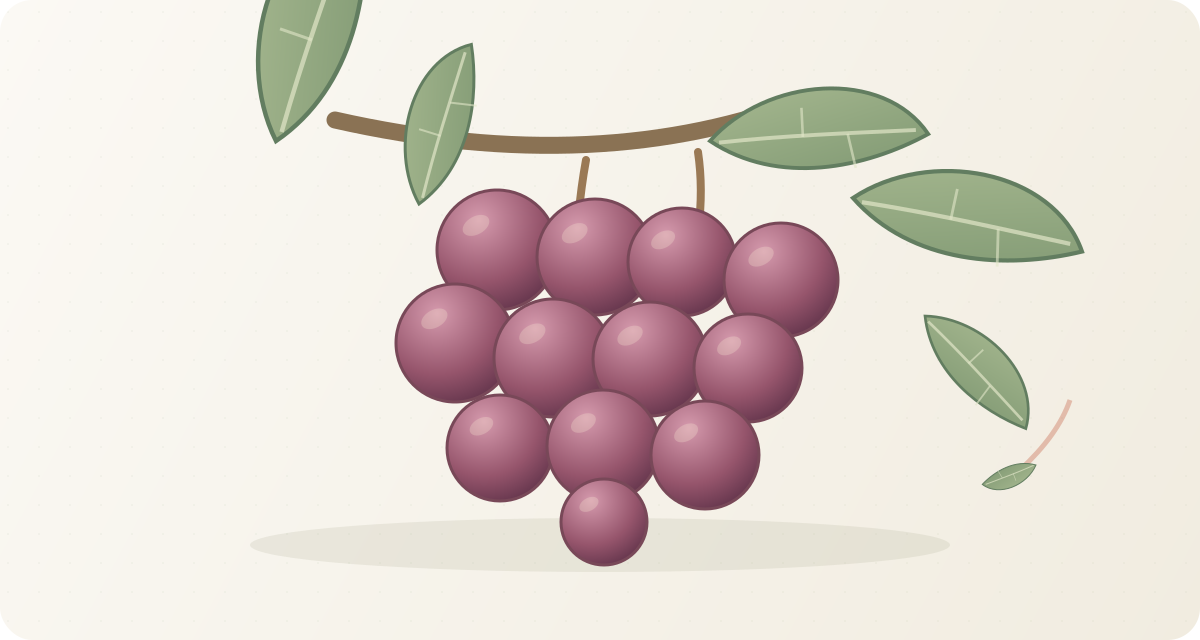
How to serve grapes for babies
Rinse fresh grapes under running water. For beginners, remove any hard seeds and tough peel, then thoroughly mash the ripe flesh into a manageable soft food; check the finished mash for intact slippery pieces. Seedless varieties still need preparation.
You may blend deseeded grape flesh into a suitable mash or already-tolerated plain yogurt. Blending does not eliminate every feeding risk; check for firm skin and seed fragments.
For children able to pick up and chew grape pieces, cut into quarters as NHS guidance recommends, lengthwise so no piece keeps a round profile. If grapes are very large or firm, modify further instead of relying on four pieces as a universal guarantee.
Toddlers and young children still face choking risk from whole grapes and rounded halves, including grapes in fruit salad or a snack pack. Prepare each grape lengthwise for a child able to manage pieces; inspect large or firm grapes individually and supervise seated eating.
The right shape and size depend on your baby's eating skills, not on age alone. Step-by-step preparation: How to cut grapes for baby
Also check how to cut food for baby-led weaning for general BLW cutting tips.
When babies can eat grapes
Round, firm, slippery grapes can obstruct the airway. NHS advises quartering small round fruit; the best preparation for a beginner may be mashed flesh with skins and seeds removed. Continue changing risky shapes for toddlers and young children.
Do not give whole grapes, crosswise discs or rounded halves. For individual pieces, cut lengthwise into four and further adapt firm or large fruit to the child's skills.
Remove seeds and consider taking off tough skin for young babies. Check the actual consistency of the fruit; quartering alone is not proof of safety.
NHS guidance says to quarter small round fruit such as grapes. Cut lengthwise rather than across the middle, and continue adapting the pieces for the child's chewing skills throughout early childhood. Do not offer whole grapes or round halves.
Inspect the fruit for hard seeds, tough skin and firm or slippery pieces. A particular cut or birthday cannot guarantee that choking will not happen.
See our first foods for baby guide for more ideas.
Safety tips
Never offer whole grapes or round crosswise discs; quarter grapes lengthwise for children who can manage individual pieces, or mash fruit for beginners.
A fixed fourth birthday does not end the need to assess round grapes; follow local choking guidance and the child's actual chewing skills.
Keep the child upright, seated, calm and continuously supervised; do not offer grapes while walking or riding in a car or stroller.
Remove hard seeds and inspect skin and firmness before serving; for young beginners remove tough skin if necessary.
Even seedless grapes must be cut or mashed appropriately; check large or firm fruit more carefully.
Learn age-appropriate choking first aid from a qualified provider; seek emergency help immediately for severe choking.
Grape recipes for babies
We're adding more grapes recipes. Check back soon.
Browse all baby recipes →See all grapes recipes for babies. Explore baby breakfast recipes, baby-led weaning recipes and first foods for baby for more ideas.
Related Guides
Frequently Asked Questions
Are seedless grapes safe whole for babies?
No. Removing seeds does not change the smooth rounded shape. Never offer whole seedless grapes to a baby; mash the flesh for beginners and use appropriate lengthwise preparation as skills develop.
Does cutting grapes in half prevent choking?
No. Crosswise halves retain a round airway-sized profile. NHS guidance recommends cutting small round fruit into quarters; cut lengthwise so no piece keeps a round profile, for children who can manage pieces, with further texture adjustment for younger babies.
Can I use grapes from a fruit cup or fruit salad?
Inspect them individually. Pre-cut mixed fruit may still contain whole grapes or rounded halves; remove those and prepare each grape for the child rather than relying on the packaging.
Sources & References
This guide is informed by current guidelines from leading health organizations:
- ●AAP - Choking Prevention AAP
- ●NHS - Foods to Avoid Giving Babies NHS
- ●CDC - When, What, and How to Introduce Solid Foods CDC
- ●CDC — Choking Hazards (reviewed March 2026) CDC
- ●NHS - Preparing Food Safely for Babies NHS
- ●NHS - Your Baby's First Solid Foods NHS
