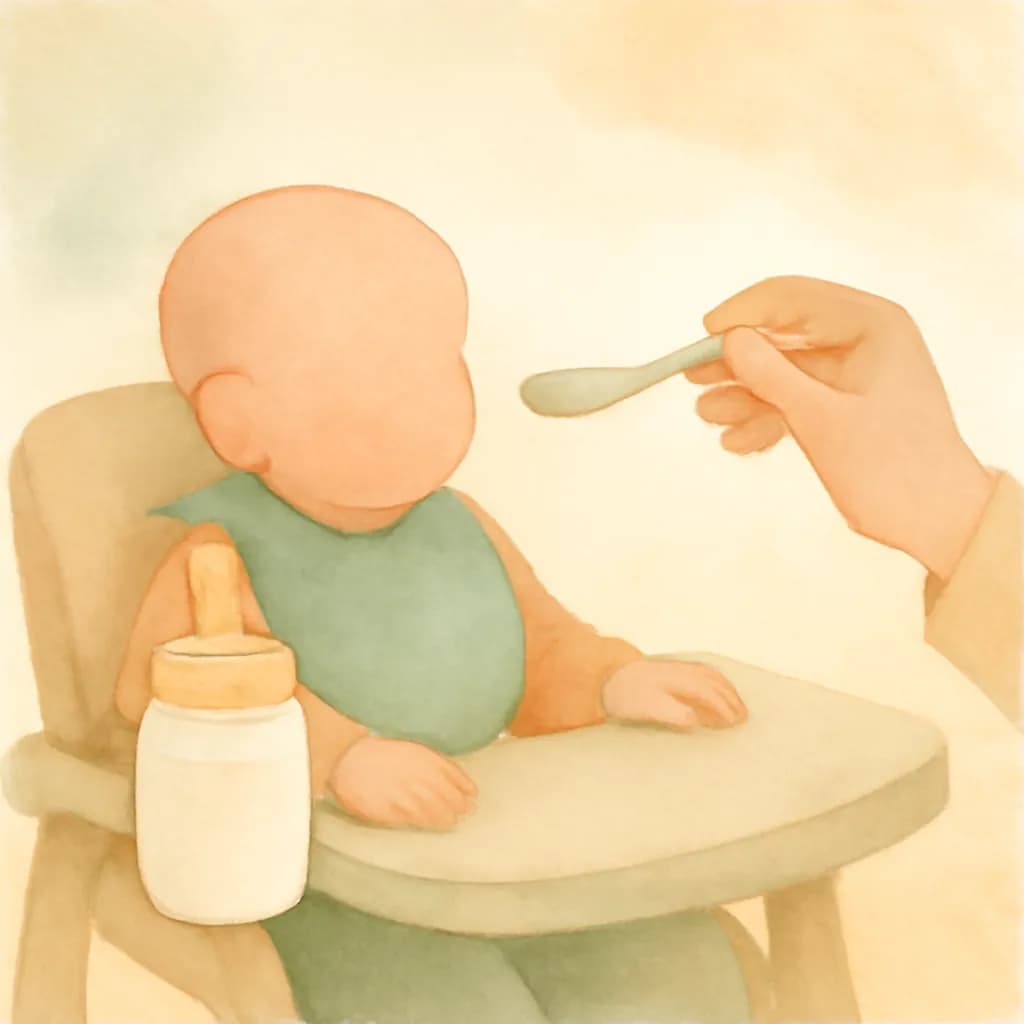
What 6-12 month olds need
Between 6 and 12 months, milk remains the main source of nutrition, especially in the first months after solids start. By around 9 months, solid foods become a more significant part of your baby's diet, and by 12 months, solids are usually the primary source of nutrition with milk supporting growth and hydration.
Babies will gradually reduce milk feeds naturally as they eat more solids. It’s important to follow your baby’s hunger and fullness cues rather than forcing feed reductions.
Why this schedule works
- Milk provides essential nutrients and hydration during early solid food introduction.
- Solids gradually provide more energy and nutrients as baby’s appetite and skills develop.
- Following baby’s cues supports healthy feeding habits and prevents stress.
- Night feeds may continue if baby wakes hungry, supporting growth and comfort.
- Avoiding juice or sugary drinks prevents unnecessary calories and dental issues.
- Monitoring wet diapers and growth ensures your baby is getting enough nutrition.
When to consult your pediatrician
- Your baby has a consistently low intake of milk and solids and shows signs of dehydration.
- Your baby is not gaining weight or growing along their expected growth curve.
- Your baby has fewer than 4 wet diapers per day over several days.
- Your baby appears unusually lethargic, irritable, or has persistent vomiting or diarrhea.
Sample daily schedule
7am - Morning milk feed
Start the day with a milk feed to meet your baby’s early hunger and hydration needs. This feed often remains until around 12-15 months.
9am - Breakfast solids
Offer iron-rich cereals, mashed fruits, or vegetables. Solids start to become a regular part of the day but milk still supports nutrition.
12pm - Midday milk feed
Provide a milk feed to maintain energy and hydration, especially as solids are still increasing.
2pm - Mid-afternoon solids
Offer a variety of soft finger foods or purees. This meal helps your baby explore tastes and textures.
4pm - Mid-afternoon milk feed (dream feed)
Around 6 months and beyond, a mid-afternoon milk feed can support your baby’s appetite and growth as solids increase.
6pm - Dinner solids
Offer a balanced meal with vegetables, protein, and grains. Solids become a larger part of the diet by 9-12 months.
8pm - Evening milk feed
End the day with a milk feed to comfort and nourish your baby before bedtime.
Night feeds as needed
If your baby wakes hungry during the night, offer milk feeds. These will usually reduce naturally over time.
Frequently asked questions
Is it normal for my baby to still want milk feeds at 12 months?
Yes, milk continues to be an important source of nutrition and comfort for many babies up to and beyond 12 months, even as solids become their primary food.
How do I know when to reduce milk feeds?
Follow your baby’s hunger and fullness cues. If they seem satisfied with solids and naturally reduce milk intake, it’s a good sign to gradually drop some milk feeds.
Should I replace milk feeds with juice or other drinks?
No, juice and sugary drinks are not recommended for babies under 12 months. Milk and water are the best options to meet hydration and nutritional needs.
What if my baby wakes up hungry at night?
Night feeds are normal in the first year. Offer milk if your baby wakes hungry, and expect these feeds to reduce naturally as they grow.
How many wet diapers should my baby have daily?
Typically, babies should have at least 4 to 6 wet diapers a day, indicating adequate hydration and milk intake.
Can I force my baby to eat more solids to drop milk feeds faster?
It’s best not to force feed. Let your baby explore solids at their own pace while continuing milk feeds to meet nutritional needs.
When can I expect solids to be the main part of my baby’s diet?
By around 12 months, solids usually become the primary source of nutrition, with milk supporting growth and hydration.
Get your baby's personalized feeding plan
A daily feeding schedule, 350+ age-matched recipes, allergen tracking and cutting guides - all tailored to your baby's age in the Nibli app.
verifiedSources & References
This guide is informed by current guidelines from leading health organizations: