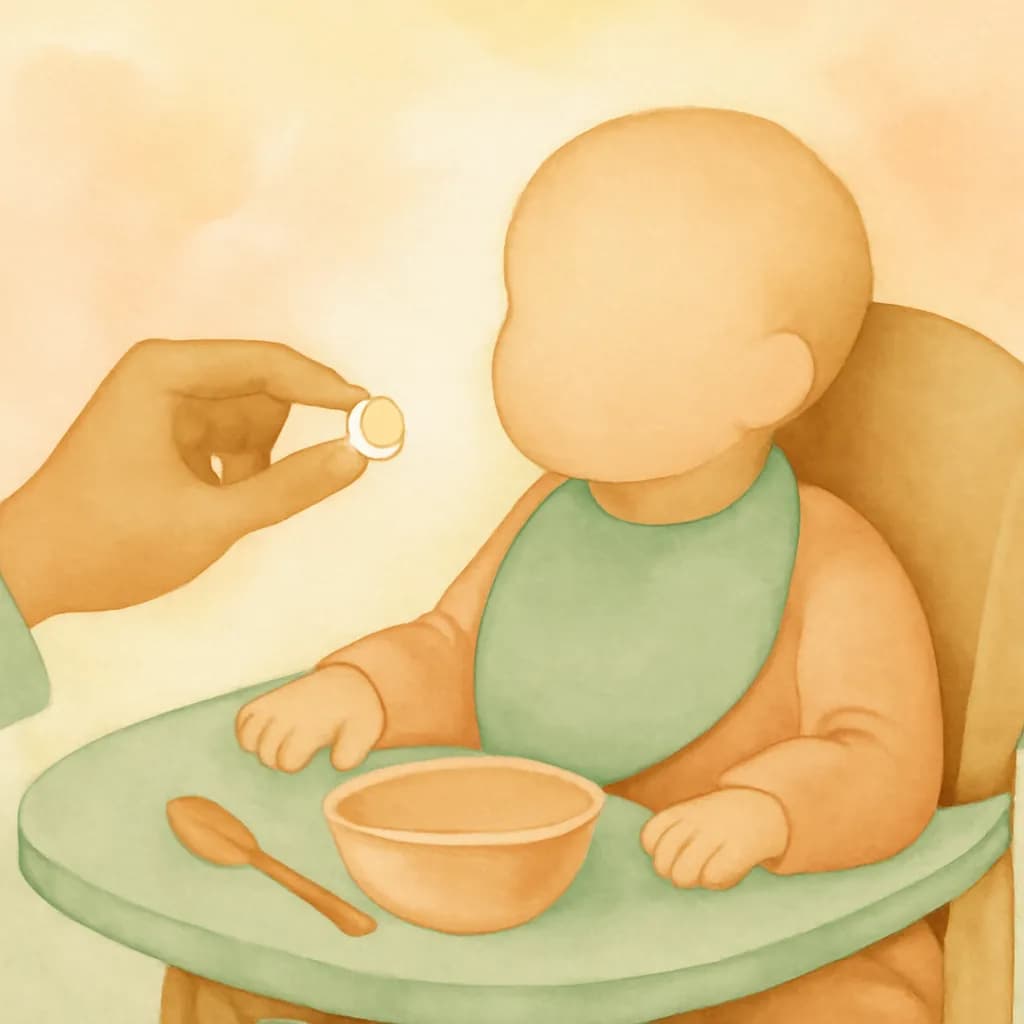
What 8-12 month olds need
At this age, babies typically start having one snack a day around 8-9 months, increasing to two snacks by 10-12 months. Snacks help bridge the gap between milk feeds as your baby’s appetite and food intake evolve.
Healthy snacks complement milk feeds and meals, providing extra nutrients and energy without replacing main feeds. Portion sizes should be small and appropriate for your baby's stage.
Why this schedule works
- Snacks support growing energy needs as milk feeds gradually reduce.
- Offering snacks between meals helps maintain steady nutrient intake throughout the day.
- Healthy snack choices encourage varied tastes and textures, aiding development.
- Timing snacks at least one hour before meals protects appetite for main feeds.
- Avoiding sugary or processed snacks promotes good dental health and nutrition.
- Portion control prevents overfeeding and helps babies learn hunger cues.
When to consult your pediatrician
- Your baby consistently refuses milk feeds or solid foods, leading to low intake.
- There is noticeable weight loss or failure to gain weight as expected.
- Signs of dehydration such as fewer wet nappies or dry mouth.
- Persistent vomiting, diarrhea, or other concerning symptoms.
Sample daily schedule
7am - Morning milk feed
Start the day with a milk feed to meet your baby's hydration and nutritional needs.
9:30am - Mid-morning snack
Offer a small healthy snack like soft fruit pieces, yogurt, or cheese to bridge the gap before lunch.
12pm - Lunch meal
Serve a balanced meal with a variety of textures and flavors alongside milk if needed.
3pm - Afternoon snack
Provide a second snack such as crackers with hummus or soft cooked vegetables, avoiding sugary or processed options.
6pm - Evening meal
Offer a nutritious dinner with finger foods or soft meals, followed by milk if your baby still takes it.
7:30pm - Bedtime milk feed
Finish the day with a milk feed to ensure your baby is well nourished overnight.
Frequently asked questions
When should I start giving my baby snacks?
Most babies start having one snack a day around 8 to 9 months, increasing to two snacks by 10 to 12 months. Snacks help fill the gap between milk feeds and meals as your baby’s appetite changes.
What are healthy snack options for my baby?
Healthy snacks include soft fruits like banana or cooked apple, plain yogurt, small pieces of cheese, soft cooked vegetables, crackers, and hummus. Avoid sugary or processed snacks.
How much snack should I offer my baby?
Offer small portions appropriate for your baby’s age and appetite. Snacks should complement, not replace, milk feeds or main meals.
When is the best time to give snacks?
Give snacks between meals to keep your baby satisfied but avoid offering snacks within one hour before a main meal to protect their appetite.
Can snacks replace milk feeds?
No, snacks are meant to complement milk feeds and meals, not replace them. Milk remains an important source of nutrition during this stage.
What if my baby refuses snacks?
It’s normal for babies to be selective. Keep offering a variety of healthy options without pressure and watch for hunger cues.
Are sugary snacks okay for my baby?
Sugary and processed snacks are best avoided as they can harm dental health and reduce appetite for nutritious foods.
Get your baby's feeding schedule + recipes
A personalized daily schedule that evolves with your baby's age, paired with age-matched recipes for every meal - milk, solids and snacks in one calm plan.
verifiedSources & References
This guide is informed by current guidelines from leading health organizations: