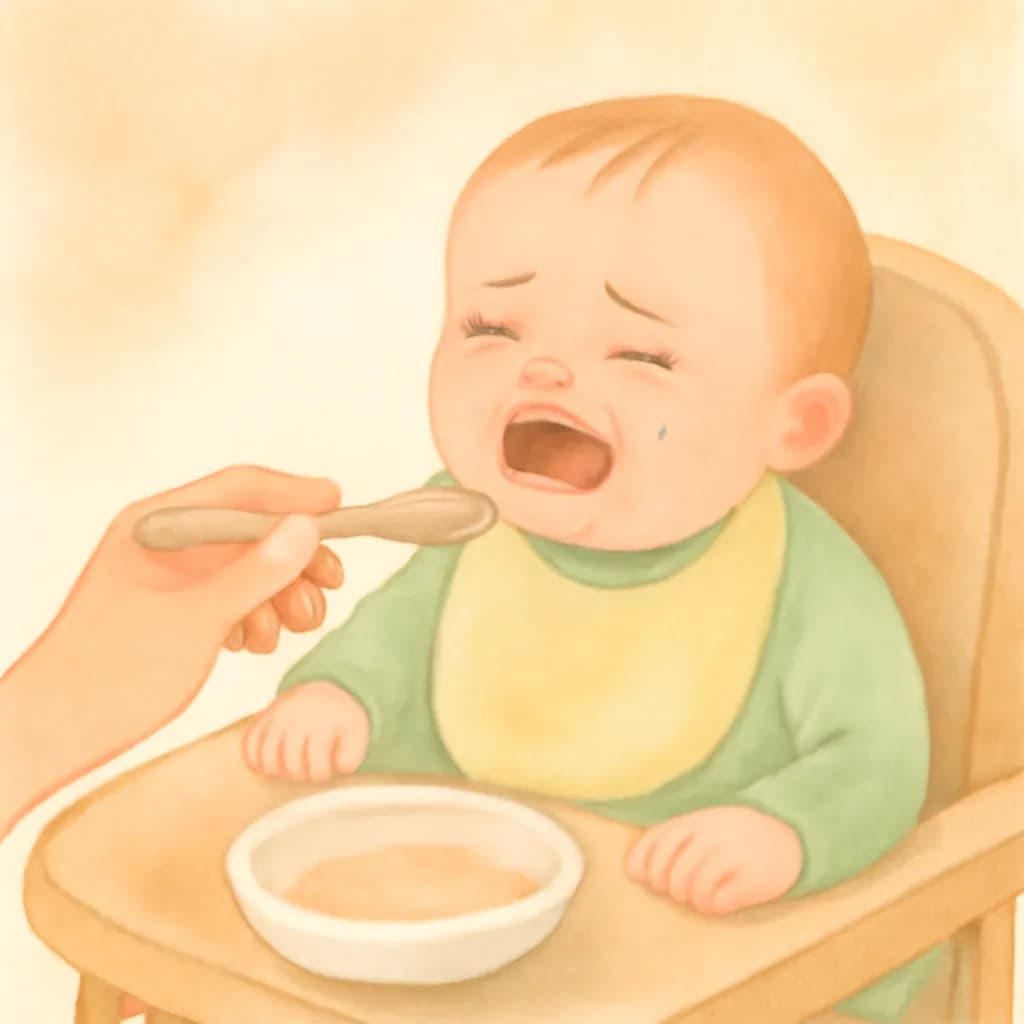
Is this normal?
Yes - lots of babies cry at meals at some point, especially in the first weeks of solids and during big developmental shifts. Babies are still learning that food is enjoyable; new textures, new high-chair seating, and a busy environment can all overwhelm them.
Crying usually isn't about hating food - it's about timing, comfort, sensation, or mood. Look at the conditions around the meal first (tired? overstimulated? teething? hungry past comfort?) before changing what's offered. Small environmental tweaks usually solve it within days.
Common reasons babies cry at meals
- Tired - meals offered when baby needs a nap usually go badly. The 'hungry-tired' window is a recipe for tears.
- Hungry past comfort - if baby has been waiting too long, they're often too distressed to eat. Offer food before crying-hungry stage.
- Teething - sore gums make chewing and pressure on the gums uncomfortable, especially with harder textures.
- Food too hot, too cold, or unfamiliar texture - sensory mismatch can trigger overwhelm.
- High-chair issues - uncomfortable straps, slipping seat, or feet dangling can make sitting feel unstable.
- Distractions and sensory overload - TV on, lots of voices, bright lights, dogs nearby - babies focus best in calm settings.
- Frustration with a new texture or self-feeding skill - learning is hard work and can spill into tears.
When to call your pediatrician
- Persistent crying with feeding refusal across multiple meals for several days.
- Weight loss or no weight gain for 2-3 weeks.
- Signs of pain: arching back, crying when food touches mouth, clutching tummy.
- Frequent vomiting (not just spit-up) after meals.
- Signs of an allergic reaction: hives, swelling, breathing changes, severe vomiting.
- Suspected reflux: discomfort during and after meals, frequent wet burps, irritability.
- Excessive crying outside meal times too - may signal another issue.
What to try
Check timing first
Try meals at calm, alert moments - not during the sleepy pre-nap window. Aim for about 30-60 minutes after a milk feed and at least 1 hour before nap time. Adjust the schedule if mealtime keeps lining up with tired times.
Keep meals shorter
End meals at 10-15 minutes. If crying starts, end the meal calmly - don't push for more bites. Forcing through tears teaches babies that meals are stressful, which makes future meals harder.
Check the seating posture
Baby should be fully upright (not reclined or slumping), feet supported on a footrest, hips at 90 degrees, straps snug but comfortable. Slumped or unstable seating triggers fussiness fast.
Reduce distractions
Turn off TV and music. Eat in a quieter space. Family meals are great but huge group dinners can overwhelm. Calm, predictable mealtime environments help babies focus and stay happy.
Offer water in an open or straw cup
Small sips of water during meals give baby a pause and can soothe. Open cups or straw cups (not sippy cups with valves) are best. Sometimes a sip is enough to reset a fussy moment.
Try cooler, soothing foods if teething
Chilled cucumber spears, plain whole-milk yogurt, mashed banana from the fridge, frozen breast milk in a mesh feeder - these soothe sore gums and often turn a meal around.
End the meal if crying continues
If 2-3 minutes of adjustment doesn't help, end the meal calmly. Try again at the next regular mealtime. Don't snack-bridge with milk or other foods - it can train babies to hold out.
Frequently asked questions
Why does my baby cry as soon as I sit them in the high chair?
It might be the seating itself (uncomfortable straps, slumped position, dangling feet) or an association with previous bad meals. Check the chair fit, add a footrest, and rebuild positive association by sitting baby in the chair for non-meal play time too.
Should I keep feeding if my baby is crying?
No - end the meal calmly after 2-3 minutes of trying to adjust. Pushing through tears teaches babies that meals are stressful and can lead to long-term feeding aversions. Try again at the next regular mealtime.
Could my baby be in pain?
Possibly - teething, reflux, food allergies, constipation, or an ear infection can all make eating uncomfortable. If crying happens at every meal and doesn't respond to environmental tweaks within a few days, check in with your pediatrician.
Is mealtime crying a sign my baby isn't ready for solids?
If you started recently and crying is constant, it could be a sign. Reassess readiness signs: stable sitting, head control, interest, lost tongue-thrust. If signs aren't all present, pause for 1-2 weeks and try again.
How long should a meal last?
10-15 minutes is plenty. End the meal when baby signals done (crying, throwing food, turning head). Long meals usually backfire - babies lose interest and tears follow.
Does crying at meals mean my baby hates the food?
Usually not. It's much more often about timing, seating, mood, or teething than the food itself. Try the same food at a calmer moment a few days later before assuming dislike.
Get unstuck + a plan for your baby
Personalized, age-aware troubleshooting plus a feeding schedule and recipes built around your baby, so mealtimes get easier from here.
verifiedSources & References
This guide is informed by current guidelines from leading health organizations: