When can babies eat apple?
Most babies are ready to start solid foods, including apple, at around 6 months of age. Look for readiness signs rather than focusing on the calendar alone: your baby can sit upright with little or no support, holds their head steady, reaches for food, and can move food to the back of the mouth and swallow rather than pushing it out with the tongue. If you are unsure, check in with your pediatrician before starting solids.
Apple is a gentle, naturally sweet first food that works well at the start of the solids journey. Because it is firm and crisp when raw, the key is to change how you prepare it as your baby develops. Cooked, mashed, or finely grated apple suits new eaters, while older babies with more chewing skill can handle softer hand-held pieces. There is no need to delay apple, and offering a variety of fruits and vegetables early helps your baby get used to many flavors and textures.
How to serve apple safely
At 6 to 9 months, raw apple is too hard and round to be safe, so cook it until soft. Steam, bake, or simmer peeled apple until you can easily mash it with a fork, then offer it as a smooth or lumpy puree on a preloaded spoon, or as soft cooked wedges large enough for your baby to grip in a fist. You can also finely grate raw apple so the pieces are soft and thin enough to gum and swallow. Always remove the skin, core, seeds, and any stem.
From 9 to 12 months and beyond, babies develop a pincer grasp and stronger chewing, so you can offer thin, peeled apple slices or small soft pieces of cooked apple. Keep raw slices very thin so they bend rather than snap into a hard chunk, and continue to skip whole apple, apple chunks, and apple slices with the skin left on until your child is older and chews well, usually around age 4. Never offer dried apple rings or apple chips to babies, as they are hard and easy to choke on.
Nutritional benefits for babies
- 💚Provides vitamin C, which supports the immune system and helps the body absorb iron from other foods
- 💚Contains dietary fiber, including pectin, that supports healthy digestion and regular bowel movements
- 💚Offers natural fruit sugars for energy without any need for added sugar
- 💚Delivers antioxidants and plant compounds found in apples, especially in fruit that is cooked with the peel before peeling
- 💚Has a high water content that helps with hydration alongside breast milk or formula
- 💚Naturally sweet and mild, making it an easy way to introduce a new flavor and texture
Safety considerations
- ✓Apple is not a common allergen, but introduce it on its own for a few days and watch for any reaction so you can spot the cause if one occurs.
- ✓Raw apple is a leading choking hazard. Always cook it soft, finely grate it, or cut very thin peeled slices, and never give whole apples, chunks, or hard slices to babies and young toddlers.
- ✓Remove the peel, core, seeds, and stem before serving, since apple seeds and tough skin can be hard to chew and swallow.
- ✓Always stay within arm's reach and supervise your baby during meals, and have them sit upright in a high chair rather than reclining or moving around.
- ✓Introduce apple one new food at a time, and avoid dried apple, apple chips, and apple juice for babies, offering whole prepared apple and water instead.
Recipes with apple for babies
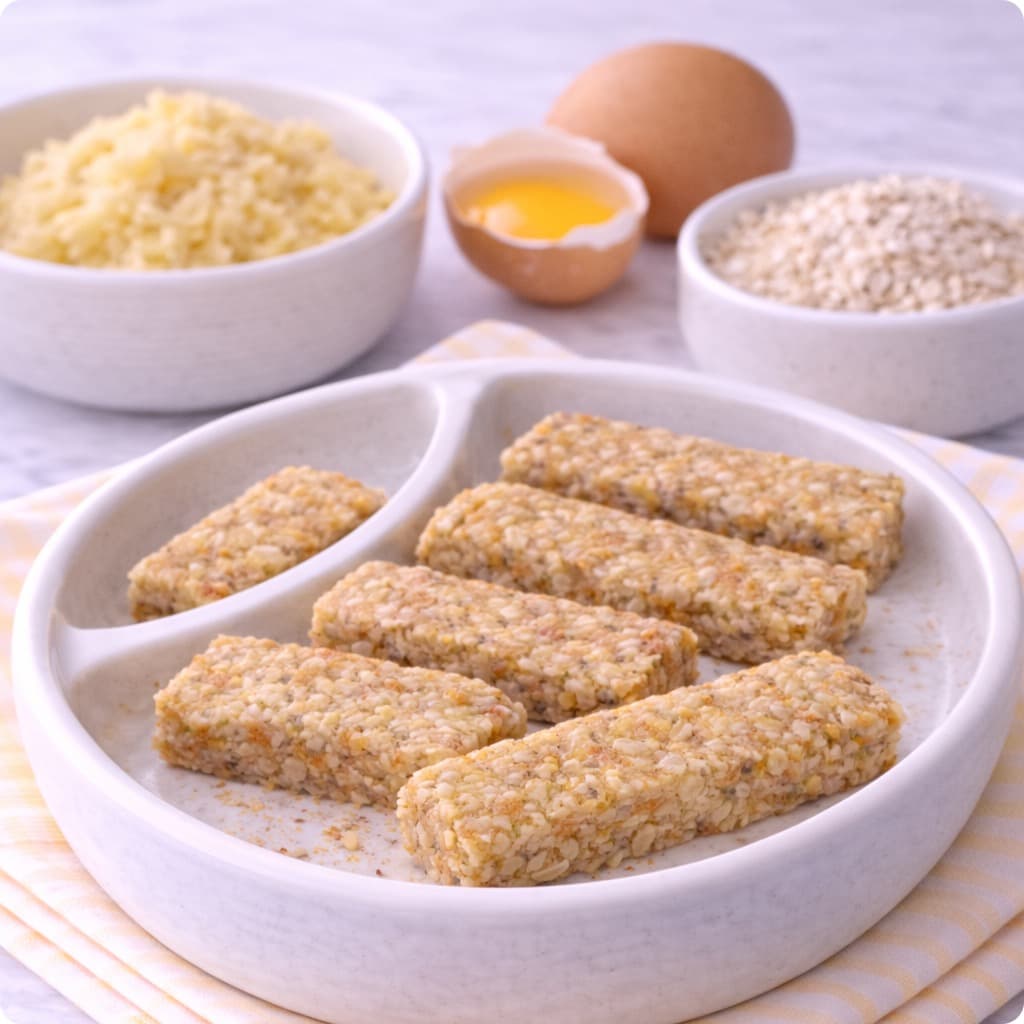
Apple Oat BLW Bars
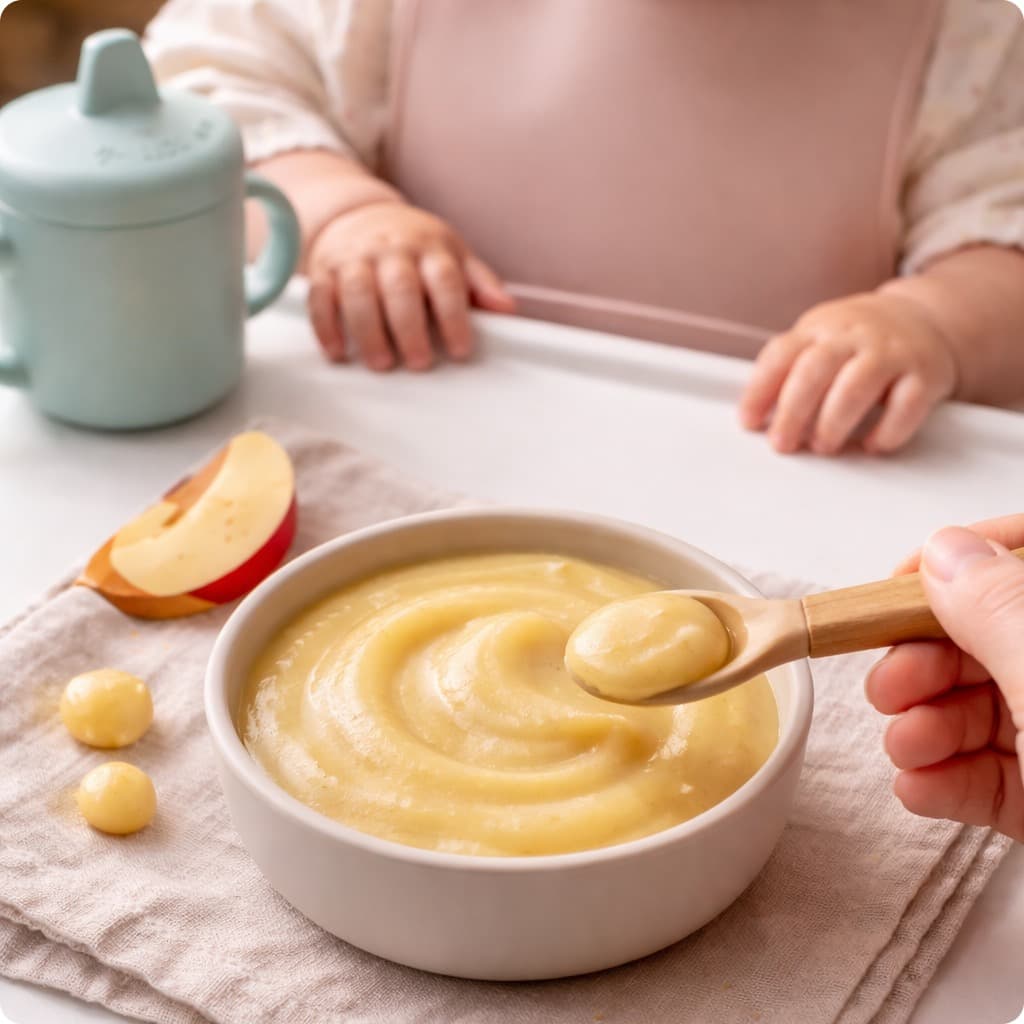
Apple Purée
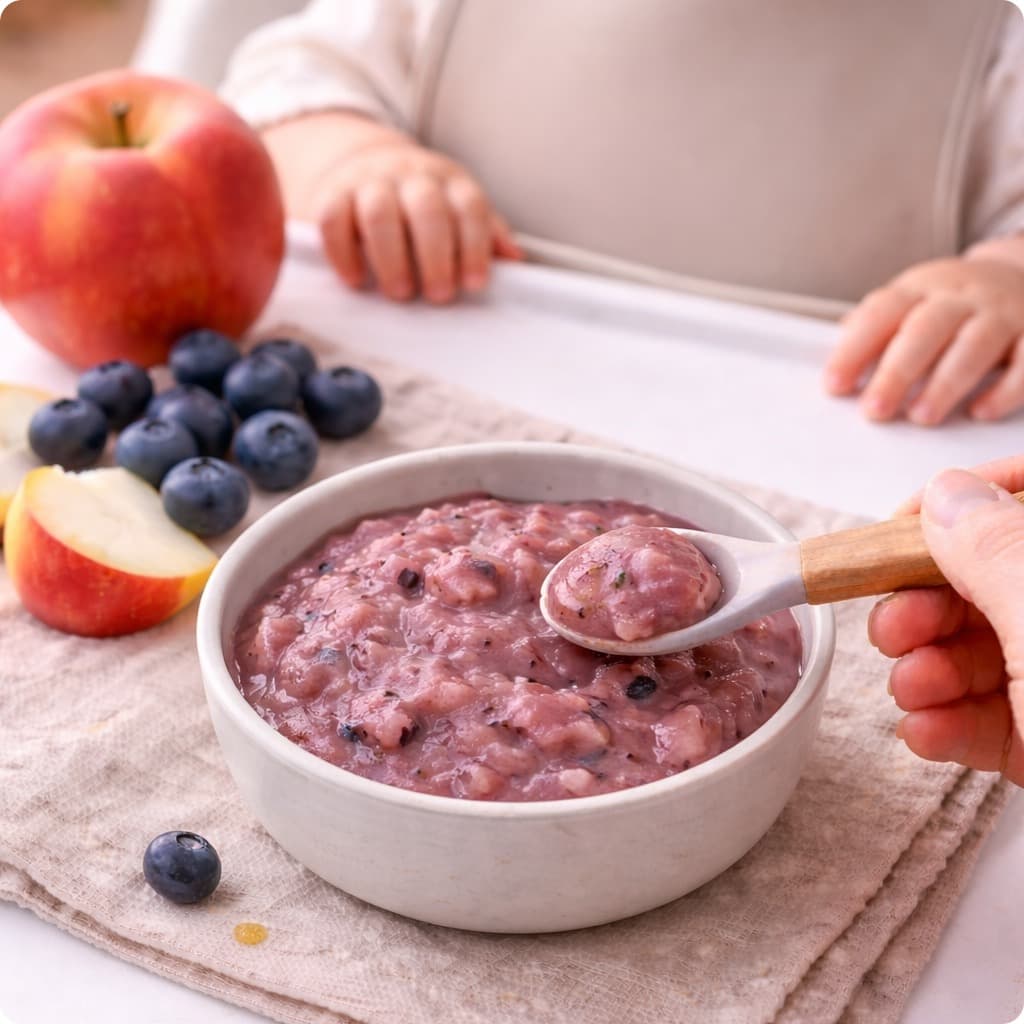
Apple & Blueberry Mash
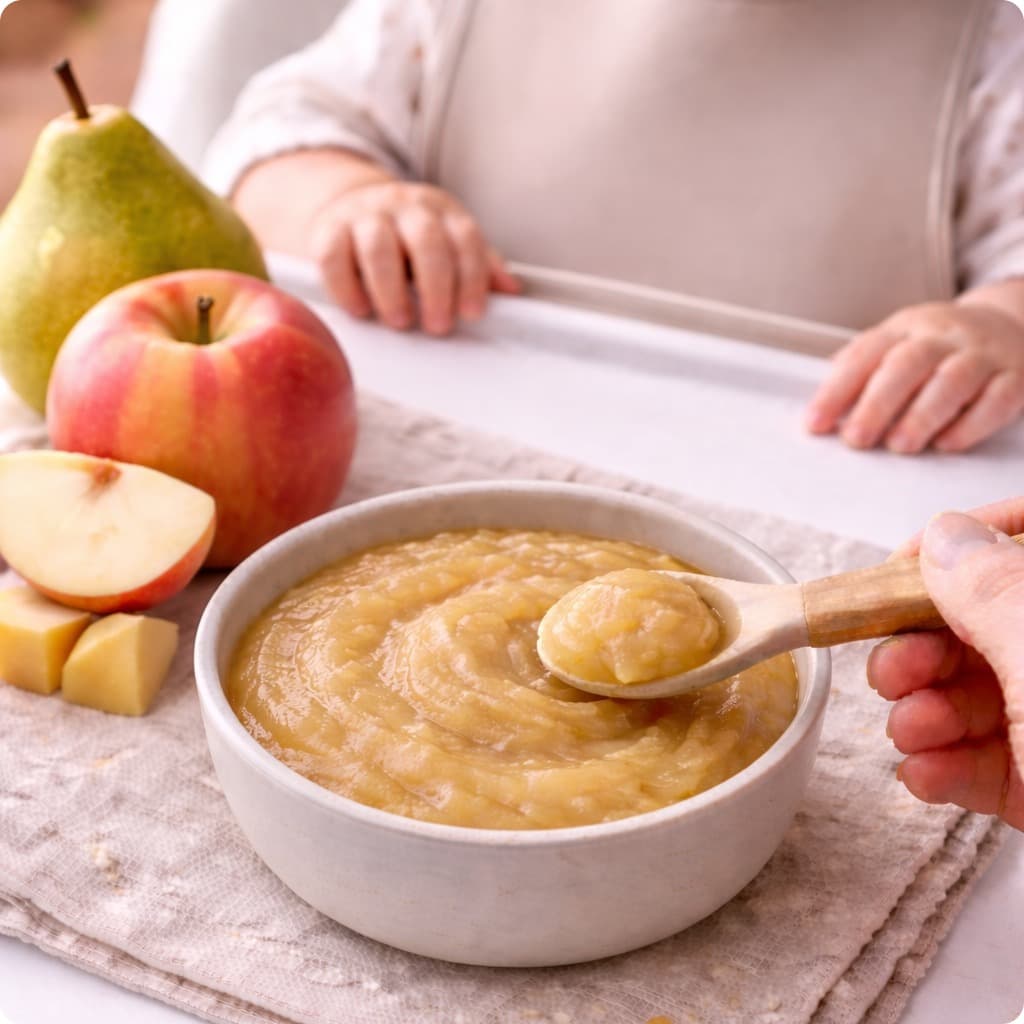
Apple & Pear Mash
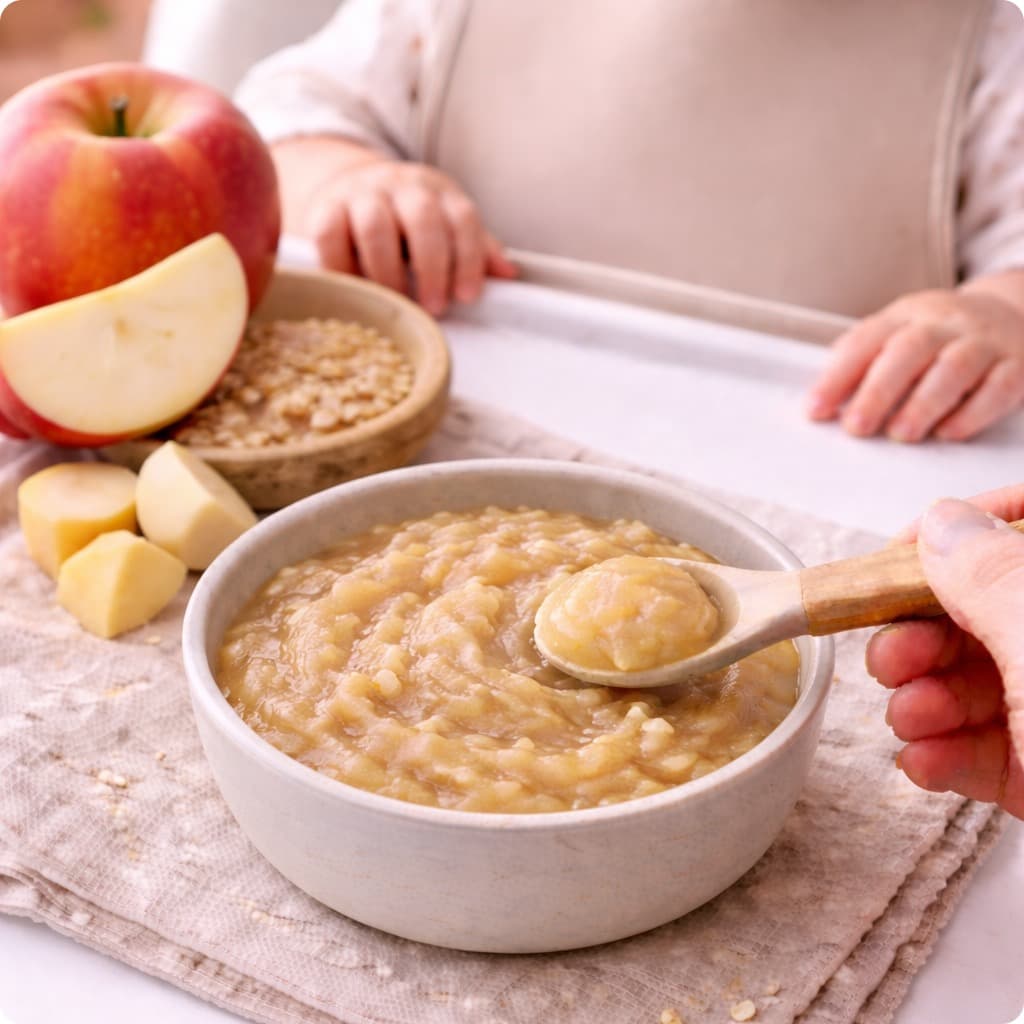
Apple Oatmeal
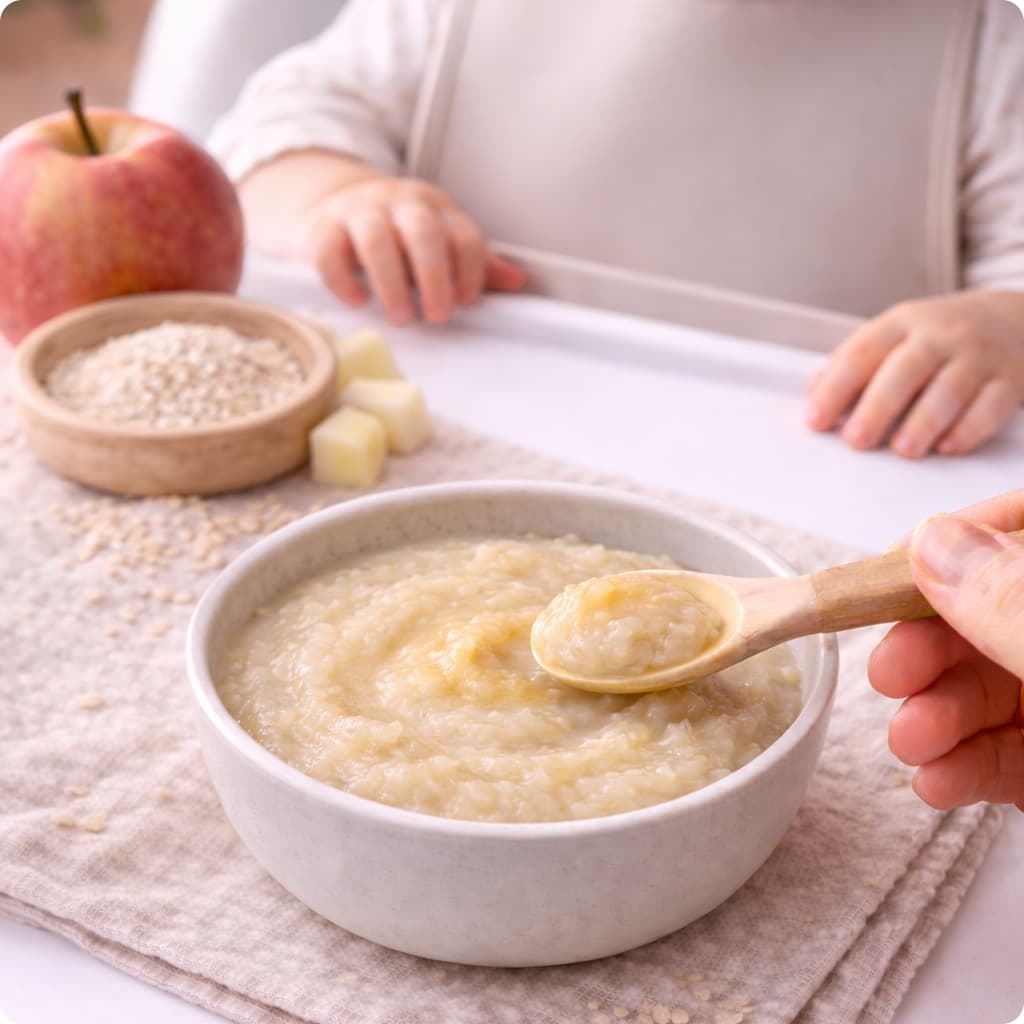
Apple Rice Cereal
Frequently asked questions
Can babies eat raw apple?
Raw apple is a choking hazard for babies because it is hard and firm. For younger babies, grate raw apple finely so it is soft and thin, or cook it until tender. Older babies who chew well can have very thin peeled raw slices under close supervision.
Is apple a common allergen for babies?
Apple is not one of the common food allergens, so most babies tolerate it well. As with any new food, offer it on its own for a few days and watch for signs of a reaction such as a rash, swelling, or digestive upset. If you notice anything concerning, stop and talk with your pediatrician.
Should I cook apple before giving it to my baby?
Yes, cooking is the safest way to serve apple to babies aged 6 to 9 months, since it softens the firm flesh and lowers the choking risk. Steam, bake, or simmer peeled apple until it mashes easily with a fork. Finely grated raw apple is another soft option for younger babies.
Can I give my baby apple puree?
Yes, apple puree made from cooked, peeled apple is a great early food from around 6 months. You can offer it on a preloaded spoon or let your baby scoop it. Once your baby is comfortable, you can leave it slightly lumpy to help them get used to texture.
How do I cut apple to prevent choking?
Always peel the apple and remove the core, seeds, and stem first. For babies, cook the apple until soft or grate it finely, and for older babies cut very thin slices that bend rather than snap. Avoid round chunks, thick slices, and apple with the skin left on.
Can babies have apple juice?
It is best to skip apple juice for babies, as it offers little nutritional benefit and can fill them up without the fiber that whole apple provides. Babies under 12 months do not need juice at all. Offer whole prepared apple and small amounts of water instead.
When can babies eat apple slices with the skin on?
Hold off on apple with the skin on until your child is a confident chewer, usually around age 4, since the peel is tough and adds to the choking risk. Until then, always peel apple before serving. For younger babies, stick with cooked, grated, or thinly sliced peeled apple.
Get recipes + a feeding plan for your baby
Save this food to your baby's list, get age-appropriate recipes and follow a personalized feeding schedule - 350+ baby-safe meals in the app.
verifiedSources & References
This guide is informed by current guidelines from leading health organizations: